

Prelude: When Nature Inspires Sleep
Some places carry a certain obviousness within them. A light-drenched clearing, a water lily floating along the current, a hammock suspended between two trees, the quiet strength of a baobab tree. These are all images that instinctively evoke rest—or at the very least, an unyielding serenity unique to nature.
It was from these landscapes that we drew our inspiration. Because a bed shouldn’t be just an object we sleep in, but an invitation to slow down, breathe, and drift off peacefully. We wanted it to tell a story: one of calm and serenity.
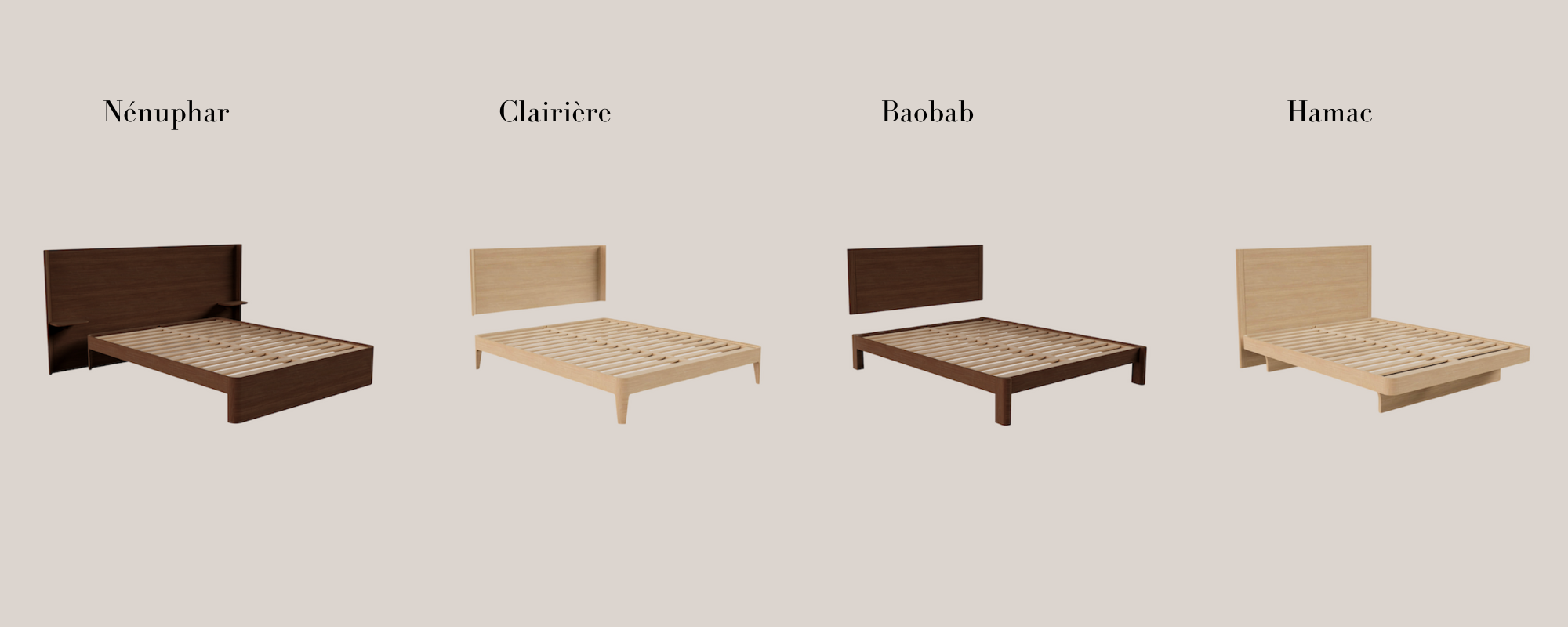
This quest gave rise to four bed frames, crafted from solid wood, each embodying a unique way of experiencing rest: Clairière, Nénuphar, Hamac, and Baobab.
Their story begins here.

I. The Origins: An Idea Takes Root
It all started with a simple question: What does rest look like?
We’re not just talking about sleep, but about that deep sense of relaxation, when everything seems simple and in harmony with ourselves. A moment of respite, a moment when body and mind are in complete harmony.
Images quickly came to mind. A clearing, bathed in light, open and peaceful—a space of openness amid the density of the world. A water lily, effortlessly carried by the water, floating in perfect stillness. A hammock, a bridge suspended between sky and earth, an invitation to let go, gently rocked by the breeze. A baobab tree, rooted in time, unchanging and reassuring.
These four concepts guided the entire creative process. We could have chosen a single interpretation of rest, but we preferred to explore several. Because everyone experiences calm in their own way. Some seek lightness; others, a sense of being grounded. Some need simplicity; others, a strong, enveloping presence.
So we set out to design bed frames that would do more than simply provide support—that would infuse a space with atmosphere and vitality. And to bring this vision to life, a meticulous process began: How do you translate a sensation into design? How do you turn nature into an object you can touch, live with, and feel?
The answer lay, as always, in the details: the choice of wood, the shape of the frame, and above all, the craftsmanship of the legs. It is the legs that give each bed frame its personality and stability. It is the legs that transform a simple structure into a living, inspired piece.
And so the idea was born: to create a minimalist bed, designed to feel like a natural choice, where every detail matters and where the raw beauty of the natural world is reflected in the solid wood.
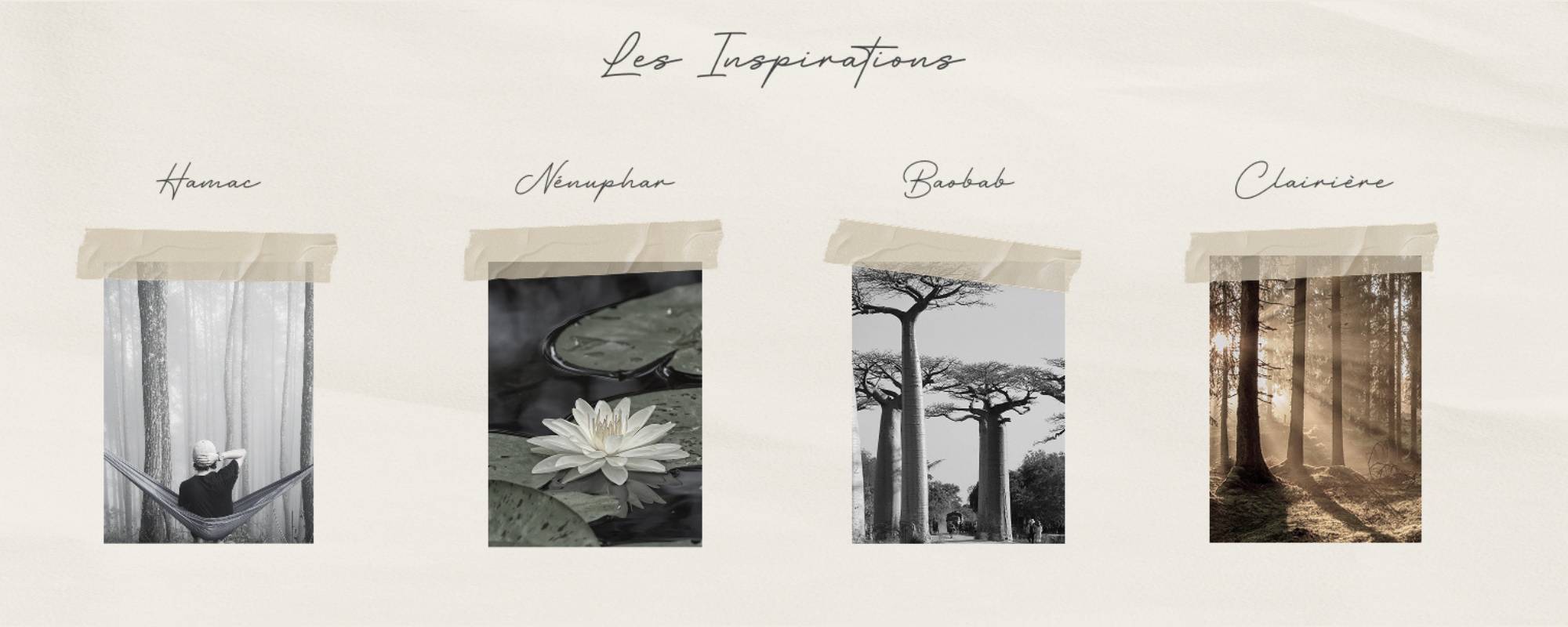
II. Shaping Intent: Giving Meaning to Design
The idea was there, strong and clear: to create bed frames that embody a piece of nature, an invitation to rest. But between the initial intuition and the finished product, there was a path to chart, a balance to strike between inspiration and technique.
The first challenge was the choice of material. Solid wood was the obvious choice. Elegant, sturdy, and full of life, it is the central element of these beds.
We chose oak, a dense and durable wood that stands the test of time with elegance. Its texture, warmth, and patina—which only improves with age—make it the ideal companion for sleep. We’ve selected two finishes: light oak and dark oak, to suit different atmospheres while maintaining a natural harmony.
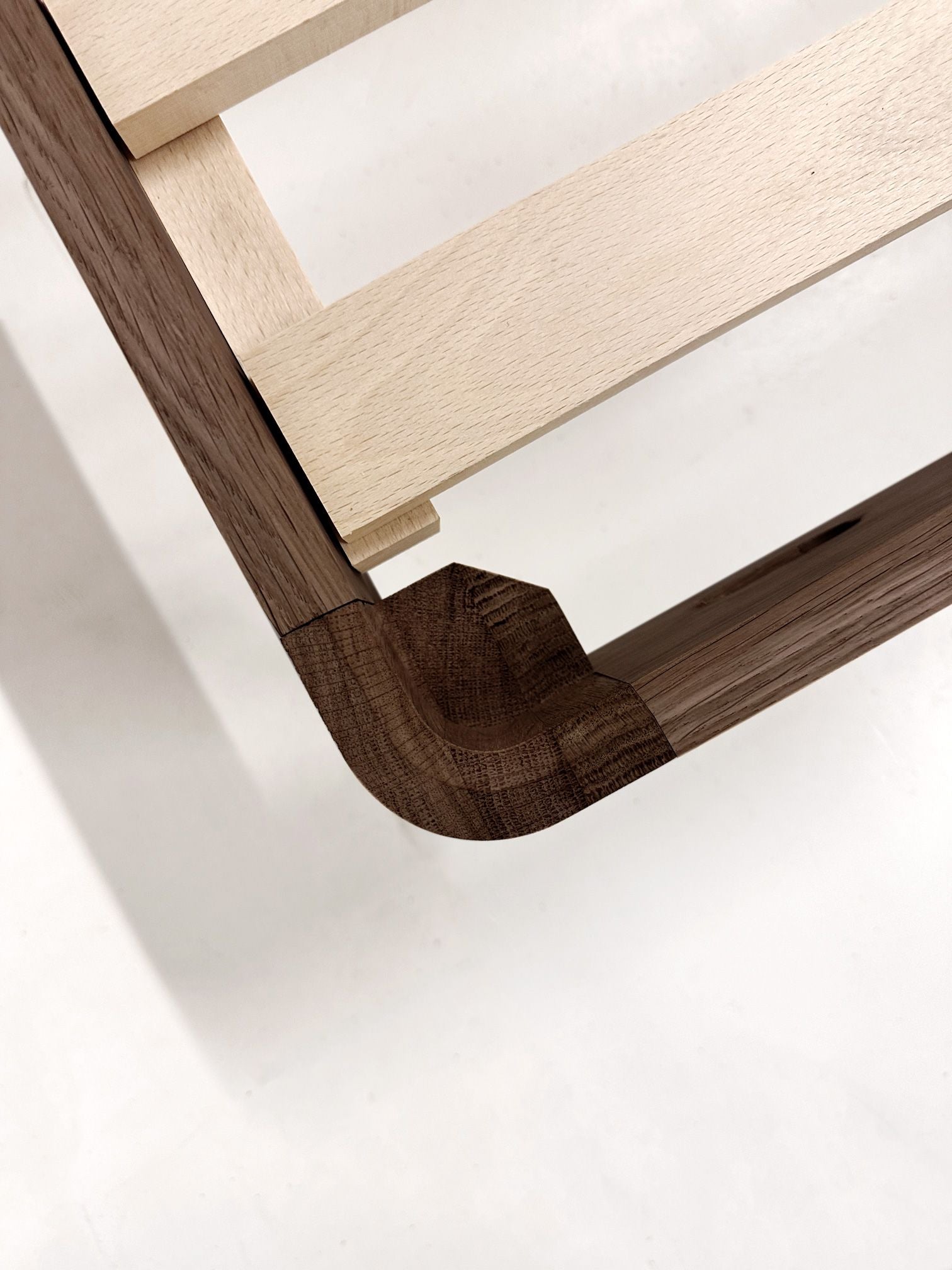
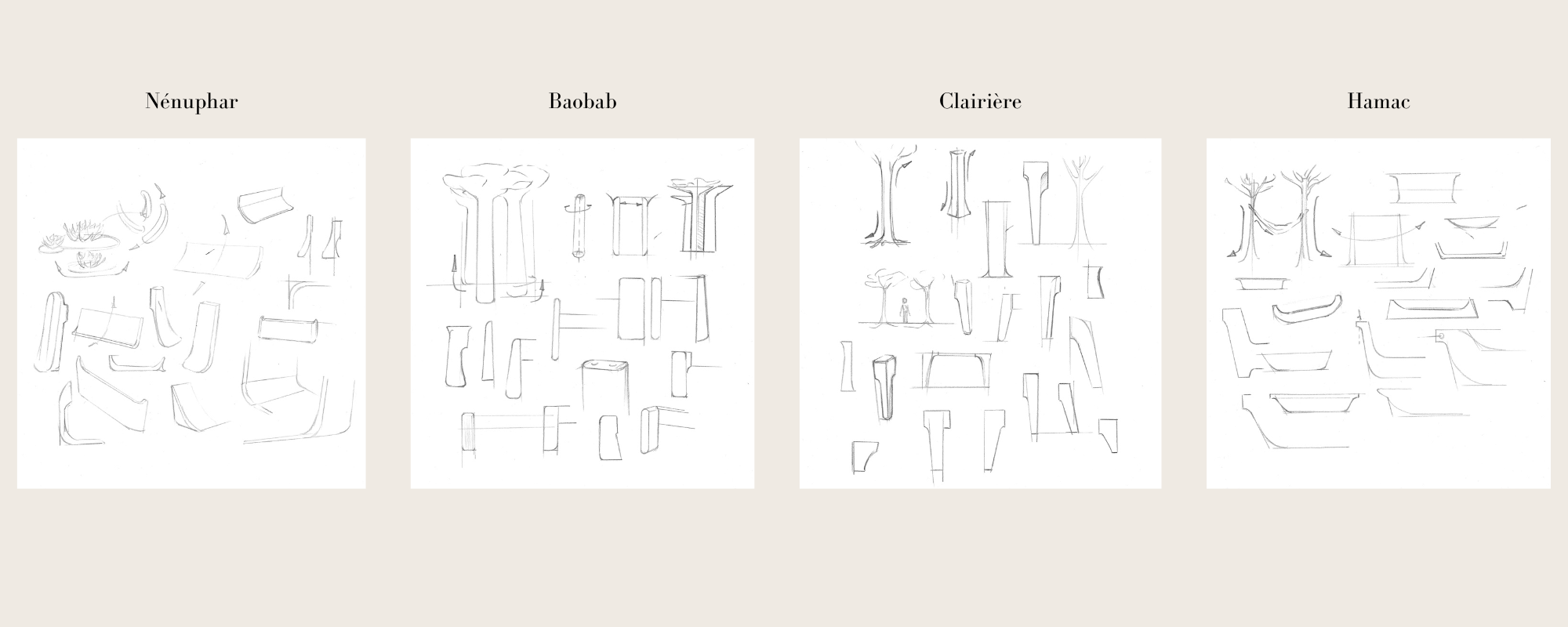
Next, we had to come up with a structure that was both simple and intuitive, without any unnecessary frills. A minimalist framework, where each element plays a specific role. Few screws, meticulous assembly—an approach where the material speaks for itself. But above all, it’s footwork who poured his heart and soul into this collection. Because more than just an aesthetic detail, they define the identity of each bed frame. Each shape was designed to extend the image that inspired it:
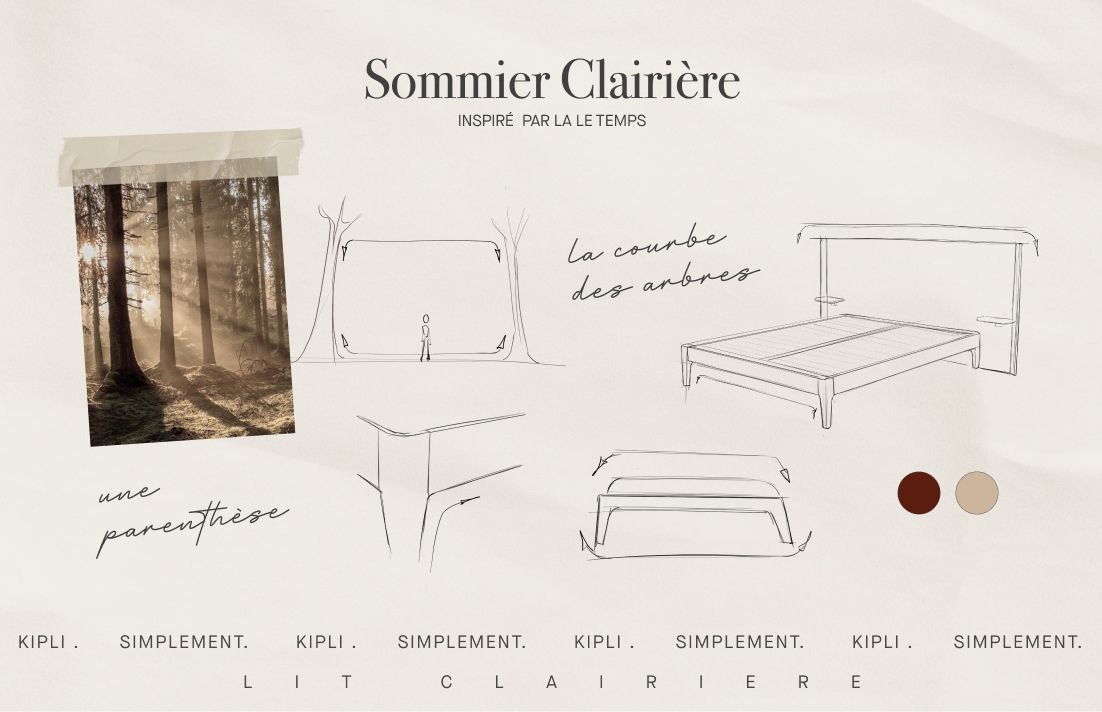
• Clairière, with her slender, graceful legs, like tree trunks that recede to let the light in.
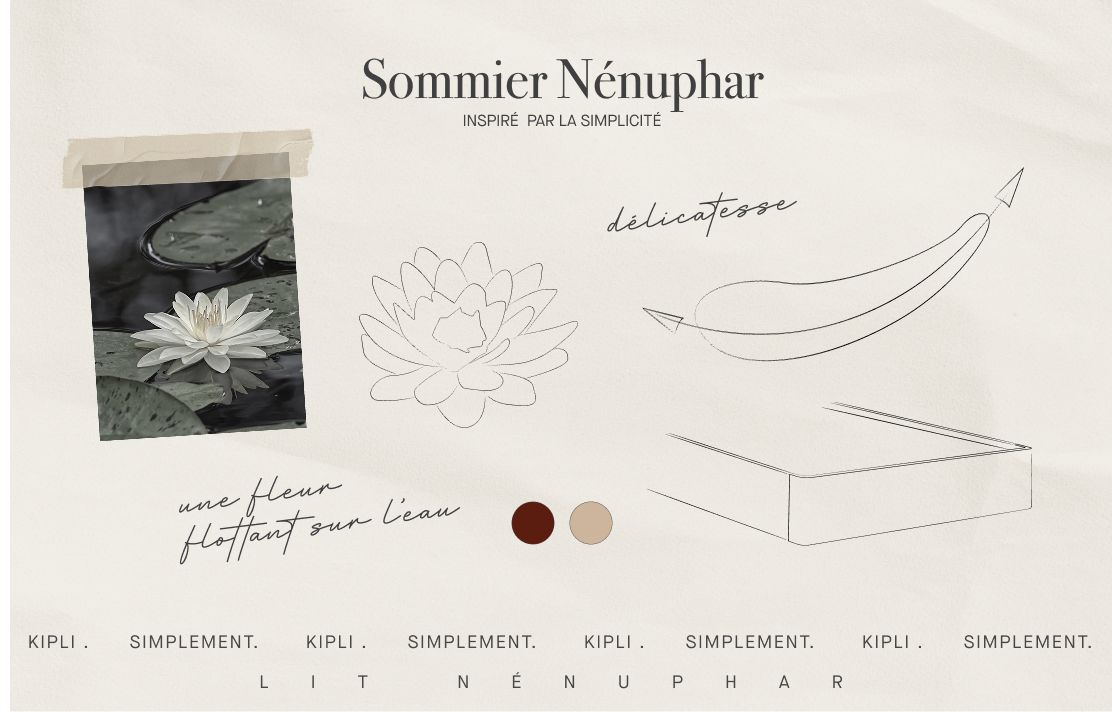
• A wide, stable water lily whose lines evoke the gentle grace of a leaf floating on the water's surface.
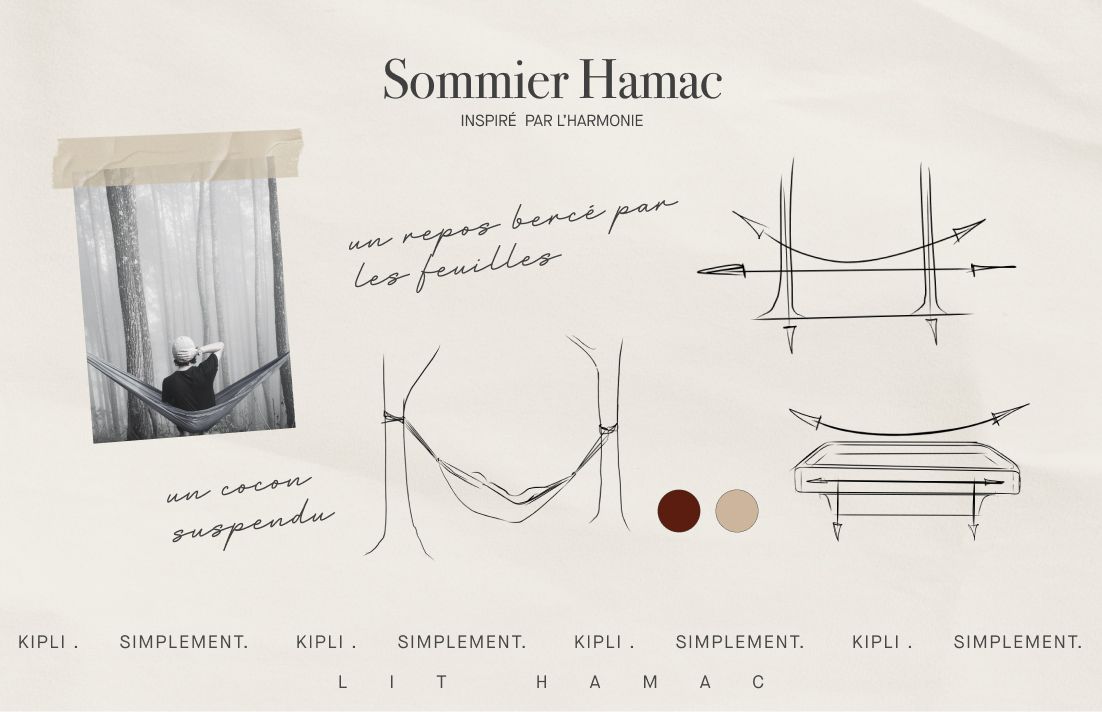
• A hammock, curved like a still wave, a flowing line that invites you to let go.
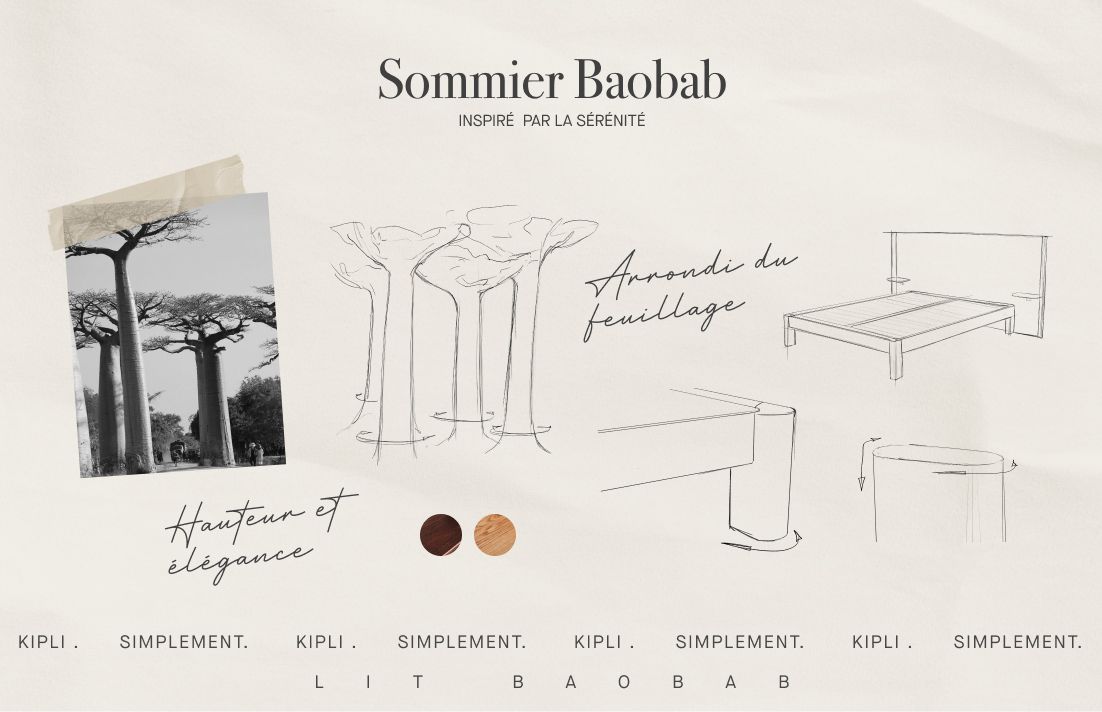
• The baobab, imposing and firmly rooted, a quiet force that defines the space.
Each element has been tested, adjusted, and balanced so that the bed feels like a natural part of the bedroom. It is an object that is both discreet and present—one that doesn’t draw attention to itself, but creates an atmosphere, a feeling.
And to refine these choices, we opened a dialogue with our community. Thanks to our conversations on Instagram, the feedback and preferences we received guided our final adjustments. It was a collaborative effort, where one person’s insights fueled the work of others until we arrived at… the final design.
This meticulous research has given rise to a collection that is more than just beautiful. Each bed frame tells a story—one of balance between material and emotion, between nature and intimacy.
III. From Sketch to Form: The Quest for Clarity
Creating a bed frame inspired by nature is one thing. Bringing it to life, in all its precision, is quite another.The prototyping stage is where the idea meets the material, where the design becomes an object, and where every curve and every joint is put to the test in the real world.
It was in our workshop in Mayenne that the first models were created. Antoine, one of Kipli’s founders, visited the site, eager to discover the prototypes—to see them, touch them, and examine them closely to ensure their durability. Because a box spring shouldn’t just be beautiful; it must be designed to last.
The main challenge wasthe frame’s adaptability: it had to work with any set of legs without compromising the aesthetics. No visual disruption, no compromise on the balance of the lines. So we tested every combination, ensuring that the assembly was seamless, tension-free, and smooth.
Another challenge is working with solid wood, a living material that breathes, expands, and reacts to humidity and temperature fluctuations. Unlike composite materials or industrial panels, solid wood changes over time.
Therefore, the joints had to be strong and precise, capable of absorbing these slight movements without creating any weaknesses.
And then came the assembly test. A Kipli bed frame should be simple and intuitive to assemble. We sought to minimize the number of screws as much as possible and favor straightforward interlocking systems that fit together almost naturally—like two trees growing side by side until they become one.
This fine-tuning process required several rounds of back-and-forth between our team and the workshop. Every detail was refined, every imperfection corrected, until everything fit together perfectly, and that sense of naturalness—so characteristic of well-designed objects—came through effortlessly.
When, finally, after months of testing and adjustments, the bed frames took on their final shape, we knew they were finally ready.
IV. In the Craftsman's Hands: When Wood Comes to Life
There is something special about watching an object take shape in the hands of a craftsman—seeing raw wood transform, take form, and become a piece of furniture. These bed frames aren’t just designed in France; they’re crafted right here in our own workshop in Mayenne.
This decision is by no means trivial. Owning part of our production facilities is a way for us to fully honor our commitment: to guarantee high-quality craftsmanship, to maintain control over our materials, and to ensure that every piece is manufactured in accordance with our values.
In the workshop, it all starts with the wood. Sourced from PEFC-certified forests in France and across Europe, it arrives as rough planks. Each piece is carefully selected for its density, texture, and natural color. Next comes the cutting stage, where the planks are cut to the precise dimensions of the bed frames.
Next comes the finishing process, an essential step in which the wood is planed, smoothed, and its edges rounded. Every slat, every leg, and every panel of the frame is meticulously crafted to ensure it feels pleasant to the touch and that the entire piece exudes elegance and simplicity.
Machining is a more technical phase that requires moving beyond traditional methods and utilizing digital technologies. Thanks to computer numerical control (CNC), each piece is carved with millimeter-level precision, ensuring consistent cuts and joints. But the final finish remains in the hands of the artisan: it is the artisan who sands, adjusts, and applies the stain and varnish made from natural solvents, thereby preserving the authentic feel of the wood.
Finally, each bed frame is assembled, tested, and then carefully packaged. Before leaving the workshop, it must meet one key requirement: —the test of time. A Kipli bed frame is not a fleeting piece of furniture; it is a piece you keep, one that stands the test of time with the same elegance as on the very first day.
It is this artisanal expertise—this direct connection with the people who make our products—that makes all the difference. We don’t mass-produce items; we craft pieces that have a soul.
V. When Bed Frames Meet Their Dreamers
A bed frame is more than just a functional piece of furniture. It inhabits a space, shapes an atmosphere, and becomes a quiet witness to peaceful nights and bright mornings. Once the final sanding is complete, the finishes have been approved, and the boxes have been sealed, another phase begins: the moment of meeting those for whom these beds were designed.
But how can we talk about a bed frame without reducing it to a mere consumer product? At Kipli, we don’t want to sell a product. We want to tell a story—the story of a piece of furniture that becomes part of a landscape, that resonates with a feeling, and that invites you to rest in a different way.
Each bed frame embodies an imagination, an evocation, our original intention, and the work we put into bringing it to life.
• A clearing is the light filtering through the foliage—an opening onto tranquility.
• The water lily embodies absolute lightness—a serene drifting on the water.
• A hammock is a moment suspended in time, an invitation to total relaxation.
• The baobab tree embodies quiet strength—a reassuring and timeless presence.
We’ve built our messaging around these inspirations, prioritizing emotion over technical arguments. Every image and every word we’ve chosen is meant to convey a feeling, a mood—to let you experience the bed frame beyond the sales pitch.
In our stores, the bed frames are displayed in a minimalist setting, bathed in soft light, where the wood interacts with the light. On our social media channels, we shared this journey from the very first sketches, involving our community in the design decisions. Because these beds were born out of a collective effort, they deserved to grow alongside those who were waiting for them.
There’s no flashy message, no loud marketing slogan. Just an invitation: to find, among these four interpretations of rest, the one that resonates with your own pace of life.
Because a good bed isn't just a place to sleep. It's a place where you feel good.
Conclusion: The Beginning of a New Story
Creating these bed frames was much more than just a design exercise. It was a way to reinterpret rest, to explore what it is about nature that soothes us and invites us to slow down.
Today, Clairière, Nénuphar, Hamac, and Baobab are no longer just ideas on paper. They exist, crafted from solid wood, designed to stand the test of time with the same elegance. Their essence remains intact: a balance between minimalism and presence, an invitation to live in the moment and surround yourself with meaningful materials.
But a bed frame, no matter how beautiful it may be, doesn’t stand alone. It’s in your bedrooms, under your sheets, as you sleep through the night, that it truly comes into its own.
Every movement of the living wood, every misty morning or summer evening spent by its side will add to its story.
We designed these beds with tranquility, nature, and rest in mind. But what happens next is up to you. These bed frames are not merely objects; beyond their past history, they are a blank canvas upon which your nights, your mornings, and your moments stolen from the passage of time will be written.
Now it's up to you to make it a place where it's nice to slow down.