


🌳 Why Baobab
In the shade of our inspiration, the baobab. Generations gather around these “palaver trees,” symbols of longevity and community. In the hot countries where it grows, the baobab provides a rare and precious shade. It becomes a refuge, a gathering place, a spot where time stretches out without haste.
We wanted to offer you pieces that reflect this vision: furniture for coming together, for slowing down, for sharing. Welcoming shapes, vibrant materials. Objects that stand the test of time without rushing.
A Collection That Brings People Together
There is something paradoxical about the silhouette of the baobab. A broad trunk, deeply rooted, and slender, almost fragile branches that fan out upward. It is this contrast between power and lightness, between rootedness and elevation, that guided us.
The Baobab collection captures this subtle tension. The pieces are solid yet airy—massive without being imposing, curved without being flabby. Each element finds its place with humility, without ever overwhelming the space.
Furniture that truly brings people together
Bringing things together doesn’t mean making them all the same. Each piece of furniture in the collection has its own function, its own rhythm. But they all share the same language: that of solid wood, soft lines, and just the right heights. A bench for impromptu conversations. A large table for meals that go on and on. A low bed to help you slow down when you wake up. Shelves to give the walls some breathing room.
The baobab is not just an ornamental tree. It is useful, generous, and central. And that is what we wanted to convey in this collection:connection, time, and a little shade to help us better embrace the light.
🌿 One essence, a thousand ways to live
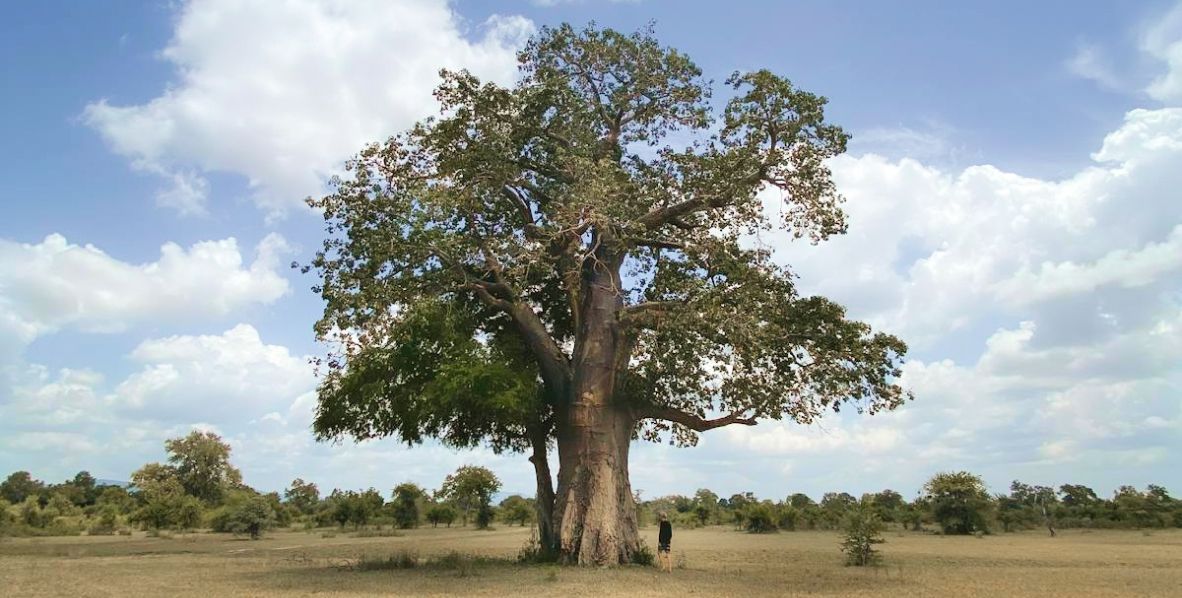
A baobab tree never grows by chance. It takes its time; it puts down roots. And as it grows, it becomes a landmark. It shapes the space around it without imposing itself on it. It is in this spirit that the Baobab collection was designed.
Each piece stands on its own, yet they all share the same essence: that of solid wood, soft lines, and thoughtful craftsmanship. This isn’t just a series of furniture pieces—it’s a family. A collection designed to fill a space naturally, to shape living areas without making them feel rigid.
A Common Language, Open Practices
The collection doesn’t make a loud statement. It settles in. It suggests. A curve here, a slope there. Legs that taper slightly to make you forget their weight. Oval or rounded tabletops, without sharp angles or dominant lines. Everything is designed to let the eye wander and allow you to breathe.
Even the shelves—which are often rigid—take on a sense of flexibility here: they can be placed individually or in groups, like punctuation marks on a wall.
And when it comes to light or dark versions, there’s no hierarchy. It’s just a matter of atmosphere: diffused light or deep warmth.
Compose Freely
In a living home, furniture isn’t set in stone. A bench can become a console table. A round table can find its way into a reading nook. A small shelf can hold a memento or a moment of quiet. The Baobab collection embraces change, repurposing, and needs that evolve over time.
And perhaps that is its greatest strength: it adapts without losing its true nature. It supports without imposing.
🧱 The Basics: Tables and Beds
It all starts with what brings us together. A table, a bed, an anchor. These pieces in the Baobab collection embody something fundamental. They are the foundations upon which other moments—other gestures—are built.
Tables for Getting Together
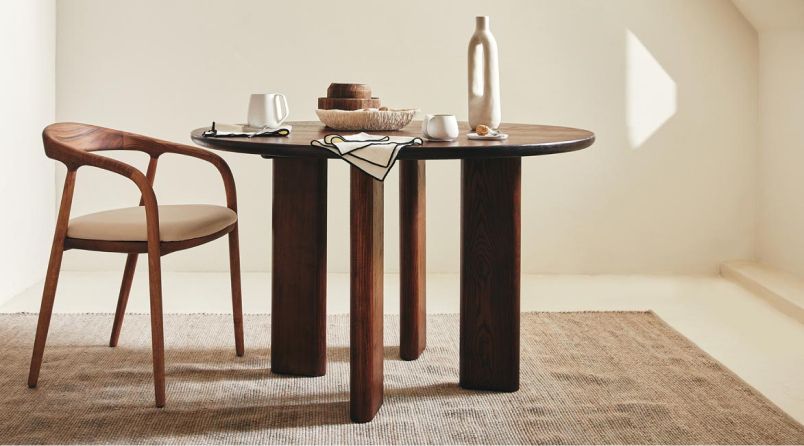
Whether round or rectangular, a Baobab table is never merely functional. It is the unseen centerpiece of the room. People gather around it, share moments there, and end up staying longer than planned.
The round encourages movement, impromptu meals, and endless conversations. The rectangular, on the other hand, sets the stage for lingering moments. Larger and more structured, it anchors the space, like a solid trunk around which everything can be organized.
And yet, despite their presence, these tables remain unobtrusive. With their tapered legs and tabletops with rounded edges, every aspect of their design is intended to leave room—for light, for legs, and for conversation.
A bed as a refuge
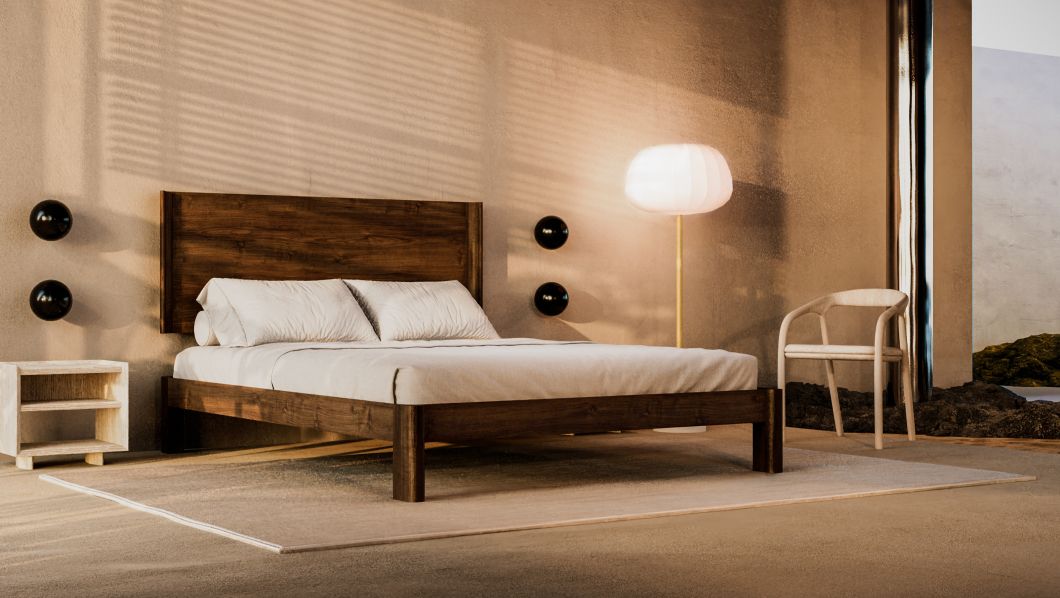
The Baobab bed—low, wide, and sturdy—is unobtrusive. It invites you to rest. Its legs are almost hidden beneath the structure, giving the impression that it’s floating just above the floor. It’s a piece of furniture that anchors the space yet feels light: it grounds you without weighing you down.
Unadorned, it leaves the stage open to textures, linens, and nights we want to keep simple. It’s a place of retreat, at the heart of the home, like a quiet nook beneath the branches of a tree. A place to let go, slow down, and start over.
It is these pieces—the bed, the tables, the bench—that lay the foundation. They are the center around which life then unfolds—not in a straight line, but in concentric circles, like the growth rings in wood.
🍃 Les Ramures: Coffee Tables
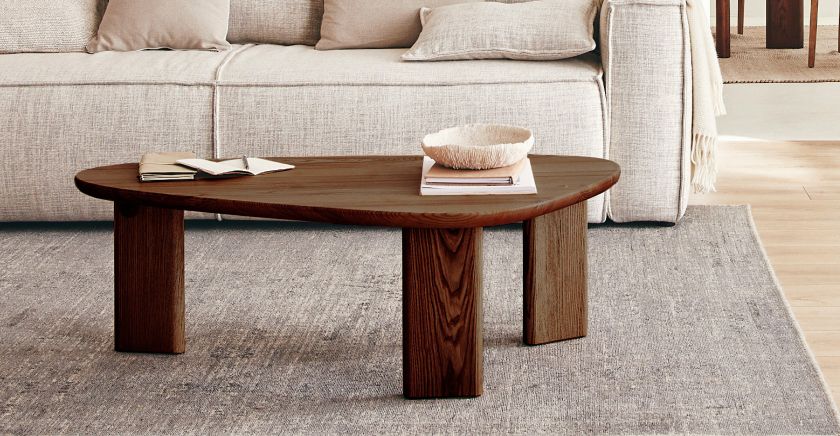
On a tree, branches never grow randomly. They seek out the light, orient themselves, and spread out. They form a shifting shape, always in dialogue with their surroundings. The coffee tables in the Baobab collection follow this logic. They are the branches of the living room: they connect, accompany, and complement.
Formats That Adapt
Some tables are tall, others are shorter. Some are round, others have organic shapes. But they all share the same delicate design: a tabletop with smooth edges and an unobtrusive base that tapers slightly to allow air to circulate.
The small, round ones, measuring 60 or 90 cm, can stand alone or be grouped together. In the nesting version, they interlock: a dance of shapes that slide under one another as the moment calls for it.
The oval coffee table, the side table and the bench, on the other hand, share the same base. Only their heights vary. They are related pieces, born of the same design process, and conceived to serve different purposes—seating, resting, and support—without ever losing their cohesion.
Lines That Breathe
And then there's theorganic. A free-form table, almost asymmetrical, like a leaf resting on three legs. Neither round, nor oval, nor square. It brings a fresh perspective to the collection—a step off the beaten path, yet seamless. Like a branch growing slightly askew, but just enough.
Coffee tables aren’t just an afterthought. They’re those little centers of gravity around which we set down a cup, a book, or a moment of silence. They shift, they adapt, they make themselves useful without making a sound. And perhaps that’s where their true beauty lies.
🌾 Thin branches: shelves
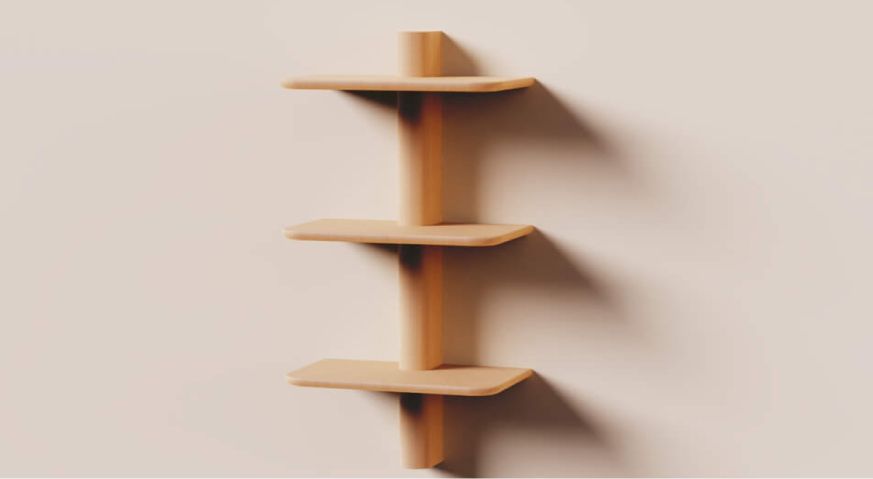
Shelves are to walls what branches are to a tree: light, useful, and structuring extensions. They aren’t there to take up space, but to give it rhythm and life. And in the Baobab collection, they perhaps embody the most subtle touch.
From Line to Composition
First, there are the simple units : one, two, three, or four shelves. Minimalist pieces that are both useful and unobtrusive. You place only a few things on them, but always with intention: a carefully chosen book, a ceramic piece, a plant. These shelves are like commas on a wall that’s too empty. They add depth without ever feeling cluttered.
And then there's the modular version. A discreet system that lets you design your own arrangement: taller, wider, more graphic. Each module can be attached, doubled, or inverted to adapt to the space. It’s a shelf that doesn’t dictate anything, but offers—a living structure, like the branches of a tree that follow the light.
A Deeply Rooted Sense of Lightness
Despite their slim profile, the Baobab shelves are sturdy. Made of solid wood, they retain the material’s warmth, density, and grain. And they always follow the same principle of visual coherence: rounded edges, an open structure, and a choice of colors to suit the desired atmosphere.
These slender branches aren’t always noticeable at first glance. But they are often what create the balance in a room—the ones that hold precious objects, subtle mementos, or a deliberate sense of emptiness.
🪵 Design That Enhances Life
The beauty of an object is not limited to its form. It is also measured by what it enables—by how it endures, how it accompanies us, and how it steps aside to make room for what truly matters: gestures, days, and seasons.
Solid wood—nothing else
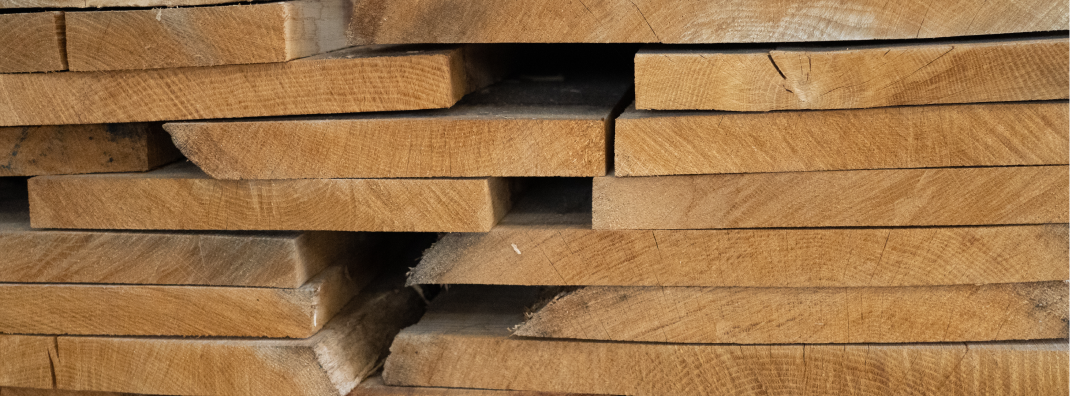
Every piece in the Baobab collection is crafted from solid wood that is certified and selected for its quality. No veneer, no compromises. Just a living, dense material that develops a patina without losing its luster. It still breathes a little, even after leaving the workshop. Its fibers carry the tree’s history—and the story yet to come, in your home.
The finishes are natural, with no opaque varnish. The wood feels smooth to the touch, yet retains its natural character. Authentic. Unadulterated. Durable.
Crafted with care, built to last
The furniture is crafted in Europe using traditional, masterful techniques. Each piece is produced in small batches to ensure that each step is done with care. And everything is designed to last: the joints, the removable legs, and the absence of visible screws. These are details you may not notice right away—but you’ll appreciate them, day after day.
The Baobab collection doesn’t need to change with the trends. It stands the test of time effortlessly, because it doesn’t seek to seduce. It seeks to serve, to reassure, to adapt. And if one day it wears out, it can be repaired, passed down, or repurposed.
It's not a spectacular design. It's a design that embraces life—with all its movements, its traces, and its imperfect beauty.
🏡 Discover, Create, Live

There’s no single way to start with the Baobab collection.You can begin with a table and end with a shelf—or the other way around. You can choose just one piece—and let it stand on its own, like an accent in the room. Or you can gradually put together a set, just as you put words together to form a sentence.
Because that, too, is what living is all about: coming to terms with our surroundings and with who we are. And Baobab furniture, with its softness and harmony, supports this search for balance. It doesn’t impose anything. It simply offers possibilities: a seat, a surface, a gesture.
Sometimes it doesn't take much. A bench in the entryway. A bare shelf. A round table for everyday life. And already, something changes. The space feels calmer. More welcoming. More like you.
In the shade of the baobab tree, we don’t just sit. We find our footing. We breathe. We share.And perhaps, quite simply, we begin to feel at home.