

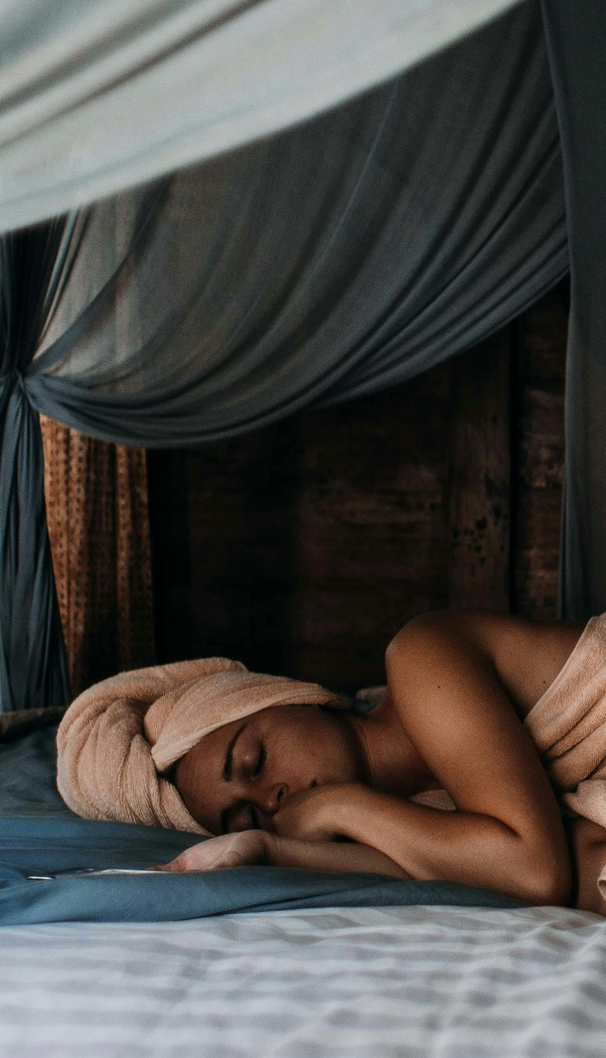
In the summer, the days grow longer, there’s plenty of light, and the evenings get warmer… and yet, sleep becomes more elusive. Many people wake up feeling tired despite being on vacation. Why this paradox? Here’s what’s really going on behind our shortened nights—and how to gently remedy the situation.
Heat: The Enemy of Deep Sleep

When the room temperature exceeds 24°C, the body has trouble initiating its sleep cycle. However, to sleep well, it must lower its internal temperature by about 1°C. In cases of persistent heat, it takes longer to fall asleep, nighttime awakenings become more frequent, and deep sleep phases become shorter.
→ Breathable materials such as organic cotton or natural latex help regulate body temperature more effectively, without the need for air conditioning.
Too much light, for too long
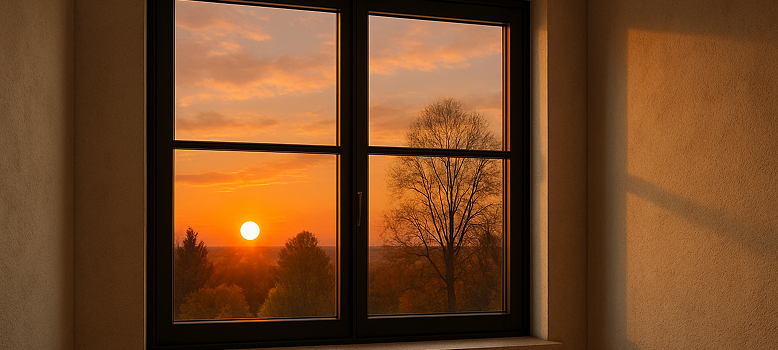
Prolonged exposure to daylight, especially in the evening, disrupts the production of melatonin, the sleep hormone. As a result, the body is slow to realize that it’s time to rest.
→ To avoid this mismatch, you can dim the lights after 9 p.m. and focus on activities that prepare you for sleep: reading, breathing exercises, and stretching.
The daily routine loses its rhythm

Summer often disrupts our routines: later meals, impromptu naps, late nights… This relaxation, while welcome at the time, gradually throws our internal clock off.
→ Without feeling guilty, it’s helpful to stick to a few simple routines: waking up at the same time every day, eating a light dinner, and taking some quiet time before bed.
The body remains more active
In the summer, our metabolism slows down less than in the winter. There is more activity and more external stimuli (sounds, social interactions, commotion). Even at night, it struggles to wind down completely.
→ A good pillow or a suitable mattress topper can help the body release tension despite the heat by helping you find a comfortable position more quickly.