

Every day, thousands of parents pay close attention to what their children eat, the screens they watch, and the games they play. But few realize that one of the safest places in the house—their bed—can become an invisible source of pollution.
A Canadian scientific study, published in March 2025 in the journal *Environmental Science & Technology Letters*…, reveals that young children’s sleeping environment is one of the places most exposed to chemicals of concern. And the main culprit is often… the mattress.
What the Study Says, in a Nutshell
Conducted in 25 households with children aged 6 months to 4 years, this study measured, over the course of one week, the substances present in the air in the children’s bedrooms—specifically in the sleeping area (the “SME”: sleeping microenvironment).
Result:
Between 30 and 50 different chemical compounds were detected in nearly all of the samples.
Concentrations were much higher around the bed than in the ambient air of the room.
Among the substances identified:
These compounds arenot permanently bonded to the objects: they are applied “to the surface” and can leach out, particularly through synthetic foams, plastic-coated covers, or waterproof mattress pads.
📖 Read the full study (in English)
Why This Is Particularly Concerning for Children
Young children's bodies are more sensitive to pollution than those of adults:
They breathe more rapidly (up to twice as fast as we do for the same weight).
Their skin is thinner and more permeable.
They spend up to 18 hours a day in bed, often in direct contact with their mattresses, stuffed animals, and sheets.
Some of the substances identified in the study are associated with health effects starting at a very young age:
- childhood asthma,
- endocrine disruptions,
- or impairments in cognitive development.
And contrary to what one might think, these substances are not essential to ensuring a mattress’s safety: fire safety standards, for example, can be met without the addition of chemical flame retardants.
In practical terms, what can we do?
The study does not recommend panicking, but rather reducing avoidable exposure, including:
- Air out the room every day, even if it's just for 10 minutes.
- Limit the number of items in the bed: stuffed animals, pillows, and treated or plastic-coated fabrics.
- Wash sheets, sleeping bags, and pajamas regularly.
And most importantly: check the materials the mattress is made of.
Why is this such a big deal at Kipli?
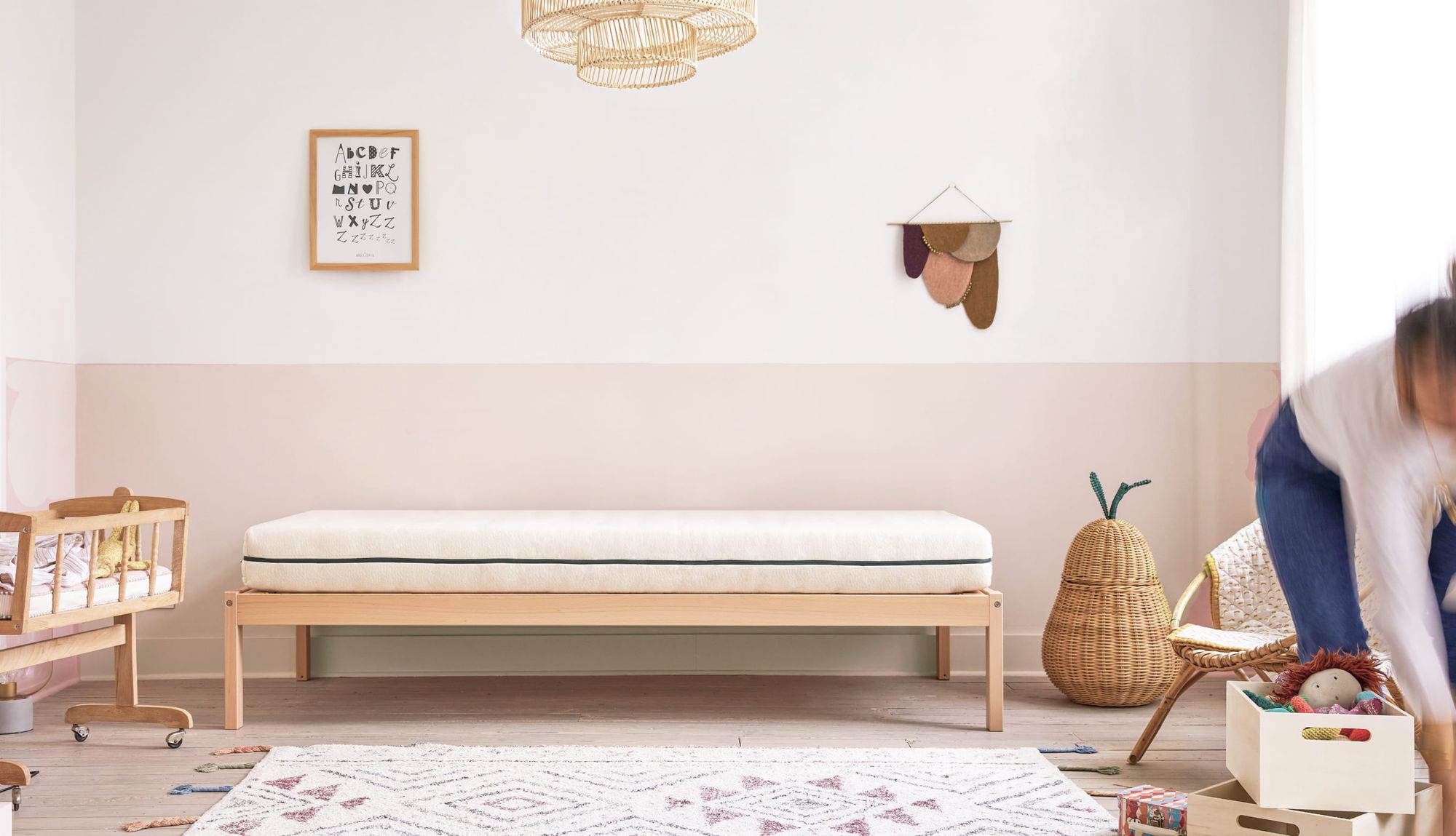
At Kipli, this isn’t news to us. In fact, it’s one of the reasons we designed our mattresses differently from the very beginning. We use no plastic foam, no adhesives, and no chemical treatments.Our children’s mattresses are made from 100% natural latex and covered with a washable, soft organic cotton cover that’s free of plastic and coatings.
Because a good mattress is also one that lets you breathe.