

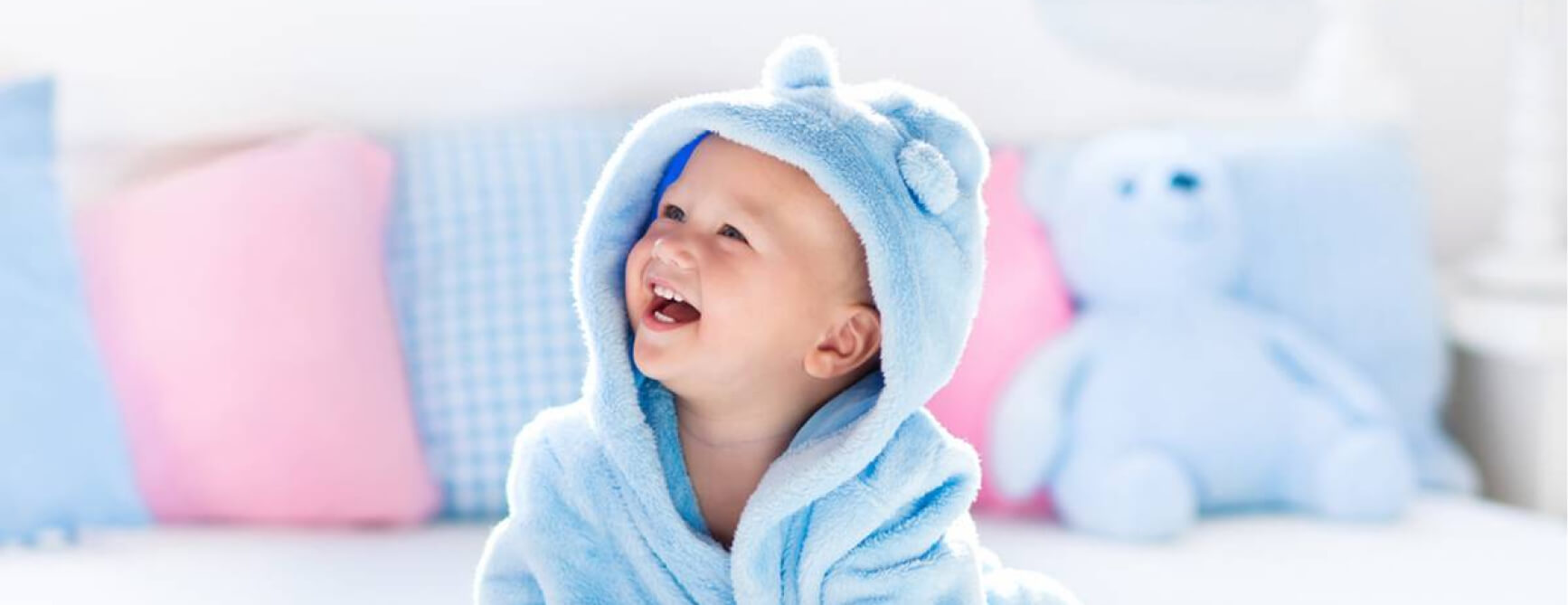
Buyer's Guide to Children's Bathrobes
We always want the best for our children in every aspect of life, including their well-being. That’s why buying a bathrobe is no small matter. This piece of loungewear—synonymous with softness, relaxation, and comfort—is a bath garment that contributes to a child’s comfort. Parents are therefore committed to selecting the best options for their little ones.
The problem is that there are many different types of bathrobes on the market, which doesn’t make choosing one any easier. With such a wide range of brands to choose from, while there’s a high risk of making the wrong choice, there’s also a better chance of finding a style that the recipient will like. But to do that, it’s essential to consider certain criteria. Let’s talk about them.

The Dimensions of a Children's Bathrobe
Size is the key factor in choosing the right bathrobe for a child, since bathrobes are available in a wide range of sizes in stores. So, how do you choose the right one? It’s simple: you need to consider the child’s age. The length of the bathrobe will vary depending on the child’s age—whether they’re a very young child or an older one. Ideally, the bathrobe shouldn’t fall below the knees.
The measurements also refer to chest circumference, waist circumference, and hip circumference. In other words, the bathrobe should fit snugly. There is a size guide to help you find the right style for each child, which shows the correspondences between the child’s age and the length of the bathrobe, as well as the waist, hip, and chest measurements. The taller the child, the larger the bathrobe should be.
The children's bathrobe style
There are several styles of children's bathrobes. Manufacturers are competing to come up with innovative designs, both in terms of functionality and aesthetics. Once again, the child’s age determines which bathrobe style to choose. As we’ve seen, some styles are designed for babies, while others are better suited for older children. It’s important to make the right choices when the time comes.
Among the most popular bathrobes are bath capes. This hooded style is a favorite among very young children, though even newborns can wear this type of bathrobe. Not only is this style practical for covering them completely from head to toe, but it also keeps their entire body nice and warm. But what about bath ponchos? These trendy and easy-to-put-on styles are sure to meet all the needs of children between the ages of 2 and 4.
For older children, you can choose the traditional style with a waistband to keep the swimsuit securely in place at all times, or even fun, whimsical styles with hoods featuring ears—with or without embroidery, in floral or geometric patterns —that are sure to be a hit with the most creative kids. You can also find bathrobes featuring comic book heroes for the most passionate fans. There really is something for everyone.
The fabric of the children's bathrobe
Bathrobes are made from a variety of materials. Choosing the right fabric is therefore crucial to ensuring that children feel comfortable in their bathrobes. However, it is advisable to opt for natural fabrics such as cotton, as they are soft and comfortable.
When designing a children's bathrobe, three types of cotton fabrics are most commonly used. They have very different properties:
- terry cloth, which is highly absorbent;
- terry cloth, which has a soft and plush texture;
- organic cotton, which is more durable.
Manufacturers also offer children’s bathrobes made of polyester, modal, bamboo viscose, velour, or fleece. These materials, which are not very absorbent, aren’t really suitable for use after a bath or shower. However, they are great for keeping children warm before bedtime. Bathrobes made from these materials generally serve as nightgowns.
While the material of the bathrobe is what gives the child that feeling of well-being, it is the fabric weight that determines the level of comfort. To ensure good absorbency, a children’s bathrobe should have a weight of between 300 and 500g/m². The higher the weight, the faster the child will be dry. Keep in mind that a children’s bathrobe with a weight above the standard will be particularly heavy.
Other Factors to Consider When Choosing a Children's Bathrobe
In addition to the main criteria that will help parents choose the bathrobe best suited for their children, there are other factors to consider, such as certification and color.
Certification
Certified products are a guarantee of quality. That’s why it’s recommended to choose a children’s bathrobe that has been certified. While there are many different certifications, the Oeko-Tex Standard 100 certification is highly regarded in the textile and apparel industry. In fact, it is the gold standard for this category of product. It certifies that the children’s bathrobe contains no harmful substances and is safe for children.
There are other certifications:
- GOTS (Global Organic Textile Standard) certification, which guarantees that the product complies with the principles of sustainable development;
- IMO certification, which ensures that the cotton used is grown without pesticides.
Color
Objectively speaking, color is not the most important factor for parents when choosing a bathrobe for their children. However, it can play a role in helping children express their individuality. Therefore, parents should be mindful of the preferences and tastes of older children.
There is a wide variety of options available on the market. From bathrobes in muted colors to those in bright hues, and ranging from solid-color to two-tone styles, the selection is vast for both girls and boys. The choice will depend mainly on the intended use.
The color criterion also applies to large families. In fact, color makes it possible to clearly distinguish between children’s swimwear. This helps prevent conflicts that might arise between siblings.
We recommend these other pages: