

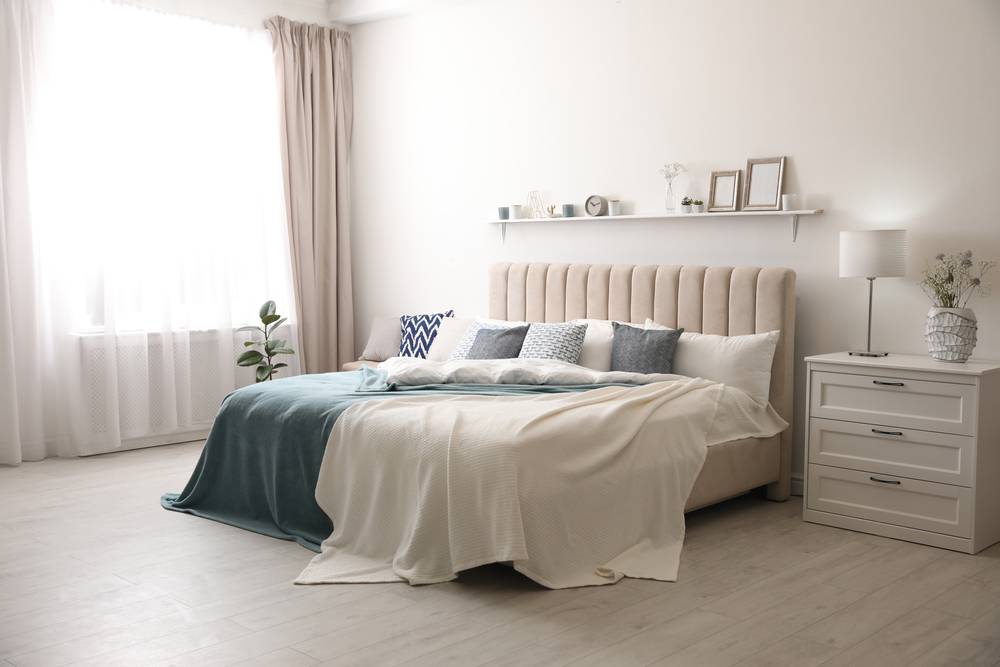
When it comes to decorating your bedroom, choosing the right bedding is just as important as selecting the right mattress, box spring, comforter, and pillows. Whether you’re looking for greater comfort to ensure truly restful nights or simply want to refresh your bedroom’s decor, you might want to consider updating your bedding.
The quality of bedding varies primarily based on the material used and the weaving process. Before buying your new bedding set, you should fully understand these two factors. Do you prefer cotton sateen? We’ll help you make the right choice.
What is satin?
When we talk about satin in the textile industry, we tend to think of it as a material, just like cotton, silk, or linen. However, it is not a material, but rather a method of weaving textile fibers. Whether natural or synthetic, these fibers influence the quality of the final fabric.
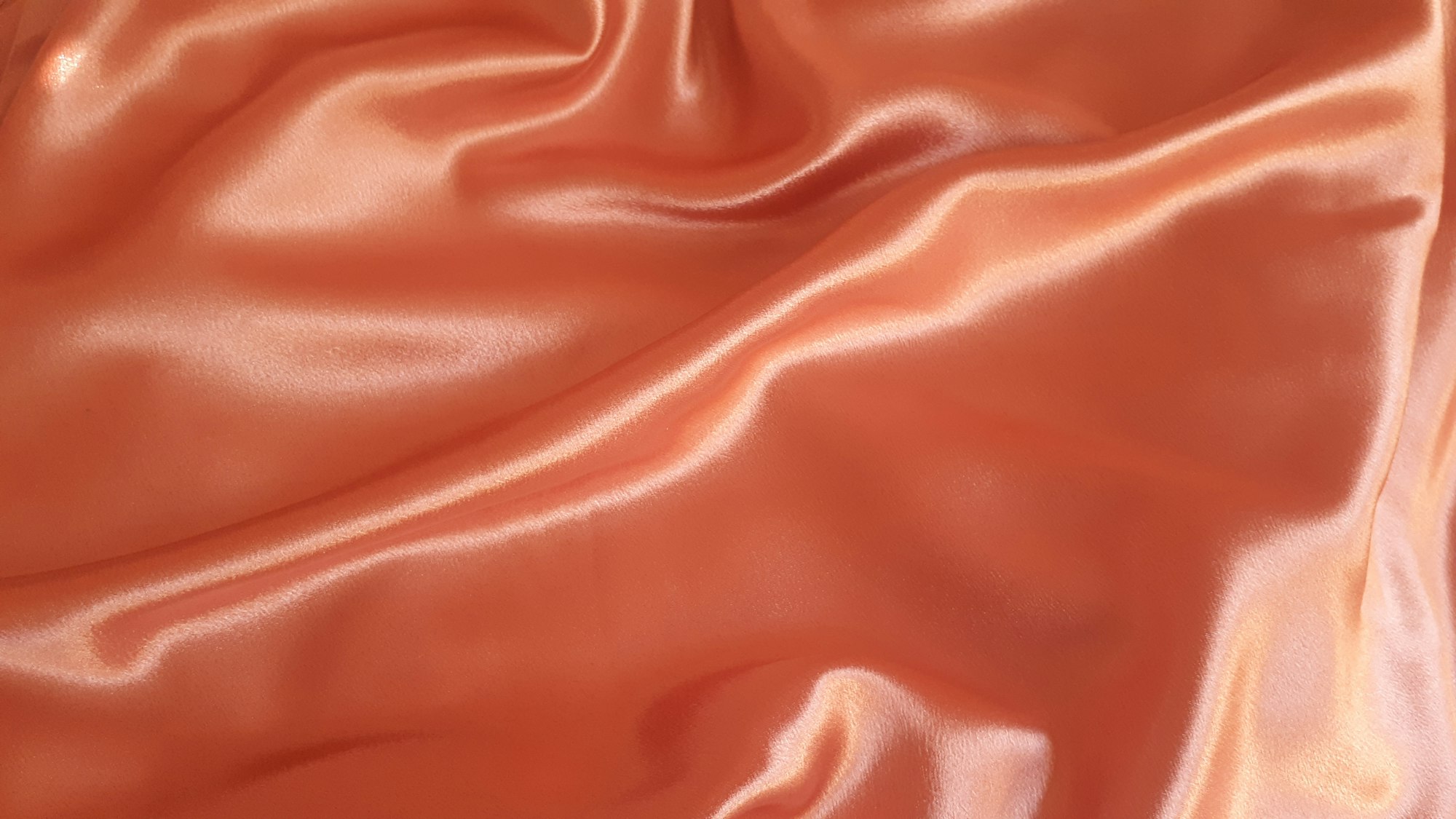
In the textile industry, cotton is the most widely produced fabric and the one most frequently purchased by consumers for bedding or clothing. Among all cotton fabrics, cotton satin is prized for its high-end look, which comes from its silky feel and soft texture.
However, many textile products are made from polyester satin rather than cotton. This is particularly true of inexpensive clothing marketed as satin items, which are especially trendy right now. In reality, these garments are made of 100% polyester, a synthetic fiber derived from petrochemicals: it is non-breathable, traps heat and moisture, and offers no comfort.
Since it comes into direct contact with the body, bedding should be natural and healthy. It is therefore best to choose cotton satin rather than polyester satin or polycotton (a blend of the two materials). Cotton, which comes from the cotton plant, is primarily grown in warm climates. The cotton fibers are harvested and separated from the cotton seeds they surround. They are then spun into yarn, which is woven to form cotton satin (or percale, flannel, gauze, or cotton jersey).
Cotton is very popular for bedding (duvet covers, fitted sheets, flat sheets, pillowcases, etc.) because it is particularly absorbent, healthy, and hypoallergenic.
However, conventional cotton farming is not environmentally friendly. If you’d like to buy cotton satin bedding, opt for organic cotton satin. Organic cotton farming ensures:
- lower water consumption;
- environmentally friendly farming practices (natural fertilizers, crop rotation, etc.);
- the absence of toxic substances in the cotton processing (resulting in organic cotton that is off-white rather than white);
- the protection of workers' health and fairer pay.
A finer, tighter weave than cotton percale
Just like cotton percale, cotton satin refers to a fine, tightly woven fabric. Percale and satin differ primarily in the number of threads used in the weave. Cotton satin bedding is made from cotton woven at 110, 115, or 120 threads per square centimeter, compared to 80 threads per square centimeter for percale.
Furthermore, while in the weaving of cotton percale the threads pass one by one over and then under, the weaving of cotton satin involves passing the threads three times over and then once under, both horizontally and vertically. It is this process that gives cotton satin its lustrous, silky appearance on one side and a matte finish on the other, as well as a feel that is even softer than that of percale; it is sometimes mistaken for silk.
However, the differences observed between satin and cotton percale have nothing to do with the quality of the cotton used in weaving. Although they are woven using different techniques, these fabrics are made from textile fibers of the same type and length.
How do you properly care for a cotton satin bedding set?
Cotton duvet covers, fitted sheets, flat sheets, and pillowcases are all machine-washable on a delicate cycle: the cotton will actually become even softer with each wash. Be careful, however, not to wash your linens in the machine at temperatures higher than 30 °C, as this could dull the fabric’s luster.
When drying bed linens, it is best to let them air dry. As for ironing cotton satin sheets, it is even easier than ironing cotton percale sheets, given the density of the weave.
Thanks to the very tight and fine weave of the cotton satin, your bedding is durable and will last a lifetime—provided it is cared for regularly and properly.
Satin bedding: ideal for summer or winter?
A comfortable bed is essential for a good night’s sleep, regardless of the room temperature. To ensure this, your bedding should be appropriate for each season.
Since cotton is a naturally breathable and temperature-regulating material, cotton bedding is suitable for all seasons. However, some weaves are more suitable than others: cotton sateen bedding is heavier than cotton percale. As a result, it retains heat better but is slightly less breathable; for people who sweat at night, it’s best to choose percale. On the other hand, it’s ideal for people who are more sensitive to the cold during the winter.
Size, colors, and patterns: Which styles should you choose?
As for the dimensions of your duvet cover, fitted sheet, flat sheet (if applicable), and pillowcases, these depend largely on the size of your mattress and pillows, as well as your personal preferences. All you need to do is know the exact dimensions of your bedding and then refer to the standard sizes when purchasing your new bedding set.
As for choosing the colors and patterns for your cotton satin bedding set, it all depends on your personal taste in home decor. You can also mix and match fabrics: a cotton percale fitted sheet will pair beautifully with a cotton satin duvet cover.
In any case, cotton satin bedding is perfect for people looking to createa luxurious and sophisticated atmosphere in their bedroom, as well as for those who particularly love the soft feel of the sheets.
We recommend these other pages:
- How do you choose bedding for a baby?
- How to Choose Linen Bedding?
- How to Choose Cotton Gauze Bedding?
- How to Choose Percale Bedding?
- How do you choose flannel bedding?
- What makes high-quality bed linens?
- How to Choose a Pillowcase
- How do you choose a duvet set?
- How to Choose a Fitted Sheet?
- How to Choose a Duvet Cover?