

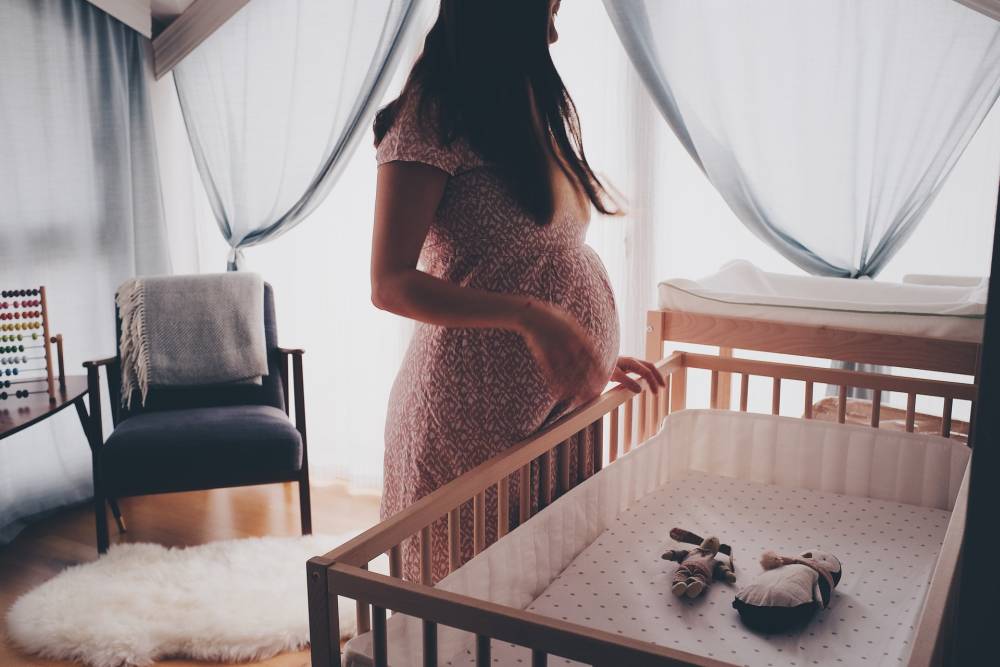
The temperature in your baby's room is crucial for his or her comfort and health. It's essential to maintain an ideal temperature to ensure your little one's well-being while he or she sleeps. But what is the ideal temperature for a baby’s room?
The ideal temperature for a baby's room is between 18°C and 20°C.
This temperature helps maintain a good balance between your child’s comfort and health, making it the ideal temperature for the bedroom. Since your baby is still unable to regulate his or her body temperature, it’s important to avoid extreme temperatures. A temperature that’s too high can cause excessive sweating and disrupt your baby’s sleep, while a temperature that’s too low can make him or her uncomfortable and increase the risk of hypothermia.In addition to temperature, humidity also plays an important role in your baby’s comfort. A humidity level between 40% and 60% is recommended to ensure the air isn’t too dry. If the room temperature is appropriate but the humidity is too low, you can use a humidifier to increase the humidity level in the room.How can you tell if your baby is too hot? It’s important to watch for signs that your baby is too hot. If your baby is restless, sweating profusely, has skin that feels warm to the touch, or has a rash, this may indicate that it’s too hot in their room. In this case, you can lower the temperature in the room by opening a window or using a fan to improve air circulation.How can you tell if your baby is too cold?It’s also important to recognize the signs that your baby is too cold. If your baby starts crying inconsolably, has cold hands and feet to the touch, or if their skin takes on a bluish tint, this may mean they’re getting cold. In this case, you can raise the room temperature by using a heater or putting an extra layer of clothing on your baby.

How can you maintain a comfortable temperature in your baby's room?
The Thermometer: Your Best Friend: To maintain a comfortable temperature in your baby’s room, it’s essential to take a few precautions and have a thermometer in the room to monitor the temperature. Place it about 1 meter above the floor, away from drafts and heat sources, such as radiators. This device will allow you to monitor the temperature accurately and make the necessary adjustments based on the seasons and weather changes, ensuring the ideal temperature in your child’s room all year round.
How should you dress your baby for bedtime?It depends on the temperature in their room. For a newborn, the room temperature should be between 18°C and 20°C, but how should you dress your baby at night depending on the temperature? In general, a baby’s body temperature is higher than an adult’s, so it’s important not to overdress them.- Between 18°C and 19°C: Dress your baby in a long-sleeved onesie, their favorite pajamas, and a sleep sack to ensure a peaceful night’s sleep.- Between 20°C and 21°C, opt for a short-sleeved onesie, along with their pajamas and a sleep sack. - Between 22°C and 23°C: opt for light pajamas—made of cotton, for example—and a summer sleep sack.

Our Best Tips for Helping Your Baby Sleep Well at Night
Sleep is essential for your baby's well-being, as well as for their physical and cognitive development. Here are a few tips to help keep your baby comfortable so they can sleep peacefully through the night.
- Establish a Bedtime Routine For both little ones and adults, a consistent bedtime routine can help with falling asleep. It helps your baby—who has no sense of time—prepare for sleep. Start with relaxing activities, such as a bath at body temperature (37°C) in a bathroom heated to 25°C, making sure there are no drafts! You can then follow up with some cuddles or a gentle massage, and a story before putting your baby to bed. This signals to your baby that it’s time to sleep and sets the stage for a peaceful night’s rest.
- Should You Share a Room with Your Baby? How do you know whether your baby should sleep in your room or in their own room? Well, it’s a personal choice. Most experts recommend sleeping in the same room as your baby for at least the first six months to make breastfeeding easier and to monitor their breathing. However, it’s important to create a separate, safe environment for your baby—without necessarily sharing the same bed. Beyond that, it’s also a matter of adapting to each newborn and, above all, to each parent, depending on how each person experiences this transition to parenthood and, most importantly, understanding their own desires and needs.
- Putting Your Baby to Sleep on His or Her Back Putting your baby to sleep on his or her back significantly reduces the risk of sudden infant death syndrome (SIDS). It also lowers the risk of hypothermia and suffocation, since your infant is still very fragile and won’t be able to clear his or her airways easily if lying on the stomach.
- Keep all stuffed animals and pillows out of your baby’s crib It’s important to keep your baby’s crib free of any bulky items, such as stuffed animals or pillows. These items can pose a risk of accidental suffocation. To prevent this, make sure your baby’s crib is safe and contains only the essentials, such as a firm mattress and a snugly fitted sheet.
- Swaddling Your Baby Swaddling is an ancient technique that involves wrapping your baby in a blanket or swaddle to give them a sense of security and comfort similar to what they felt in the womb. This can help your baby calm down and fall asleep more easily. However, make sure you swaddle your baby correctly to avoid any risk of suffocation or overheating. You can find very clear tutorials from La Maison des maternelles!