

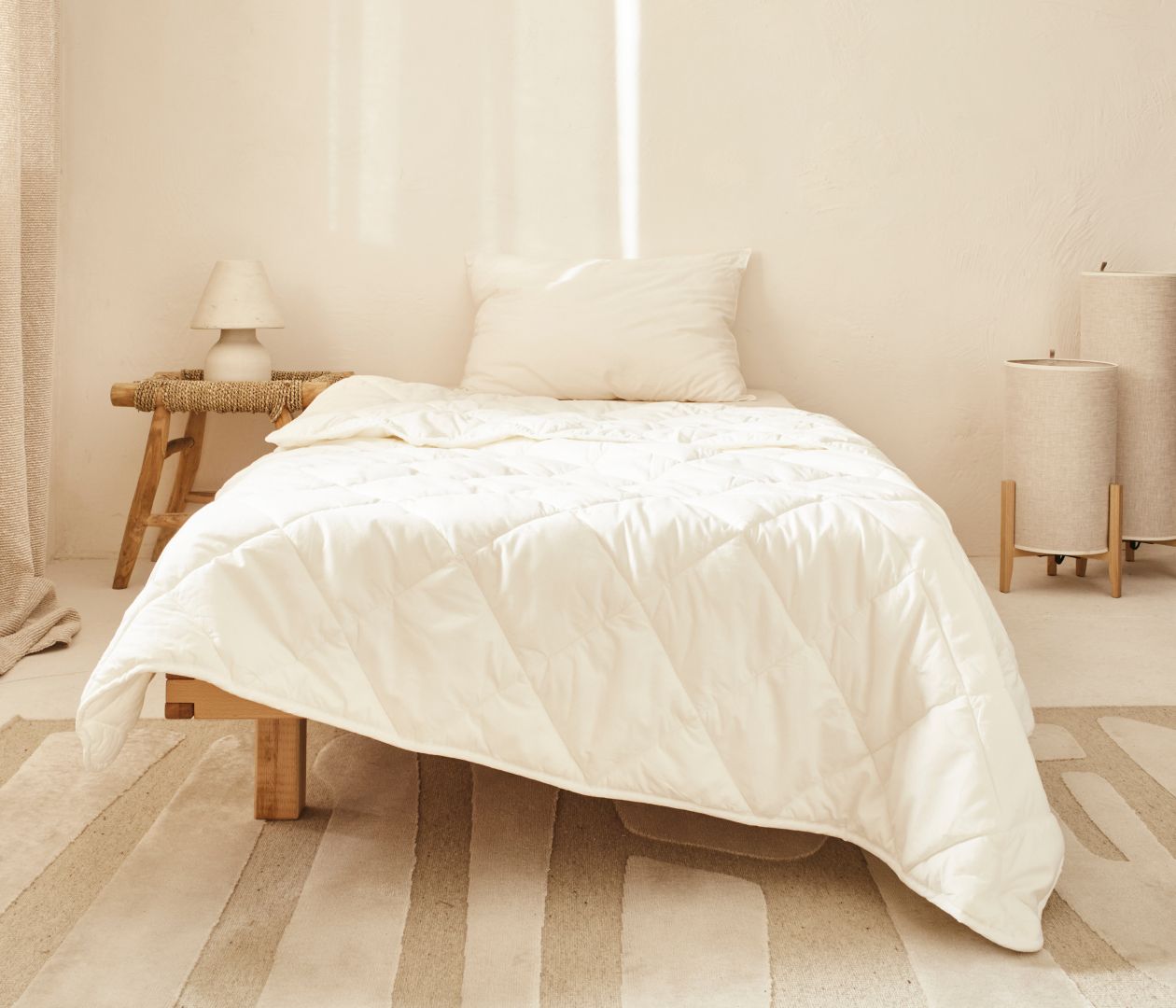
The size of a single-person comforter depends on the bed's dimensions. Is the comforter too small? Your legs and arms will stick out, which can disrupt restful sleep. Is the comforter too big? It becomes heavy and difficult to handle. Not to mention that it drags on the floor and collects dust!!
Keep in mind, that’s not all. The sleeper’s body type, whether they toss and turn during sleep, and the desired drape on each side of the mattress: these are other factors that come into play when choosing the size of a comforter and its cover. So, to ensure a comfortable night’s sleep, should you choose a 140x200 cm comforter or a 200x200 cm comforter? And when choosing a children’s comforter, do the same criteria apply?
Between pitfalls to avoid and tips to keep in mind, let's take a look at the different duvet sizes available on the market.
What sizes should you choose for single-person comforters?
Measuring the bed is the first step in choosing the right size for a comforter. The same goes, in fact, for all bedding: comforter covers, flat sheets, pillowcases, bedding sets, etc.
Generally, a standard single bed is between 80 and 100 cm wide. A person of average build who sleeps peacefully can therefore choose a 140x200 cm comforter. However, taller people and restless sleepers should opt for a larger comforter, measuring 200x200 cm.
Adjust how the comforter hangs over the edge of the bed
Bedding experts recommend leaving a 30- to 40-centimeter overhang on each side of the mattress. Again, there are no hard-and-fast rules, as it all depends on the sleeper’s build and the thickness of the mattress.
If the fitted sheet hangs down too far, the comforter will drag on the floor, which could cause serious falls. Bedding and its accessories get dirty more easily and act as dust traps. And we know that the bedroom is a breeding ground for allergens. There’s no need to encourage this just because you chose a comforter that’s the wrong size.
If the comforter doesn't drape over the sides of the bed, it's likely that the sleeper will kick it off. That's a real shame, since it leads to heat loss during cold winter nights!
Standard duvet sizes available on the market
Here are the sizes of single-person comforters available on the market:
- 140x200 cm for mattresses with the following dimensions (width x length in cm):
- 70x190 or 200 cm,
- 80x190 or 200 cm;
- 140x200 or 200x200 cm for mattresses measuring 90x190 or 200 cm;
- 200x200 cm for mattresses with the following dimensions:
- 100x190 cm,
- 120 x 190 cm.
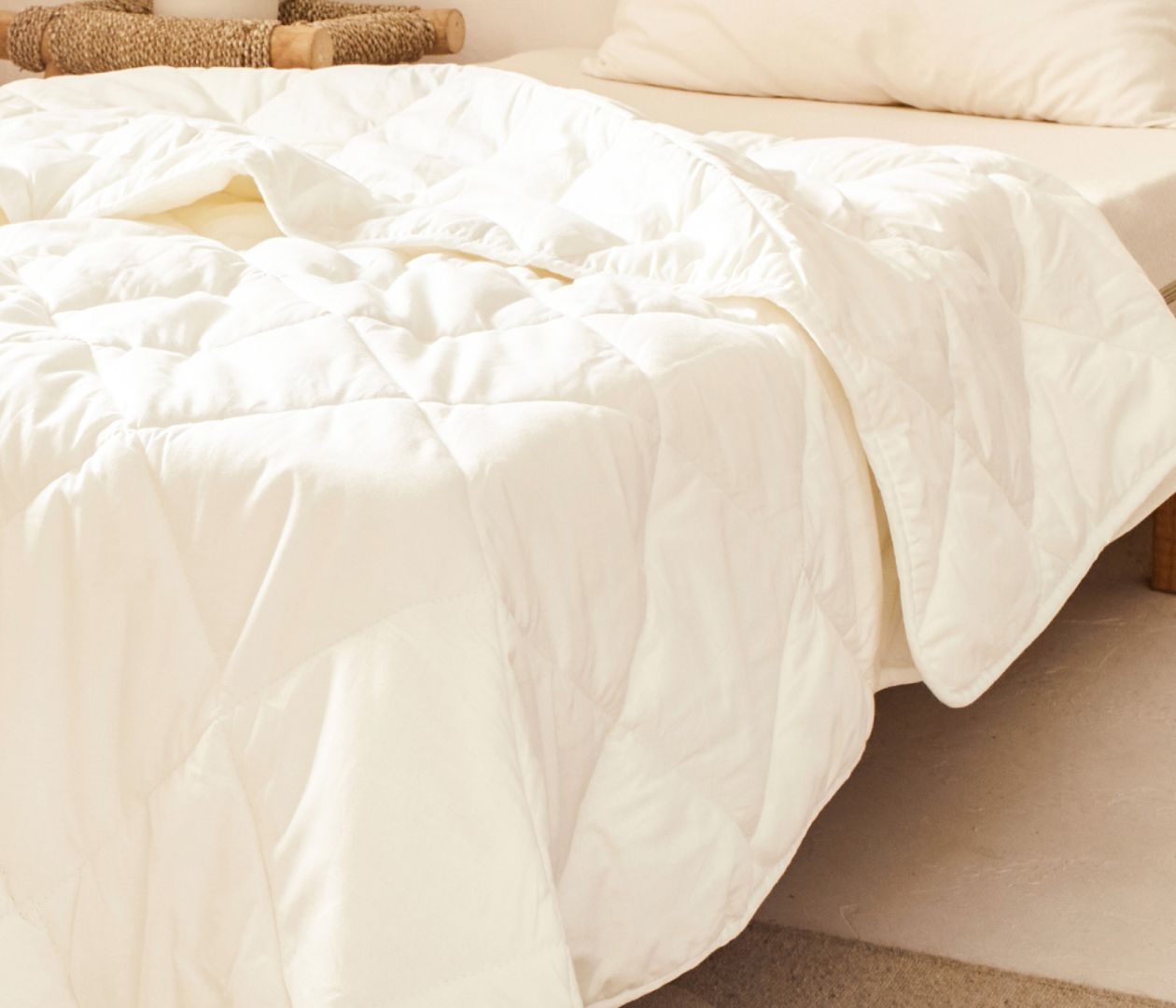
What kind of comforter should you choose for a child?
Their beds are, on average, between 70 and 90 cm wide and between 190 and 200 cm long. Parents can follow the same rule as before: use 140x200 cm comforters. However, for smaller beds, the ideal size for a comforter is 160x200 cm.
Lower-height children's beds
To make them easier to get into, children's beds are lower than adult beds. This fact affects the choice of duvet size for a child. Why? Because you need to account for the bed's edge and the overhang to cover the child properly without restricting their movement.
Added to this is the quality of the child's sleep. A restless night causes the child to kick off the covers. To prevent the child from catching a cold in winter, a suitable comforter is necessary.
What Makes the Convertible Bed Unique
A more flexible solution, this type of bedding includes a bed frame and mattress that can be adjusted as the child grows. There’s no need to replace the bed over the years. However, the comforter and bedding set aren’t adjustable. What can you do?
Standard-size comforters (140x200 cm) are too long for beds smaller than 90x190 cm. Although it’s always possible to make do, the sleeping conditions for the child are far from ideal.
Tucking the comforter under the mattress forces you to lift your legs. This is a very bad position for your back. And curling up with your legs tucked in isn't any better. The child's comforter becomes too heavy. It increases body heat, which is not conducive to falling asleep naturally.
Choosing a 140x150 cm duvet is a good compromise. These bedding set sizes are well-suited to changes in bed size. The goal is to cover the child, not the mattress. For your information, bedding experts recommend that the child’s feet be positioned at least 20 cm from the end of the duvet cover.
What size comforter should I get for a baby?
That’s not even a question. Why? Because the recommended covering for babies under 19 months is a sleep sack. This garment provides all the warmth a baby needs for a good night’s sleep, while eliminating the risk of suffocation. Parents must absolutely avoid using baby comforters and blankets, at least until the baby is 19 months old, or even two years old.
Parents can then choose duvets in the appropriate size that can be machine-washed frequently. Above all, they should select a duvet that regulates the moisture caused by their children’s perspiration, ensuring a better night’s sleep.
A Quick Guide to Duvet Sizes for Single Beds: What You Need to Know
Choosing the right size for a comforter and its cover contributes to the sleeper's comfort. Of course, other factors come into play, such as the quality of the mattress and pillow, whether the comforter is filled with natural cotton or synthetic fibers, the stability of the box spring, and so on. However, when it comes to the sizes of comforters and their covers, you need to consider the following:
- the size of the bed—a king-size mattress requires a fitted comforter;
- the sleeper's body size and height, with a clear difference between a duvet for adults and one for children;
- the sleeper's behavior during sleep, including nighttime movements that can shift sheets and comforters;
- draping the bedding on either side of the bed for cleanliness (to keep the dust out!) but also for aesthetic reasons;
- the sleeper's age, which is associated with a greater tendency to feel cold or greater difficulty regulating body temperature.
We spend a quarter of our lives sleeping. It would be a shame to miss out on a good night’s sleep because of a down comforter that doesn’t fit right! With this quick guide, you now have everything you need to find the right-sized comforter—one that’s tailored to your bedding, your body type, and your needs.
We recommend these other pages:
- How to Wash a Duvet
- What size comforter should I choose?
- What size duvet should you choose for two people?
- How do you choose a comforter for a child?
- How do you choose a comforter for a baby?
- What kind of comforter should you choose for the summer?
- What kind of comforter should I choose for winter?
- Should you choose a 4-season comforter?