

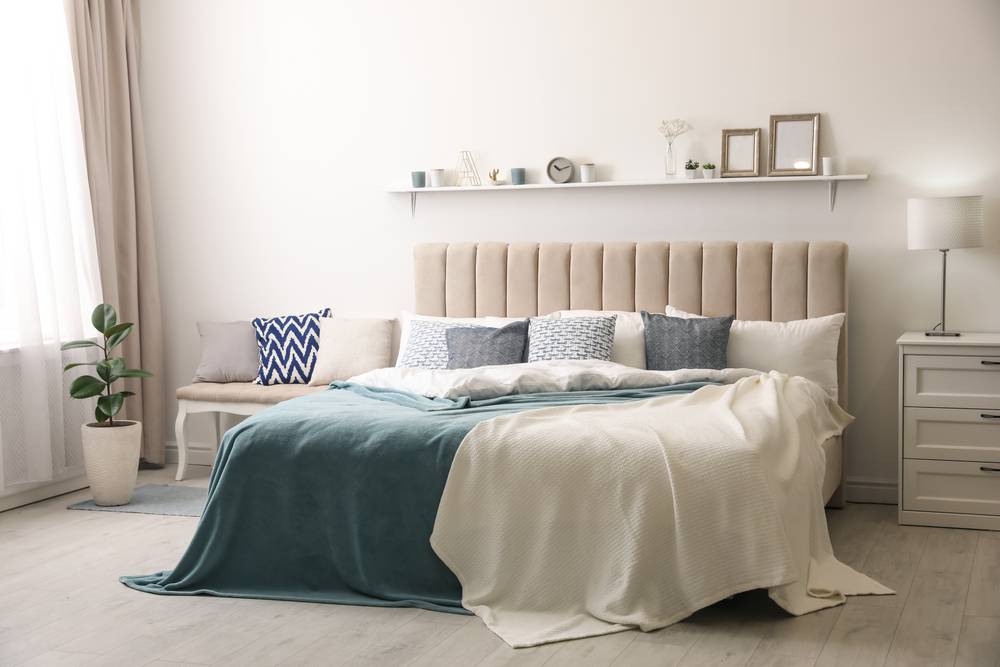
Setting up a bedroom often begins with choosing a mattress and box spring. While this choice is very important, choosing the right bedding is just as important, since it affects how comfortable you are in bed and, consequently, the quality of your sleep.
Before choosing a new bedding set, it’s essential to clearly distinguish between the fabric material (cotton, silk, linen, wool, etc.), the weaving method (gauze, percale, satin, etc.), or the knitting method (pique, jersey). Among all the sets available for purchase, you may decide to opt for a flannel set: we’ll help guide you in your choice.
What is flannel?
In the textile industry, flannel is often considered a fabric, just like cotton, silk, linen, or polyester. However, it is actually a method of weaving textile fibers, whether natural or synthetic. Flannel can be made from wool or cotton fibers, among others.
When it was first used, this fabric was primarily made from wool. As the textile industry evolved, the fabric began to be made from cotton fibers. Today, cotton is the most widely used material for making all kinds of textile products, including clothing and household linens.
Wool or cotton flannel, commonly known as “pilou” fabric, stands out from other fabrics because of its fluffy, voluminous appearance. Highly prized for its softness, flannel bedding feels pleasant against the skin.
Because of this direct contact between the linens and the skin every night, it seems essential to choose high-quality sheets, pillowcases, and a duvet cover. Organic materials are the ideal solution: untreated and free of potentially toxic substances, these materials form the foundation of a healthy, breathable sleep environment—not to mention their environmental benefits.
Manufacturing processes specific to flannel
Like any fabric, cotton or wool flannel is produced through a process of weaving threads made from textile fibers. The weave of flannel is neither tight nor loose: the number of threads used can vary from one fabric to another. For example, cotton percale bedding is made from cotton woven at 80 threads per square centimeter, while this thread count can reach 120 for cotton sateen.
Nevertheless, the number of threads used in weaving is not, on its own, an indicator of fabric quality: it must be considered in conjunction with other factors, such as the type of thread used and the nature and length of the textile fibers.
While flannel is not distinguished by its weave or composition, it is the raising of the fabric’s nap that gives it its exceptionally soft feel. Raising the nap is one of the fabric finishing processes —or “mechanical finishes”—designed to enhance its softness on one or both sides.
This softness is the result of combing the fabric with a special tool to bring out the finest and shortest fibers. Thanks to this layer of fibers released by the combing process, flannel is softer and more insulating: it retains heat better than other fabrics and provides maximum comfort.
However, to minimize the risk of pilling, the fabric must be reasonably brushed and then sheared after brushing. Pilling refers to visible defects—clumps of loose, intertwined fibers on the fabric’s surface—that have a more or less significant impact on the appearance of textile products. Caused by wear and tear (washing, drying, friction, etc.), fabric pilling can be minimized by shaving the fabric, another mechanical finishing process.
So, to choose the best possible quality for your flannel bedding, make sure the fabric:
- is soft to the touch;
- has a fluffy, voluminous appearance;
- has undergone scraping and shaving processes;
- is made of safe and durable materials.
What are the best ways to care for flannel clothing?
Care instructions for flannel duvet covers, fitted sheets, flat sheets (if any), and pillowcases depend primarily on the fabric’s composition. These care instructions may influence your choice of flannel bedding.
Wool flannel is particularly difficult to care for: in this case, it's best to take your clothes to the dry cleaner to avoid damaging them.
As for cotton flannel bedding, it can be machine-washed on a gentle cycle at a maximum temperature of 30 °C. It should not be washed with other fabrics or crammed into the machine. To prevent shrinkage, flannel bedding should be air-dried. Finally, it’s best to iron your linens inside out to avoid damaging the fibers.
What's the best season for flannel clothing?
To get a good night's sleep, a comfortable bed is essential: your bedding should be appropriate for the temperature in your bedroom.
If you choose cotton flannel bedding, it will be suitable for all seasons to a greater or lesser extent, since cotton is a naturally breathable material. However, the raised texture of the fabric increases its ability to retain heat, so flannel is best for winter. It never feels cold to the touch, so your comfort is guaranteed the moment you get into bed.
For people who tend to sweat at night, regardless of the temperature in the bedroom, it's best to choose cotton percale, which is a much more versatile fabric.
Size, Colors, and Patterns: How to Choose Your Set?
First, to choose the right sizes for your duvet cover, fitted sheet, flat sheet (if applicable), and pillowcases, you need to consider the size of your mattress and pillows, as well as your personal preferences. Once you know the dimensions of your bedding, all you need to do is refer to the standard sizes when purchasing your new flannel bedding set.
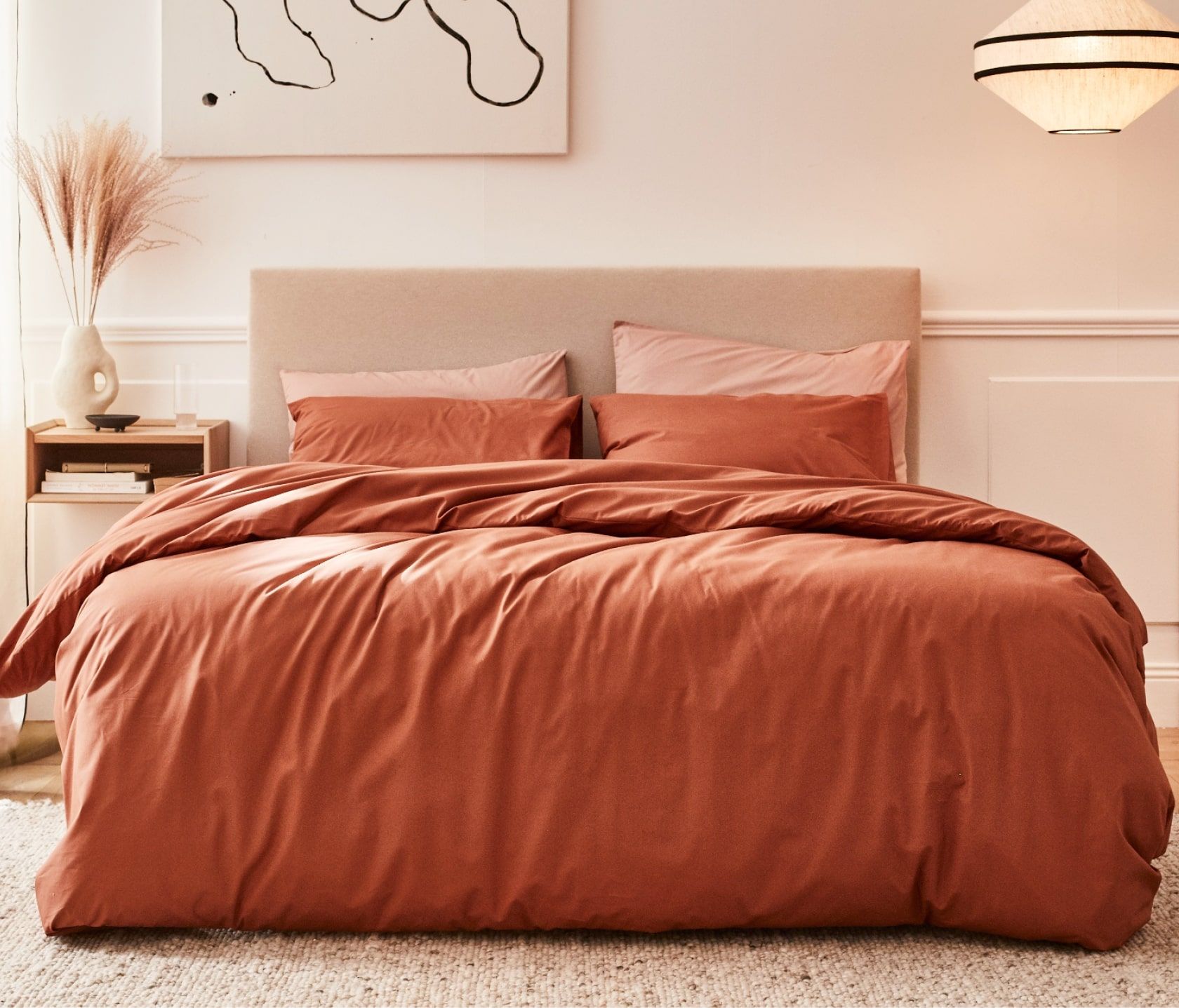
As for choosing the colors and patterns for your flannel bedding, it’s primarily a matter of personal taste. While you’ll want to coordinate your bedding set with your bedroom’s decor, you can certainly mix and match colors and patterns between your sheets and each pillowcase.
One thing is certain: with flannel bedding, your winter nights will be filled with softness and comfort.
We recommend these other pages:
- How do you choose bedding for a baby?
- How to Choose Linen Bedding?
- How to Choose Cotton Gauze Bedding?
- How to Choose Percale Bedding?
- How do you choose cotton satin bedding?
- What makes high-quality bed linens?
- How to Choose a Pillowcase
- How do you choose a duvet set?
- How to Choose a Fitted Sheet?
- How to Choose a Duvet Cover?