

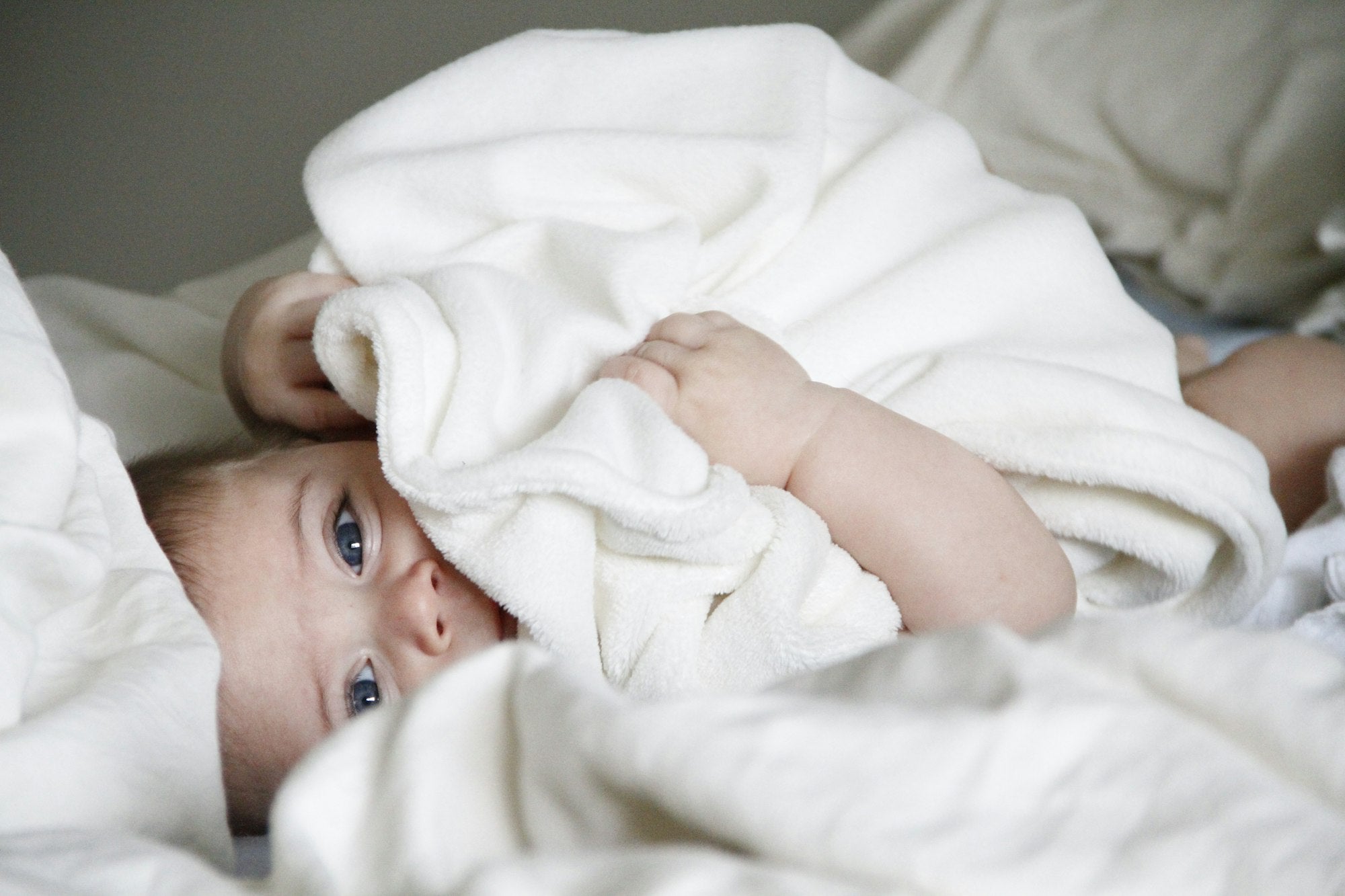
A well-maintained children’s mattress protector means a healthier bed, a longer-lasting mattress, and more restful nights. Because it comes into direct contact with your child’s skin and breath, we prioritize simple, natural materials that are easy to care for in everyday life. Here are our essential guidelines, designed to last without complicating your life.
Start by washing it once before use. This step softens the organic cotton fibers and removes any remaining impurities from the manufacturing process. Wash your mattress protector on its own or with light-colored laundry, using a moderate amount of detergent and no fabric softener. Harsh products saturate the fibers, reduce absorbency, and can irritate sensitive skin.
Between laundry sessions, make these habits part of your routine. Air out the bedroom and flip the bedding once a week to remove moisture that builds up overnight. Give the mattress protector a quick shake when you change the fitted sheet—this is enough to dislodge dust and microparticles. If you spot a small, localized stain, treat it immediately with a slightly damp sponge and mild soap, then rinse by dabbing gently. Avoid rubbing vigorously, as this causes the padding to “felt.”
The care instructions vary by model. Our waterproof versions, designed for everyday use, are machine-washable at 60 °C and should be air-dried. This applies to the waterproof children’s mattress protector, which combines organic cotton fleece with a thin, discreet, and breathable liquid-resistant barrier:
For toddlers, the waterproof baby mattress protector follows the same care instructions.
If you’ve chosen a non-waterproof 100% organic cotton diaper, care focuses on maintaining the fabric’s purity: washing at high temperatures up to 95 °C ensures a thorough clean, which is helpful for those with allergies or during potty training. Air-dry the diapers; they can be ironed on the cotton setting, but do not dry clean them.
A few simple habits can extend the product’s lifespan. Have a second one on hand so you can alternate between them and minimize wear and tear. During hot weather or cold season, wash them more frequently to keep them fresh and hygienic. Avoid using bleach on waterproof versions, as well as the dryer and ironing, which can damage the membrane. For 100% cotton models, follow the recommended temperature and use a mild detergent without optical brighteners or strong fragrances.
The rest comes down to daily care. A snugly fitted sheet reduces friction and protects the foam. A mattress that’s regularly aired out and flipped retains its shape longer. When traveling, fold the mattress protector flat into a fabric cover to keep it separate from your luggage. For stubborn stains, soak the mattress protector overnight in lukewarm water with a little Marseille soap rather than using a strong stain remover.
Finally, learn to recognize when it’s time to replace your mattress protector. If the fleece has thinned, if the surface is excessively pilling, if the waterproof membrane has lost its effectiveness, or if the odor persists despite thorough washing, it’s time to replace it. This will ensure your child continues to have a healthy, breathable, and comfortable sleeping surface.
To easily compare options based on your needs—whether you're looking for something waterproof to handle everyday mishaps or 100% cotton for a completely natural feel—check out the entire collection here.
Choose simplicity, clean materials, and gentle care—it’s the best way to ensure they sleep soundly.