

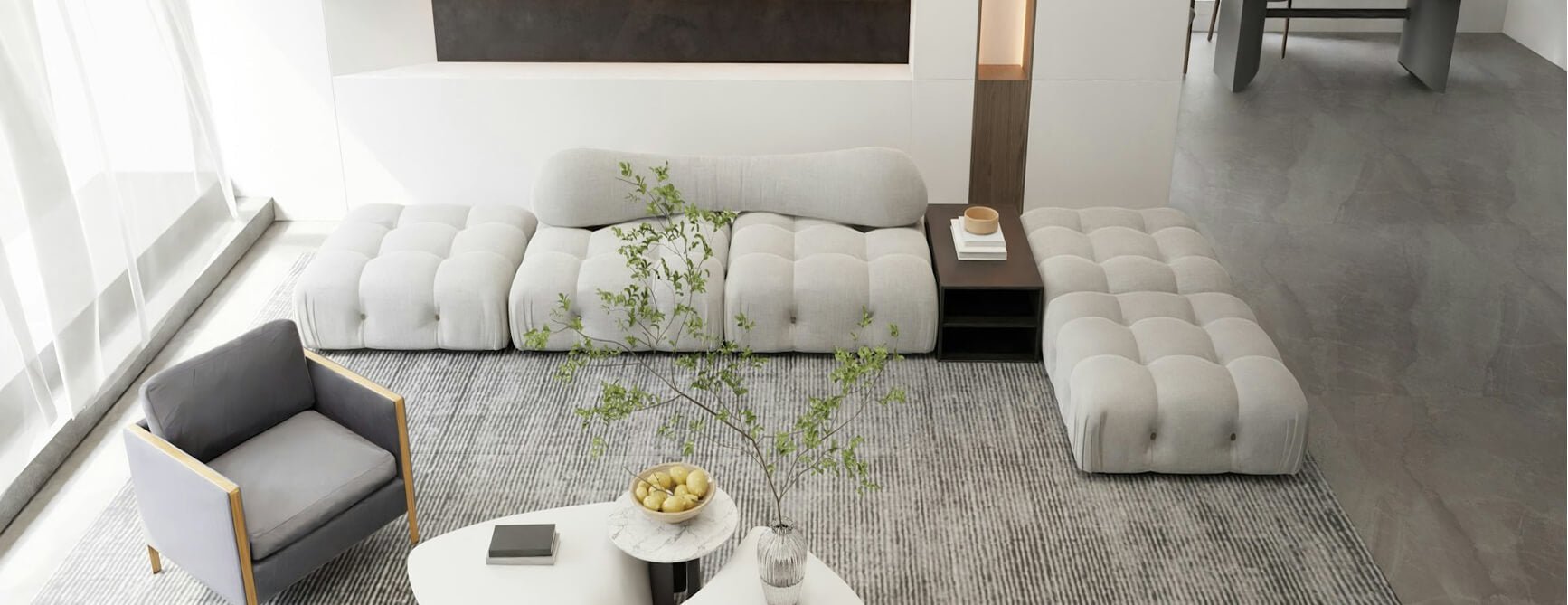
Since the 1920s, Scandinavian design has made its mark in both architecture and furniture design, particularly for its ability to offer simple, clean, functional, and airy lines. Born out of the research and work of several Danish designers—among whom Hans J. Wegner is frequently cited—this movement, which champions an ethical and moral philosophy rooted in nature, has taken over our living rooms thanks to one iconic piece of furniture: the Scandinavian sofa.
Long limited to a single sofa style—namely, the straight sofa—Scandinavian design is now available in every existing sofa style, much to the delight of those who want to enhance their interiors with something other than a two-seater or three-seater sofa.
We invite you to learn more about the characteristics and elements that contribute to the enduring success of the Scandinavian style.

What are the characteristics of the Scandinavian style?
The Scandinavian style is so consistent and cohesive that it is possible to draw general conclusions that apply equally well to building construction as they do to describing a coffee table, a bookshelf, or a sofa.
The core principles of Scandinavian design do indeed focus on pure functionality and, in the case of furniture, the absence of any parts that serve no practical purpose. However, the beauty of the design is not overlooked, as every line is carefully crafted to convey a simple yet always effective and striking beauty. This concept is particularly evident in Scandinavian sofas.
Focus on natural materials
For Scandinavian designers, it is important to provide direct physical contact with nature. That is why the material of choice for the frames of Scandinavian sofas is wood—preferably light-colored wood. The wood should therefore remain visible and not be hidden beneath the sofa’s upholstery or cushions.
Generally, the wooden base on which the sofa seat rests is perfectly straight and thick enough that it does not require metal reinforcements. Again, the wooden base is meant to be visible and is not hidden by fabric that falls from the seat all the way to the floor, which would weigh down the sofa’s aesthetic.
The legs of Scandinavian sofas also have a striking visual impact, contributing to the clean, light appearance of furniture from the Nordic countries. The legs are therefore also made of wood and are most often angled, sloping from the inside toward the outside. This angled positioning of the legs is a true hallmark of the Scandinavian style and the purity of its lines and curves.
When it comes to upholstery, a sustainable approach is essential, with a clear emphasis on natural fabrics and materials. As a result, cotton, linen, and velvet take center stage, offering comfortable and inviting seats and backrests.
The Pursuit of Brightness
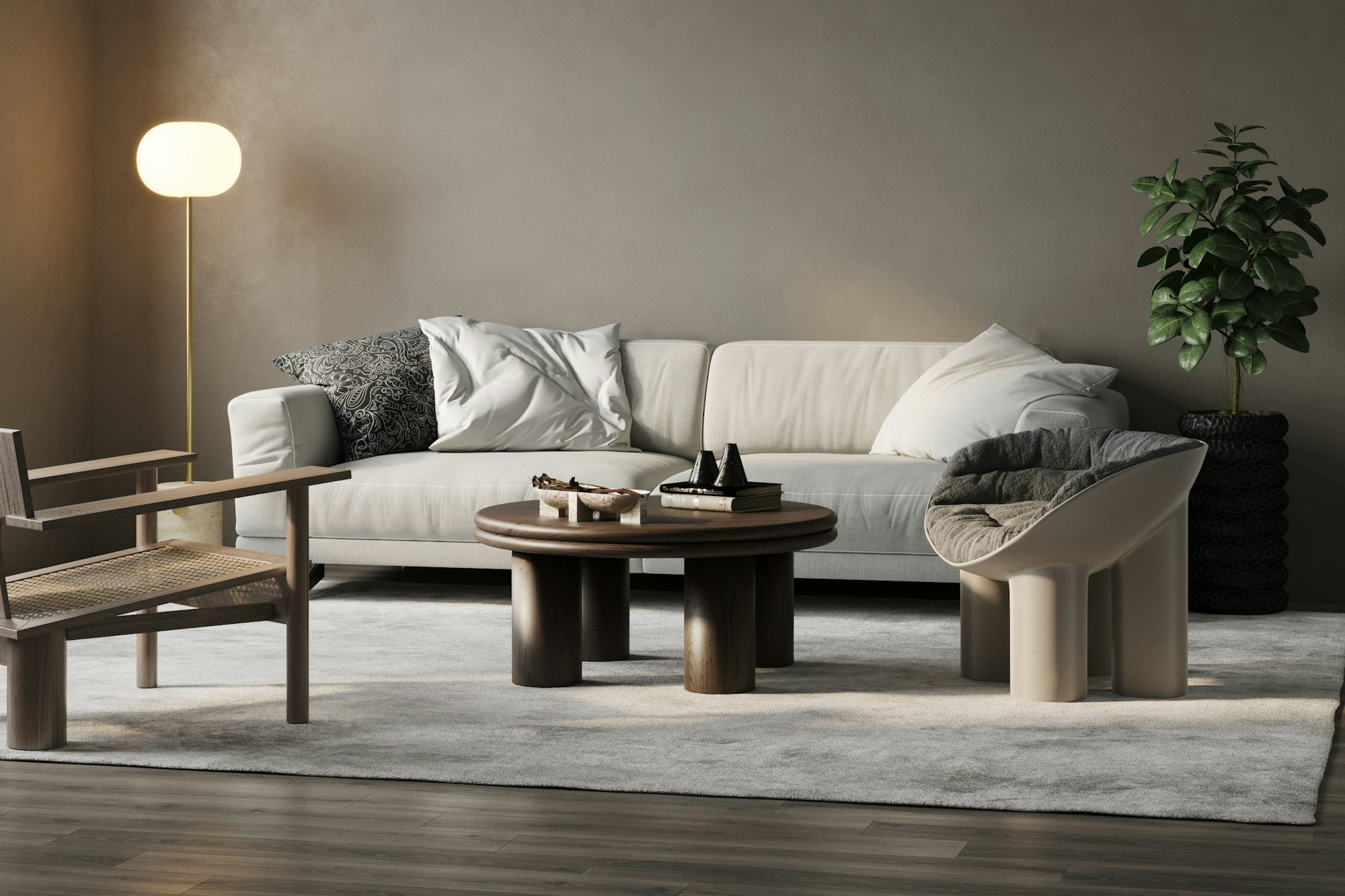
The Nordic origins of the Scandinavian style are also reflected in the choice of colors for both wood and finishes. The colors are generally light and are intended to bring brightness to the interior of homes. Indeed, the long winter months in northern Europe result in very short days, during which the hours of darkness outnumber the hours of daylight.
For a long time, the most common colors used to define a Scandinavian sofa were various shades of white, as well as beige and gray. Today, given the global success of these products, the color palette has become more diverse and includes darker shades to suit all kinds of interior design and furnishing preferences.
The 2-Seater Straight Sofa: The Origins of the Scandinavian Sofa
Of all the types of sofas, the 2- or 3-seater straight sofa is undoubtedly the most faithful embodiment of the spirit pioneered by furniture designer Hans J. Wegner when he designed his first sofas.
The straight Scandinavian sofa is deliberately minimalist and timeless, whether it has armrests or not, or comes with or without matching cushions. To meet modern needs, the straight Scandinavian sofa can be a sleeper sofa and convert into a guest bed, without undergoing any major aesthetic changes that might detract from its natural elegance.
For large families who need more seating, it's also possible to arrange two straight sofas facing each other.
Some straight Nordic sofas can also conceal a storage compartment, further enhancing their practical design. As we just mentioned, a wide range of colors is available, from traditional light shades to black, which offers a more luxurious look.
Why choose a Scandinavian corner sofa bed?
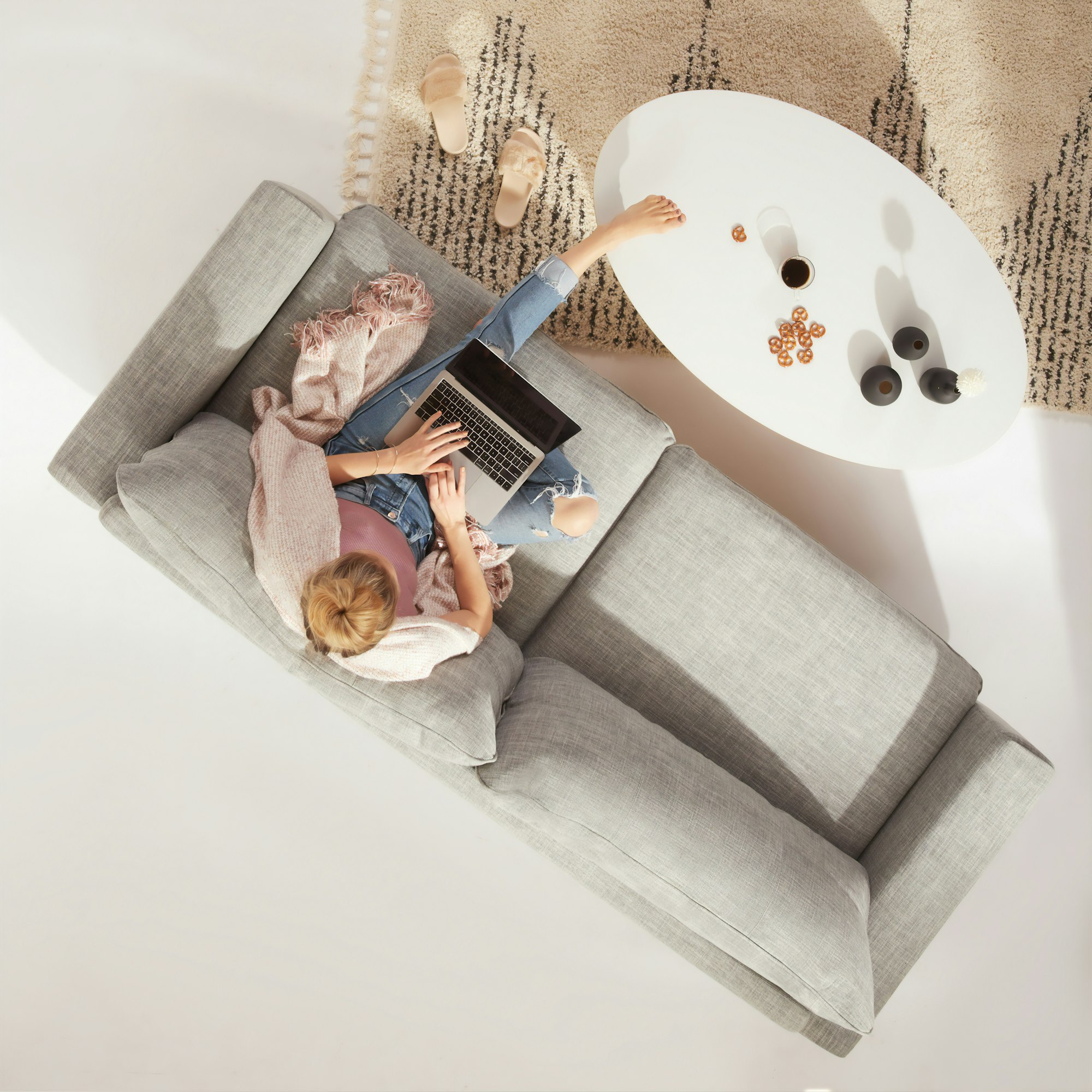
When you need plenty of seating, or when the layout of a living room lends itself to the placement of a corner sofa, you can still enjoy the clean lines of the Nordic style.
In fact, for many years now, it has been easy to find a Scandinavian corner sofa —whether it converts into a bed or not. Like any self-respecting Scandinavian sofa, the Scandinavian corner sofa remains an elegant piece of furniture, resting on slanted wooden legs that give it that inimitable air of lightness. Since corner sofas are often large and imposing, it can be a good idea to take advantage of the distinctive features of Scandinavian design to significantly lighten their presence in the living room.
Practicality is definitely a key feature, with a large storage compartment located under the end section of the sofa seat on most models. In the case of a convertible sofa, this compartment is ideal for storing pillows and comforters when the sofa is folded or closed, depending on the type of opening mechanism. We recommend choosing a sleeper sofa model that features a full-size mattress housed in a sliding drawer. This way, the mattress won’t wear out prematurely, since it isn’t used as a seat when the sofa is in its standard seating position.
Natural materials are always in style, with a strong preference for cotton or linen upholstery and natural latex as the filling material.
A corner sofa also lets you make the most of the available space in a living room. In a small space, it helps optimize the area by fitting into a corner without cluttering the room, while still providing plenty of seating. In a large living room, it can be placed in the center of the room, facing a wall, to define the space by separating the living area from the dining area.
Check out our other types of sofas:
3-Seater Sofas - 4-Seater Sofas - Solid Wood Sofas - Modular Sofas - Corner Sofas - Brown Sofas - Green Sofas
We recommend these other pages: