

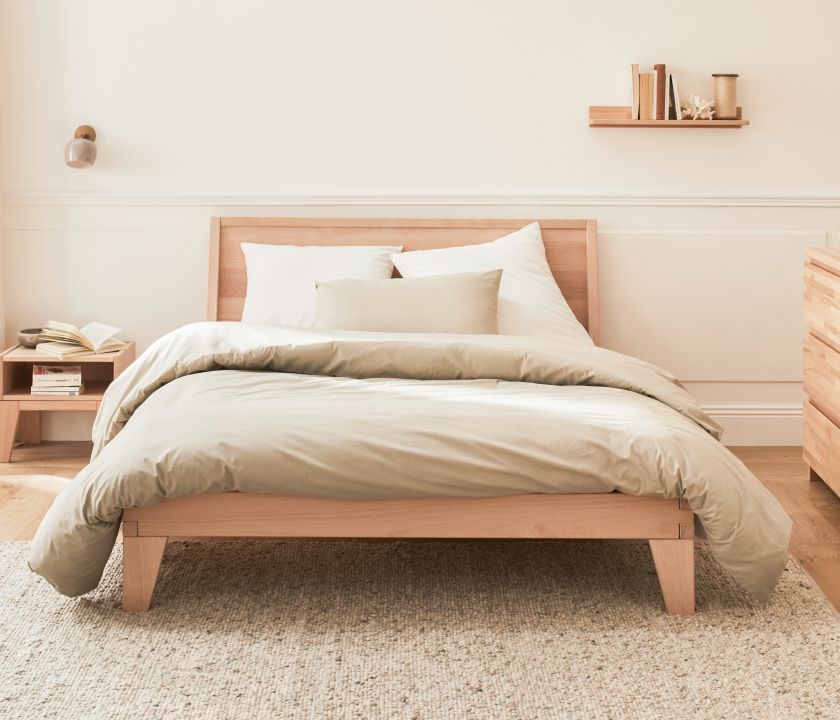
While there is now a wide selection of beds that are out of the ordinary (such as beds mounted on suspension systems or box springs placed directly on the floor within a wooden frame, for example), most beds still have legs or a frame on which the mattress and box spring rest .
This raises the following question: What height should you choose to ensure your bed is practical, comfortable, and attractive? While there are certainly a few rules and tips to keep in mind, you’re actually completely free to decide on the height that’s right for you! Here are a few tips to help you determine the most important factors, so you’ll feel perfectly comfortable when getting into bed, getting out of bed, and while you sleep.
What are the standard heights for bed frame legs?
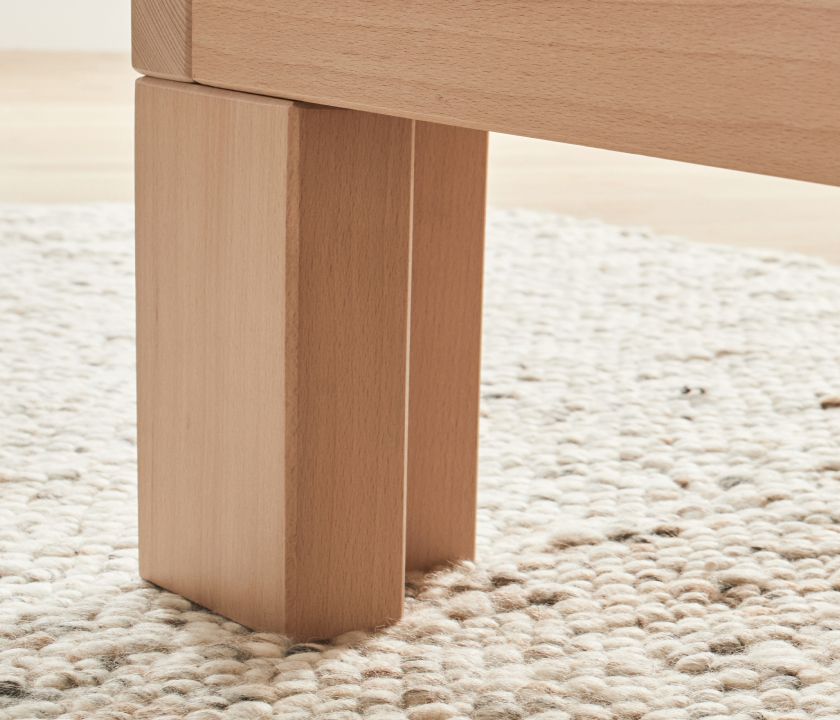
If you want a bed of standard height, you’ll need to choose legs that are about 15 centimeters high. With a standard mattress and box spring, this will place you between 50 and 55 cm above the floor when you’re lying down. This height is ideal for people of average height, who will then be able to get in and out of bed easily.
The same goes for children's beds: with a slatted bed frame (lower than an upholstered bed frame) and a mattress that is thinner than an adult's, children with feet about 15 cm long can easily get in and out of bed.
This space of about 15 centimeters between the box spring and the floor allows for proper ventilation of the bedding. This prevents the buildup of moisture, which can result from perspiration or the room's humidity level.
What factors influence the choice of height?
While there is a standard bed size, it is also possible to choose larger or smaller sizes to suit a variety of needs. Here are the different factors to consider to ensure optimal sleeping comfort.
Bedding Sizes
Have you chosen a particularly thick box spring or, on the contrary, an extra-thin one? Do you prefer a latex mattress that’s about 25 cm thick to a thin foam mattress? In that case, you’ll need to adjust the height of the legs based on the total thickness of your bedding (not to be confused with the density or firmness of the bedding) to achieve an overall height of 50 to 55 cm. That’s why it’s important not to choose the box spring, mattress, and bed legs separately.
Ceiling height
The layout of the room can also influence the height of the bed legs you should choose. In a converted attic, for example—which often has sloped ceilings and low headroom—it’s best to have a bed that isn’t very high. It’s therefore not uncommon to have to opt for bed legs that are 10 cm or shorter in this case.
On the contrary, in a house with high ceilings and a spacious bedroom, it might be a good idea to choose taller legs. This will showcase the bed, especially if it’s made from high-quality materials. But be careful not to end up “perched” on your mattress—and don’t let the decorative aspect take precedence over your comfort at all costs!
The size of the sleepers
The average height of 50 to 55 cm is suitable for a person of "average" height. However, if you are taller than 1.90 meters or shorter than 1.50 meters, this may not be the right fit. In that case, you can find shorter legs (starting at 7 cm) or longer ones (up to about 30 cm), depending on your height.
The classic way to determine the right height for you is to sit on your bed with your legs at a right angle. The soles of your feet should touch the floor.
Unfortunately, for couples with a significant height difference, there is no magic solution for adjusting the bed's height to suit each person.
Storage Capacity
The layout of the bedroom and its size may also lead you to choose a bed with taller legs. Why? Because when you have limited storage space in the room, the space under the bed can serve as makeshift storage for clothes, toys, comforters, books, shoes, and more. With about 30 centimeters of space under the bed frame, it’s easy to install rolling bins, baskets, or drawers to create storage space. Some wooden-frame bed frames are even designed to accommodate these types of storage solutions.
The bed's design
The current trend in bedding design features models that are either very low (or even placed directly on the floor) or relatively high. So the height of the legs can simply depend on your personal preferences and the style you want to create for your sleeping area!
However, keep in mind that you need to leave at least a few centimeters of space under the bed frame for ventilation. In addition, if you want to create a raised bed, you’ll need to buy high-quality, stylish legs that blend perfectly with the bedroom’s decor. These legs will really stand out, whereas low legs are almost invisible.
What about adjustable bed legs?
So far, we’ve discussed fixed bed base legs. But did you know there are also height-adjustable options? This can be especially useful for children’s and teens’ beds: as they grow, you can raise the bed with just a few turns of a screw if needed! And despite what you might think, the price remains quite reasonable if you opt for a mid-range product line, with options available between 30 and 60 euros for a set of four legs.
Adjustable bed legs are also useful for creating a slight incline in the bed. Whether you want to improve blood circulation while you sleep by raising your legs or you’re a fan of inclined bed therapy, adjustable legs allow you to create a height difference between the head of the bed and the foot of the bed. You’re then free to customize your sleeping surface to suit your needs, without creating too steep of an incline (less than 6°).
This method is undoubtedly more effective than the "pillow under the feet" method, and more practical and aesthetically pleasing than adding books or wedges under the legs of the bed frame!
We recommend these other pages:
- Which bed slats should you choose?
- Which box spring should you choose for a latex mattress?
- Which box spring should you choose for a foam mattress?
- Which bed frame should you choose for a pocket-spring mattress?
- What kind of mattress should you choose for an electric bed?
- What kind of mattress should you choose for a storage bed?
- What kind of mattress should you choose for a slatted bed frame?
- What type of mattress should you choose for a slatted bed frame?
- What kind of mattress should you choose for a box spring?
- Which bed frame should you choose for a spring mattress?