

Night sweats can turn your nights into a nightmare, disrupting your sleep and affecting your daily well-being. Whether they’re caused by hormonal changes, medical conditions, or simply the summer heat, it’s crucial to understand their causes and find effective solutions to get back to a peaceful night’s sleep. In this article, we’ll explain the possible reasons behind these nighttime discomforts and offer tips for combating them, so you can finally enjoy restful nights.
How can you tell if you're experiencing night sweats?
Night sweats—episodes of excessive sweating during sleep—occur when you wake up to find that your clothes or sheets are damp or even soaked, despite a normal room temperature. This phenomenon can be intense enough to disrupt your sleep, sometimes requiring you to change your pajamas or bedding to regain comfort and fall back asleep.But why do you get hot at night?
Night sweats can be caused by several factors. Among the most common are hormonal changes, particularly in women going through menopause or perimenopause. Both men and women can also experience night sweats due to medical conditions such as:- hyperthyroidism,
- diabetes,
- or infections.
In addition, certain medications and lifestyle habits—such as drinking alcohol or eating spicy foods before bedtime—can also cause these discomforts.
And of course, hot nights are quite common in the summer, but to ensure a good night’s sleep, we have a few tips for you. Add a link to the article “Sleeping Well in the Summer.”
In women
In women, hormonal fluctuations associated with menopause are a common cause of hot flashes. These symptoms can begin several years before menopause itself, during the phase known as perimenopause, and can continue for several years afterward.
There is also a condition that is more common in women than in men: restless legs syndrome. It is a condition characterized by a feeling of discomfort in the lower limbs, often accompanied by an irresistible urge to move your legs. People with this condition frequently experience night sweats due to the constant movement of their legs.
Of course, we recommend that you contact your primary care physician for more information!
In men
Although less common, men are not immune to this phenomenon. Causes in men may include hormonal imbalances, such as a drop in testosterone, or underlying health issues. Stress and anxiety can also play a significant role.
For men, one of the conditions responsible for night sweats may be sleep apnea. This condition can, of course, affect both men and women, but it is more common among men. Those affected may have difficulty regulating their body temperature due to the extra effort required to breathe. We encourage you, of course, to consult your doctor to learn more!
What are the consequences of nighttime heat waves?
Night sweats aren't just uncomfortable—they can also have a negative impact on sleep quality. A night interrupted by frequent awakenings can lead to daytime fatigue, reduce concentration, and affect mood. In the long term, disrupted sleep can have serious consequences for overall health, including an increased risk of chronic diseases.
Our Solutions for Night Sweats
Solution #1: Choose the right bedding
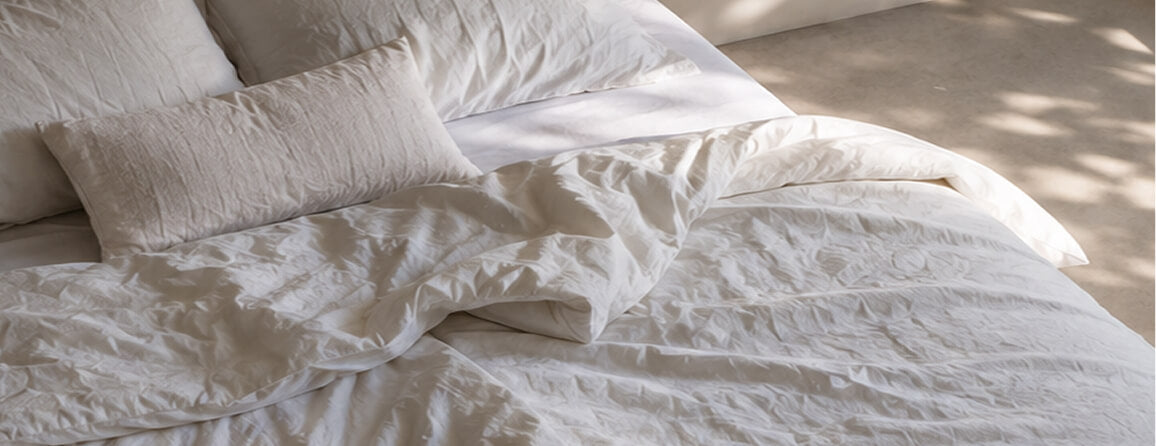
Choosing the right bedding is crucial for counteracting the effects of nighttime heat. The key is to opt for breathable materials.
When it comes to your bedding essentials, natural latex mattresses and pillows are the most effective choice. This material is naturally very breathable and helps regulate your body temperature throughout the night. As for the comforter, you should, of course, choose natural materials, but you’ll also need to select a comforter that’s appropriate for the season. You can choose one comforter for summer nights and another for winter, or opt for brands like Kipli that offer comforters suitable for both seasons.
And of course, your bedding is key! The lightest materials are the most effective at preventing night sweats. Hemp andlinen will be your best friends. When shopping, look for natural materials free of synthetic fibers and chemical treatments. Your body will thank you!
Solution #2: Air out your bedroom in the morning or before going to sleep
Proper ventilation is essential. Be sure to air out your bedroom daily to refresh the air and lower the room temperature, thereby creating an environment more conducive to sleep.
Solution #3: Maintain an appropriate temperature
The ideal temperature for sleeping is generally between 18 and 22 degrees Celsius. Check out our guide to setting your heating to the optimal level at night.
Solution #4: Eat a light dinner
Eating a light meal before bed can help prevent feeling hot at night due to digestion. Discover nutritional tips on how a light meal can improve your sleep.
When should you seek medical attention for night sweats?
It is important to consult a healthcare professional if you experience frequent night sweats that significantly disrupt your sleep. They may be a sign of medical conditions that require attention.