

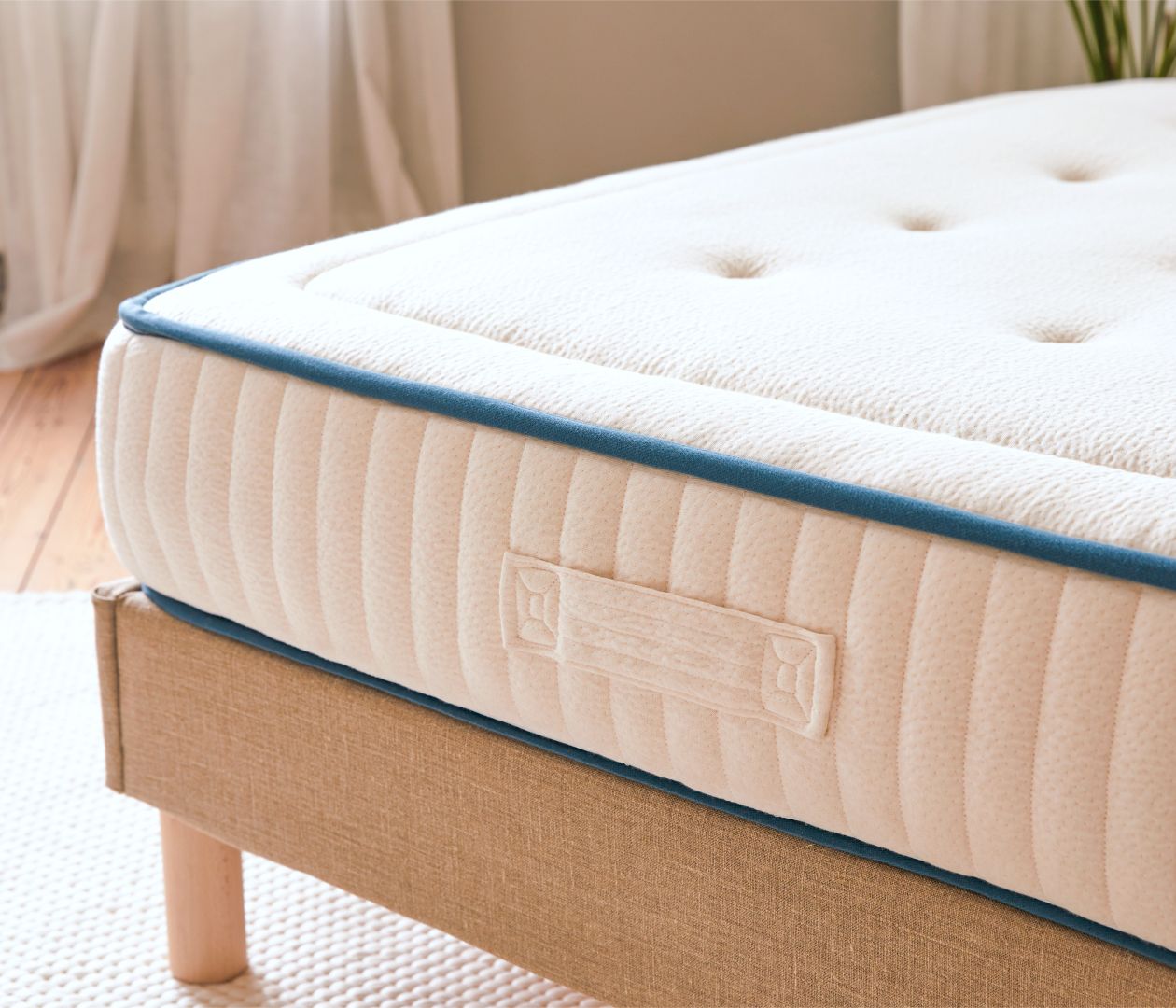
When choosing a mattress, there are many factors to consider. The thickness of the mattress, its firmness level, and the type of filling can all affect the quality of your sleep. It is therefore important to compare different types of mattresses to make the best choice.
So, how can you tell the difference between a latex mattress and a pocket-spring mattress? What are the characteristics of natural latex and synthetic latex? Which support technology should you choose for a good night’s sleep? We invite you to discover the pros and cons of synthetic latex, natural latex, and pocket-spring mattresses. This will help you decide whether to choose a latex mattress or a spring mattress.

The Pocket Spring Mattress: An Innovative Technology
The pocket-spring mattress is a type of mattress that has come a long way from traditional spring mattresses. Thanks to new pocket-spring technology, it offers a good level of firmness.
Introduction to the Pocket Spring Mattress
Along with biconical springs and multi-coil springs, pocket springs are among the latest suspension technologies available in spring mattresses. Pocket springs are therefore a suspension technology in their own right that offers numerous advantages.
In a pocket-spring mattress, each spring is, literally, enclosed in its own individual pocket. Each spring is therefore isolated and protected within a sort of fabricsleeve. This means that a spring mattress is made up of a very large number of these pouches. In fact, the number of springs can affect the price of a spring mattress. It is generally estimated that a mattress must contain at least 500 springs to be considered a high-quality mattress.
Features of this type of mattress
Pocket-spring mattresses offer more firmness than traditional foam mattresses, such as memory foam or polyurethane foam mattresses. This level of firmness increases with the number of springs. Thus, the more springs a mattress has, the firmer it will be. You can consult a bedding specialist to find the mattress that best suits your body type and needs.
Among the other benefits of pocket-spring mattresses are their temperature-regulating properties. Unlike foam or synthetic latex mattresses, pocket-spring mattresses promote air circulation. This keeps the mattress well-ventilated, providing true sleeping comfort.
A Closer Look at Synthetic Latex Mattresses
Among all the mattress models available on the market, the synthetic latex mattress is made from a blend of natural and synthetic materials. We’ll look at the proportions of these materials before going into detail about its main features.
How can you tell the difference between a synthetic latex mattress and a natural latex mattress?
Synthetic latex mattresses and natural latex mattresses are two very different products. But to tell them apart, you have to carefully examine the labels. A natural latex mattress is one made up ofat least 85% natural latex. Only in this case may the product be labeled as a 100% natural mattress. In all other cases, the mattress is made from synthetic materials. By manipulating the proportions or failing to be completely transparent, some brands attempt to mislead consumers at the time of purchase.
How can you tell if a mattress is made of synthetic latex?
Synthetic latex mattresses are a type of foam mattress, just like memory foam mattresses, polyurethane foam mattresses, and so on. As such, they tend to sag over time. They are therefore less durable, and sleepers will need to replace them more frequently to maintain a good quality of sleep.
In addition, it is less firm than a mattress made with pocket springs. Since firmness and density are closely related, the lower a mattress’s density, the softer it will be. Conversely, to have a firm mattress, its density must be high.
Furthermore, compared to natural latex, synthetic latex is less breathable. This means that the mattress will not wick away moisture as effectively as a natural latex mattress. People who sweat at night should avoid choosing this model. Similarly, this type of mattress is not suitable for damp rooms.
Finally, since we are dealing with a synthetic material, it is important to note that a synthetic latex mattress is a product made from petrochemical-based components. Chemicals were therefore used in the manufacture of this line of mattresses.
The Unique Features of Natural Latex Mattresses
If you need guidance in choosing your next mattress, we invite you to learn more about the unique features of natural latex mattresses. As a reminder, these mattresses are made of at least 85% natural latex.
Natural Latex as a Response to a New Trend
100% natural latex, just like wool or organic cotton, is one of the natural materials that are healthy and safe for your health. In fact, in recent years, there has been a growing public awareness not only of global warming but also of the effects of various pollutants on health. Whether visible or invisible, these pollutants cause hormonal imbalances, cancer, allergies, and more.
For all these reasons, a complete line of natural mattresses has been created by brands committed to protecting the environment and people’s health. In addition to their natural composition, these types of mattresses also offer the ideal balance of support and comfort.
The Benefits of a Natural Latex Mattress
The strengths of a natural latex mattress lie in its filling, its comfort zones, and the quality of its support.
Natural latex mattresses do not need to be treated with chemicals, as latex is a naturally antibacterial and anti-mite material. In addition, it is a highly breathable material. This natural ventilation eliminates the risk of bacterial growth.
The natural latex mattress is also designed with multiple comfort zones. These comfort zones are tailored to the different pressure points where the body comes into contact with the mattress. As a result, the head, shoulders, lower back, and legs do not exert the same amount of pressure on the mattress. These pressure points are essential for sleepers with back problems. In fact, they provide effective support for the spine throughout the night.
The final key benefit of natural latex mattresses that we’d like to mention is their lifespan. Memory foam and polyurethane foam mattresses sag quickly and have a lifespan of five years. As for pocket-spring mattresses, their lifespan is generally between nine and ten years. Finally, natural latex mattresses offer a lifespan of fifteen years.
In short, mattress thickness, filling, size, lifespan, firmness level, and support quality—there are many factors to consider when choosing a mattress. But to make the right choice, ask yourself just one question: Do you want to sleep every night on a product made from harmful materials? If you want to lie down and fall asleep on a mattress that’s as good for you as it is for the planet, choose a natural latex mattress.