

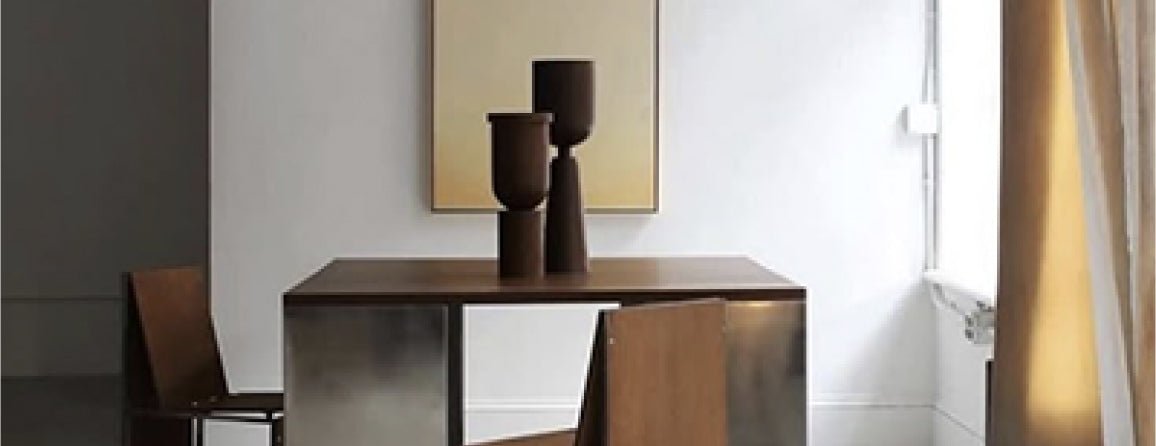
In an era when the interior has become more than just a refuge—a mirror of our sensibilities, an extension of our intuitions—art on the wall no longer serves merely a decorative purpose. It contributes to a sense of rhythm—a subtle balance between forms, materials, empty spaces, and solid elements. Hanging a piece of art means choosing a pulse within the composition of the space. A breath in the silence.
Forget the "frame in the middle"
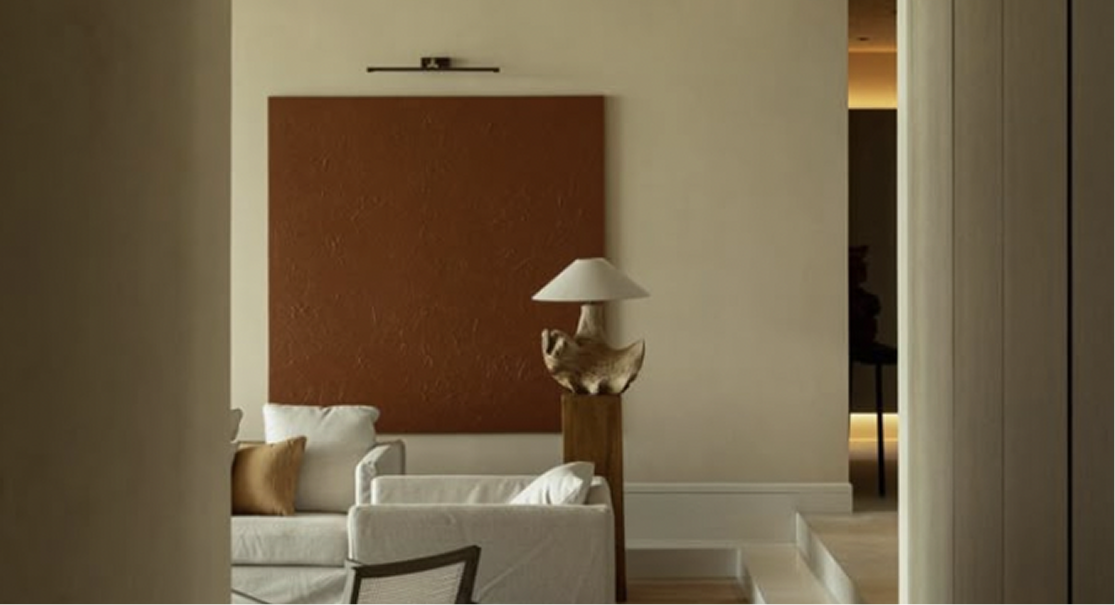
There was a time when every painting was centered above the sofa, hung at eye level, perfectly balanced. Today, the rules are shifting. They’re becoming more flexible. In contemporary interiors, artworks no longer merely serve as decoration: they interact with the furniture, natural light, and the flow of air. They move off-center, align with the floor, and find their place in corners. And sometimes, they aren’t even hung on the wall anymore.
This movement isn’t just a stylistic choice, but a desire to let things breathe in a different way. To step outside the box—literally. A large drawing leaning against the wall becomes a manifesto of gentleness. A framed photo casually resting on a console table creates a calm, almost cinematic tension. These choices tell a different story: one of the art of movement, of experimentation, of fluidity.
🪑 What if the sofa became the starting point for this design?A low, plush sofa with clean lines—like the ones we create at Kipli—invites you to rethink heights. It opens up the view, broadens perspectives, and lets you play with the walls as you would with a blank canvas.
Baselines, friezes, and rhythms
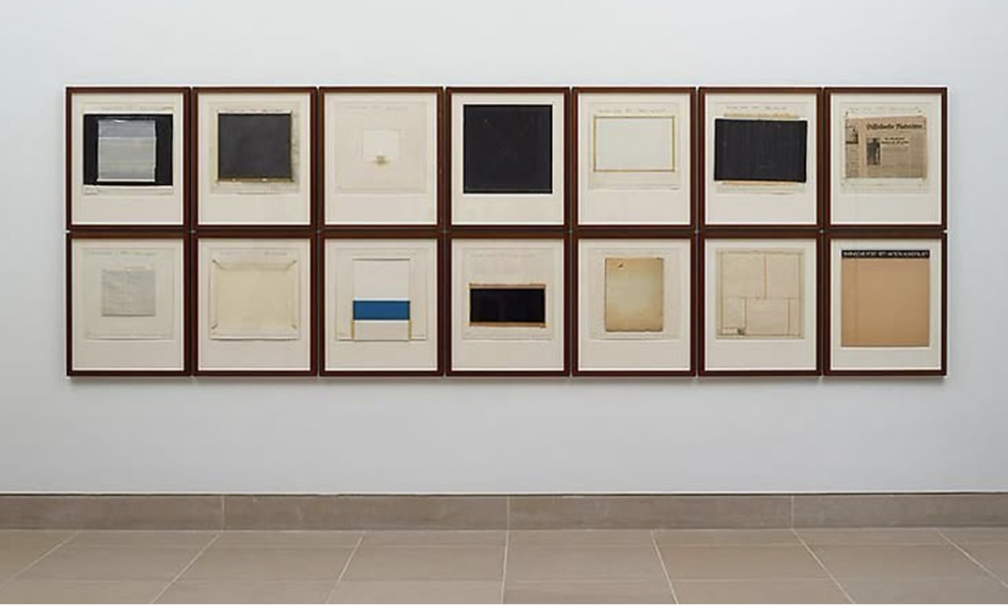
When you want to hang several pieces of art together, it’s all about rhythm. The simplest—and most effective—tip is to choose a fixed baseline, about 1 meter above the floor, along which the frames will be aligned. Their sizes don’t matter; what counts is horizontal consistency. The result is a contemporary, almost musical frieze—like notes on a staff.
The spacing between the works should remain tight: 2 to 3 centimeters is enough to create a dense, confident visual effect without feeling overwhelming. More than just paintings, what we’re creating here is a sequence, a narrative—a succession of moments.
This method works particularly well above a bench, in a hallway, or on a slightly bare section of wall. And it pairs perfectly with natural materials, muted tones, and understated lines.
📏 Reading tip: Keep your seating position in mind. A work that’s at eye level when you’re standing isn’t at eye level when you’re curled up on a couch. Lowering the display then becomes a thoughtful, almost intimate gesture that reflects how the room is actually used.
The Power of the Soil

Sometimes, a piece of art doesn’t need to be hung. Simply placing it on the floor can be enough to give it presence and create a strong sense of grounding. An oversized canvas, a framed poster, or even a lightweight sculpture can thus become powerful focal points—without the need for drilling or any complexity.
This choice works especially well in serene interiors, where the space is thoughtfully designed: a textured rug, a low solid-wood piece of furniture, a houseplant, an armchair upholstered in raw fabric. The result is a balance between the stable and the ephemeral, between action and contemplation.
🌿 At Kipli, sofas are designed to last, but also to adapt. Their solid wood frame, deep seating, and palette of natural tones help create a serene atmosphere that lends itself to this type of display: the artwork doesn’t dominate; it engages in a dialogue.
Frames, Materials, and Reflections

Choosing the right frame is just as important as choosing the artwork itself. It’s not just a matter of decoration; it’s an interface between art and space. A dark wooden frame can complement a walnut coffee table. A floating frame, with no visible edges, creates a sense of lightness, as if the image were floating a few millimeters away from the wall.
Always opt for matte finishes.Glossy glass creates distracting reflections, especially near a window or a lamp. Anti-reflective glass—or a frame without glass (for non-fragile works)—creates a softer, more immersive effect.
And why not mix materials? Combine slim black frames, natural wood, and wide or unfinished mats to create a cohesive interplay of textures. Like a wall of stories, where each piece has its own highlight but never overshadows the whole.
Let the void do its work
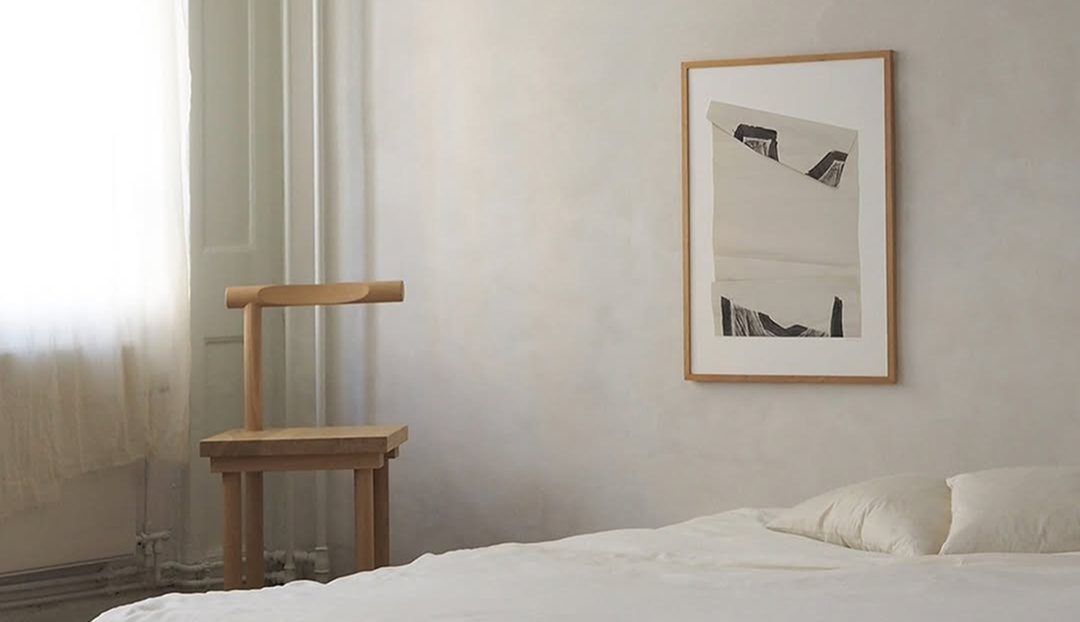
Hanging a piece of art also means knowing what you choose not to hang. Leaving empty space around a painting, not centering it, creating a slight asymmetrical tension—all of this contributes to showcasing the artwork. The eye needs spaces to rest. Just as in a musical score, silence is sometimes more expressive than a note.
A bare wall in a minimalist room can showcase a single striking piece of art. A drawing with delicate lines, hung at eye level in a somewhat overlooked corner, is sometimes enough to change the rhythm of a day.
🛋 This appreciation for silence and simple gestures is also reflected in the way we design seating at Kipli. Comfort isn’t something you shout about—it’s something you experience. Aesthetics aren’t something you impose—they’re something you let sink in.
In Conclusion — An Invitation to Slow Down Your Gaze
Hanging art on the wall isn’t a technical exercise. It’s an act of attention. A way to direct the gaze, to guide it, to invite it to slow down. We don’t just fill a wall; we give it room to breathe. A gentle rhythm, in harmony with the other elements in the room.
In this silent interplay between the furniture, the artwork, and the light, a whole philosophy of living takes shape. It’s a way of inhabiting the world mindfully—of surrounding oneself with actions that endure and bring peace—and of creating a place to truly live.