


There’s something deeply instinctive about placing your hand on the back of your sleeping baby’s neck. Without really thinking about it, you’re trying to feel whether the baby is too hot or too cold—whether this room, this cozy little nest you’ve carefully set up, really does keep the baby warm.
An infant's sleep is delicate and precious. And among all the factors that influence it, room temperature is one of the easiest to control—and yet one of the most often overlooked.
What is the ideal temperature for a baby's room?
Pediatricians and health authorities agree on this point: the ideal temperature for a baby’s room is between 18 and 20 °C. This range is not arbitrary.
It takes into account a fundamental physiological fact: during the first few months of life, a baby cannot yet regulate its body temperature on its own. Unlike an adult, who sweats or shivers to adapt, an infant passively endures changes in its environment. It is therefore up to us, as parents, to create conditions in which the baby’s body can rest without having to exert itself to regulate its temperature.
A room above 22 °C puts the baby at risk of overheating, which disrupts sleep. Below 16 °C, your baby may have trouble maintaining body heat, even when well-covered. Between 18 and 20 °C, you’re in the right range.
The First Few Months: A Time for Extra Caution
During the first few weeks, a baby’s sensitivity to temperature changes is at its peak. Their autonomic nervous system, which is still immature, has difficulty coping with sudden fluctuations. A draft, a radiator blowing too strongly, a window left open at night—any one of these factors can be enough to disrupt a sleep cycle.
It is during this time that maintaining a stable temperature in your baby’s room truly becomes a priority. Not an obsession, but something to pay regular attention to—just like ventilation or keeping the space clean.
How can you tell if the room temperature is right?
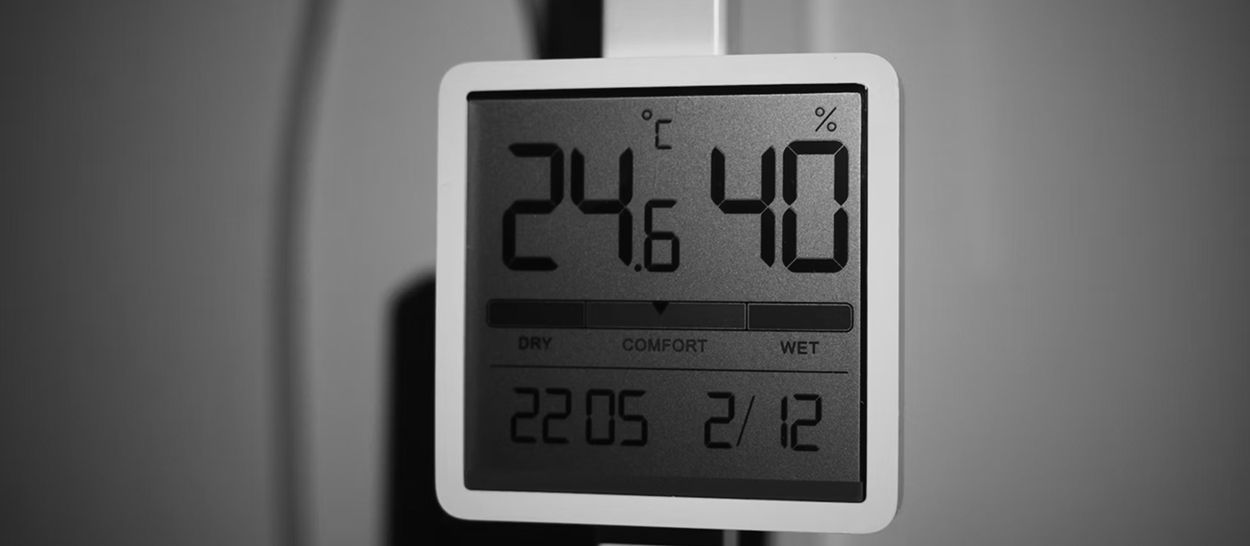
A room thermometer placed at bed level, away from windows, radiators, and drafts, will give you a reliable reading of the actual temperature in the room. It’s a simple, inexpensive tool—and much more accurate than our own perceptions.
Signs That Your Baby Is Too Hot
- A sweaty or damp neck is the most reliable sign of overheating
- The skin is red and feels warm to the touch
- Sleep is restless, with frequent and unexplained awakenings
- Small beads of sweat appear on the neck or scalp
Signs That Your Baby Is Too Cold
- The back of my neck feels cool to the touch
- The skin takes on a pale or slightly mottled appearance
- The baby seems less energetic and less responsive than usual
An important tip: Always place your hand on the back of the neck or the chest—never on the extremities. An infant’s hands and feet are almost always colder than the rest of the body; this is completely normal and is not a reliable indicator of the infant’s overall temperature.
Maintaining a Stable Temperature: Practical Steps
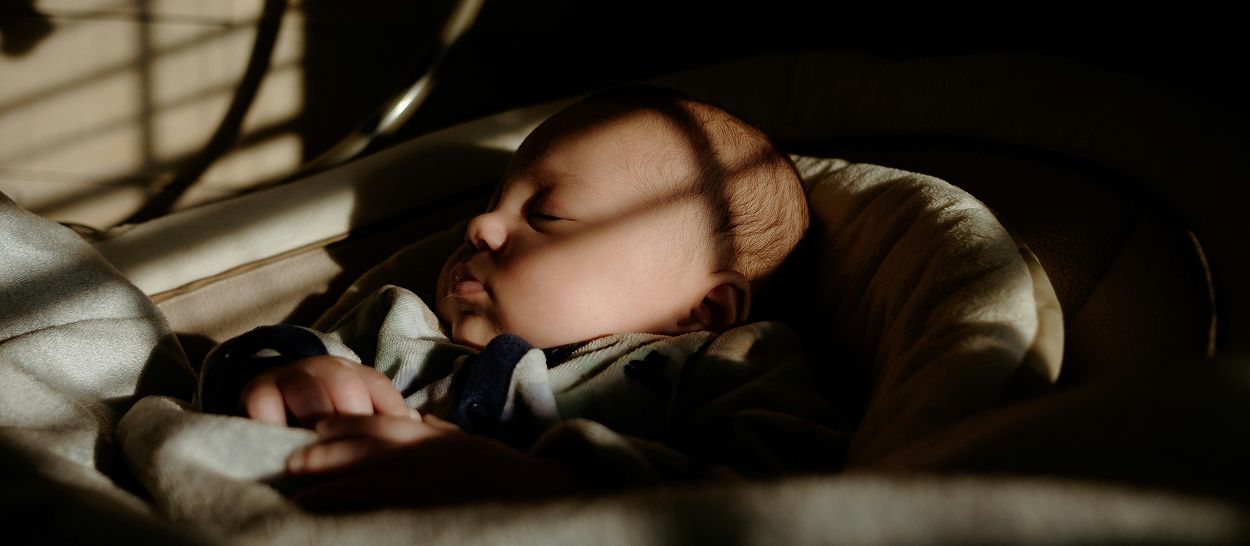
Air out the room for 10 to 15 minutes each day —that’s enough to refresh the air, reduce humidity, and prevent the buildup of allergens. It’s best to do this when your baby is in another room, and be sure to close the window before bringing your baby back in.
If the room temperature is within the proper range, a season-appropriate sleep sack is more than enough. Sleep sacks are rated using a TOG rating: 1 TOG for temperate environments, 2.5 TOG for winter. Choose natural, breathable materials—especially organic cotton—which allow body heat to escape naturally without creating a stuffy environment.
The temperature in the bedroom can drop by 2 to 4 °C between 11 p.m. and 5 a.m., even with central heating. A thermostat that maintains a minimum temperature throughout the night can make a real difference.
Finally, the location of the bed matters more than you might think. Whether it’s directly under a window, against a cold exterior wall, or right next to a radiator, the bed is exposed to slight temperature fluctuations that disrupt sleep without us even realizing it.
Common Mistakes to Avoid
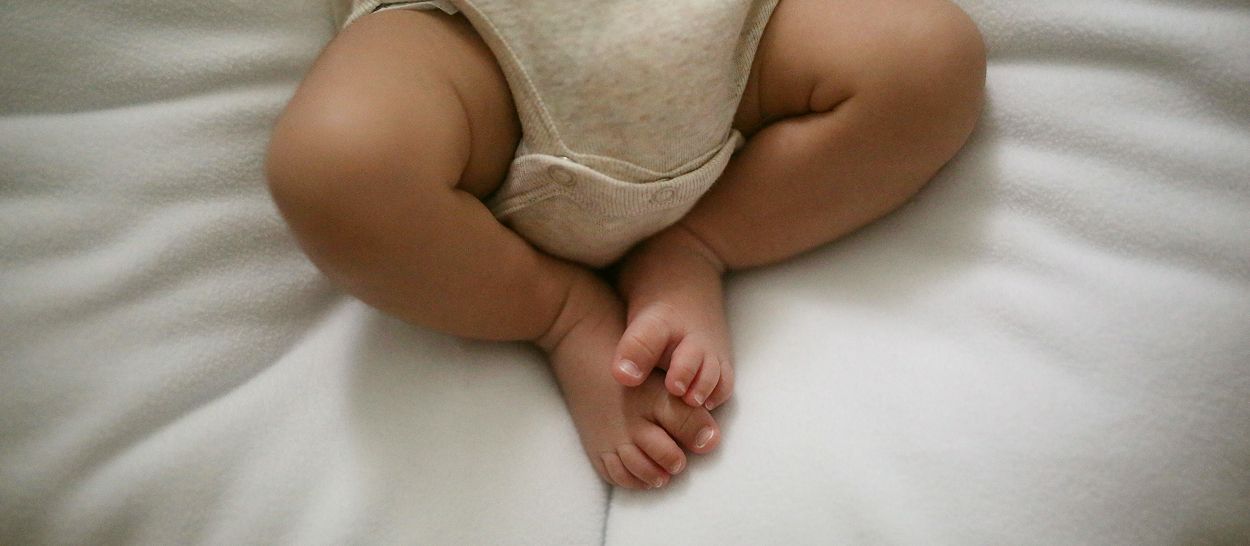
The most common mistake is to instinctively swaddle the baby too much, especially during the first few months. Many parents instinctively associate protection with warmth. But if the room temperature is right, the baby doesn’t need to be swaddled. A baby who is too warm sleeps poorly, sweats, and may become irritable in ways that are hard to interpret.
Not having a thermometer in the room is another mistake that’s easy to fix. You can’t maintain the right temperature without measuring it—it’s as simple as that.
Some parents try to compensate for a room that's too cool by dressing their child in extra layers. This is understandable, but the right approach is to address the source of the problem—heating and insulation—rather than piling on layers, which creates a different kind of discomfort without solving the underlying issue.
One last point that’s often overlooked: seasonal changes. A room that’s perfectly temperate in March can become stifling in July. Adjust your habits with each season, keeping a thermometer handy.
Materials and Bedding: How Babies Feel When They Come into Contact With Them
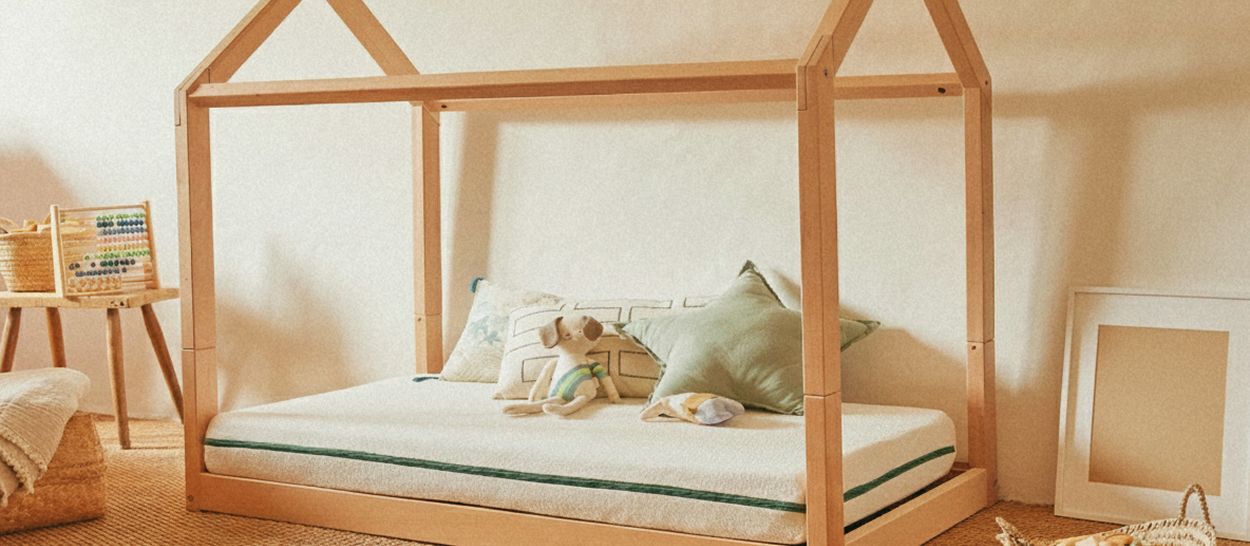
The temperature of the room is one thing. The quality of the materials surrounding the baby is another—and just as important.
A mattress with filling that traps heat and moisture can create a much warmer environment in certain areas than the room temperature would suggest. Conversely, a mattress made of natural latex —a material with a naturally thermoregulatory cellular structure—promotes air circulation beneath the child’s body and prevents heat from building up against their skin.
The same principle applies to fabrics: organic cotton, natural linen, and chemically untreated merino wool. These materials breathe, regulate, and adapt to the baby’s body temperature without interfering with it. They are healthy materials in the truest sense of the word: they don’t disrupt; they adapt.
What We've Come Up With for the Baby
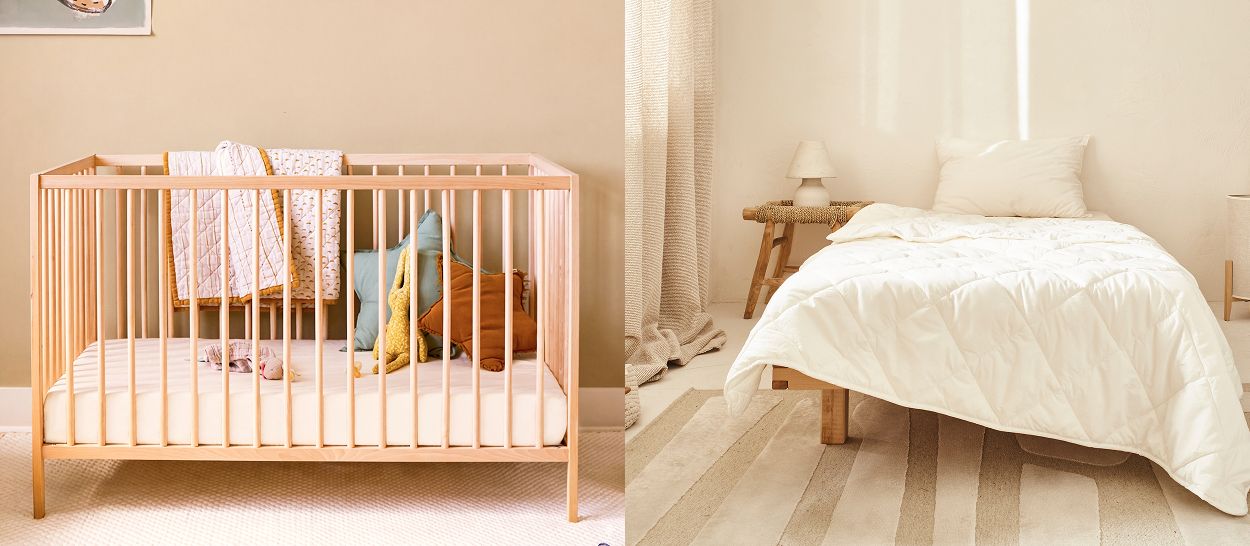
We have been manufacturing natural bedding since 2018. As we expand our baby line, we started with the same principle that guides our entire approach: the materials surrounding a child while they sleep should not cause any disturbance. They must adapt, breathe, and regulate.
A mattress that doesn't trap heat
The Essentiel baby mattress combines 3 cm of natural latex with a layer of pocket springs. Natural latex has a honeycomb structure that naturally promotes air circulation beneath the child’s body, where heat typically builds up against the skin. As a result, the baby doesn’t sweat or overheat, and their sleeping environment remains stable even if the room temperature rises slightly. The cover, made of organic cotton and Tencel—a fiber derived from wood pulp—is removable and washable. No synthetic foam, no chemical treatments. Made in Italy, with a 2-year warranty.
A mattress protector that truly breathes
Most baby mattress protectors are waterproofed with plastic-based materials. While this choice may seem reasonable at first glance, it creates a stuffy environment between the child’s body and the mattress. The organic cotton baby mattress protector we offer takes the opposite approach: 100% organic cotton, OEKO-TEX certified, woven at 210 g/m², and made in the Vosges region of France. It is not waterproof—a deliberate choice. On the other hand, it breathes, doesn’t trap heat, and becomes softer with every wash. Naturally dust-mite-resistant, hypoallergenic, and antibacterial, it can be washed at temperatures up to 95 °C.
A comforter that regulates temperature without making you feel stuffy
The natural baby comforter is filled with Tencel—the same plant-based fiber derived from wood pulp—and features an organic cotton cover. Both materials share a natural ability to regulate body temperature: they wick away excess heat without creating drafts and maintain a comfortable feel regardless of the season. Unlike polyester, they do not trap heat or moisture. Designed by a manufacturer in the Auvergne region that has held the “Entreprise du Patrimoine Vivant” designation since 1870, it is OEKO-TEX certified and free of any chemical treatments. For ages 2 and up.
A room at the right temperature is the starting point. But what’s also important is what’s in direct contact with your baby: the mattress, the mattress protector, and the comforter. Discover the Kipli baby collection →
Creating a room where your baby sleeps well isn't rocket science. It's all about paying attention to the details: the right temperature, the right materials, and a space designed with your baby in mind. Small things, chosen with care, that make all the difference.