

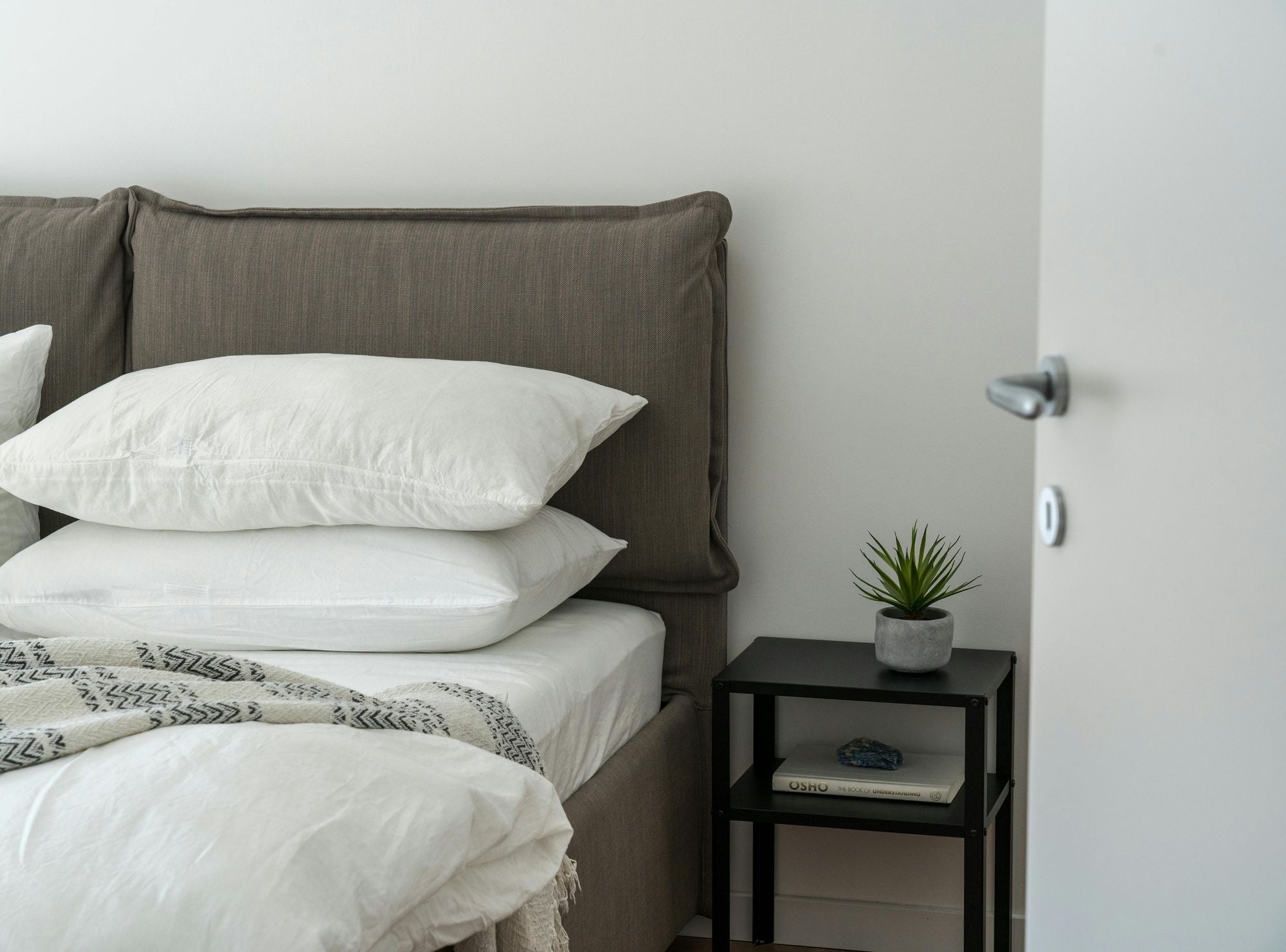
We all have our own preferences when it comes to getting a good night’s sleep—from the type of bed to our sleeping position. However, there is one standard setup that comes up time and again: the bed, the mattress, the pillow, and the blankets or comforters. But what if we were to rethink this setup—especially when it comes to the pillow? Because when it comes to pillows, their actual usefulness varies depending on your sleeping position, as well as the quality of your mattress and your personal habits. Some people have decided to stop using one altogether and have noticed improvements in comfort and reduced muscle pain, while others simply can’t do without it. So, is the pillow essential for a good night’s sleep, or is it a superfluous accessory?
Sleeping Without a Pillow: Is It a Good or Bad Idea?
We all have our own preferences when it comes to getting a good night’s sleep—from the type of bed to our sleeping position. However, there is one standard setup that comes up time and again: the bed, the mattress, the pillow, and the blankets or comforters. But what if this way of setting up your bed were called into question—especially when it comes to the pillow? In fact, its actual usefulness varies depending not only on your sleeping position but also on the quality of your mattress and your personal habits. Some people have decided to stop using a pillow altogether and have noticed improvements in comfort and reduced muscle pain, while others simply can’t do without one.

Sleeping Without a Pillow: What's the Best Sleeping Position?
A pillow isn’t just a comfort item—it also serves various functions, such as supporting the neck to ensure proper alignment with the spine. However, individual needs vary depending on sleeping position. According to a Sanofi study, 69% of French people place great importance on their pillow. As for sleeping positions, 43% of French people sleep on their side in the fetal position, and 26% sleep on their stomachs. It is also recommended to let babies sleep on their backs and to start introducing pillows into a child’s bedroom starting at age 2 or 3.
- Sleeping on Your Side: In this side-sleeping position, there is a height difference between the shoulders and the head that the pillow is meant to compensate for. In this case, sleeping without a pillow is not recommended. We recommend choosing a suitable pillow, which depends mainly on your build and shoulder width. The greater the space between your neck and the mattress, the thicker the pillow you’ll need. For smaller frames, a pillow less than 10 cm high should do the trick. When it comes to pillow comfort, it all depends on the feel you’re looking for—soft, firm, or memory foam. In this case, we can only advise you to try out different models. However, if you have neck issues or pain—or even as a preventive measure—choosing a high-quality or ergonomic pillow is a good investment.
- Sleeping on Your Back For those who sleep on their backs, using a pillow is less essential. In this position, there is no longer any space to fill to ensure that the cervical spine is aligned with the rest of the spine. In this case, the pillow becomes a comfort accessory.For those who find it difficult to do without one, it’s best to choose a flatter or even ergonomic pillow that raises the head only slightly. An unsuitable pillow could cause a stiff neck and result in discomfort for several days.
- Sleeping on Your Stomach Finally , when it comes to sleeping on your stomach, this is the position best suited for doing without a pillow. In fact, it’s not a natural position and it puts more pressure on the neck. This is exacerbated when using a pillow, even a flat one.Of course, many of us change positions during the night, shifting from lying on our side to lying on our back or vice versa, and so on. So, aside from those who are used to sleeping this way, it’s still a good idea to have a pillow nearby in case you change positions, just to be comfortable.

When should you sleep without a pillow?
- Fewer Skin Problems When we sleep with a pillow, we increase friction and restrict the skin’s ability to breathe. For acne-prone skin, for example, sleeping without a pillow allows the skin to breathe more freely. If, for whatever reason, you can’t sleep without a pillow, we recommend choosing one made from natural materials rather than synthetic ones. Synthetic materials don’t breathe well and trap heat, which can be harmful to your skin and your comfort.
- To Each Their Own Our bedding already consists of several components: sheets, a comforter, a bolster, and one or more pillows. All of these elements, combined with our nighttime movements, can prevent us from finding the most comfortable sleeping position. Sleeping without a pillow allows the body to find a more natural sleeping position.
Which pillow should you choose?
As mentioned earlier, choosing a pillow depends on both your sleeping position and your personal preferences. In fact, pillows come in a variety of materials and firmness levels.
- Latex Pillows: If you’re looking for fairly firm support, we recommend choosing a latex pillow. Designed with a higher density around the edges than in the center, this pillow offers true comfort. There are also ergonomic pillows whose shape follows the curve of your neck and cervical spine, providing you with tailored support.
- Feather Pillows Compared to latex pillows, feather pillows are less firm and offer a soft, plush feel. If the filling contains no synthetic materials, they are also known for their breathability and are therefore recommended for people who tend to get hot at night.
The type of mattress makes all the difference
While your sleeping position is what matters most, the comfort of the mattress also plays a role in how you feel—with or without a pillow. After all, what matters most is comfort throughout the night. And just as there are different types of pillows—firm, soft, or memory foam—the same is true for mattresses.Therefore, it’s important to create the right setup tailored to the person’s build and sleeping position, while ensuring proper body support for total comfort. If the mattress is too soft, it may cause the pelvis to sink in too deeply. This will position the cervical spine higher than the lumbar spine. On the other hand, a mattress that is too firm can lead to muscle stiffness. The mattress must therefore provide appropriate body support so that the spine remains straight, and the pillow takes over depending on the sleeping position. Sleeping with or without a pillow is therefore a personal choice that helps meet a greater need for comfort and may help reduce neck pain.
Here are some other articles you might find interesting: