

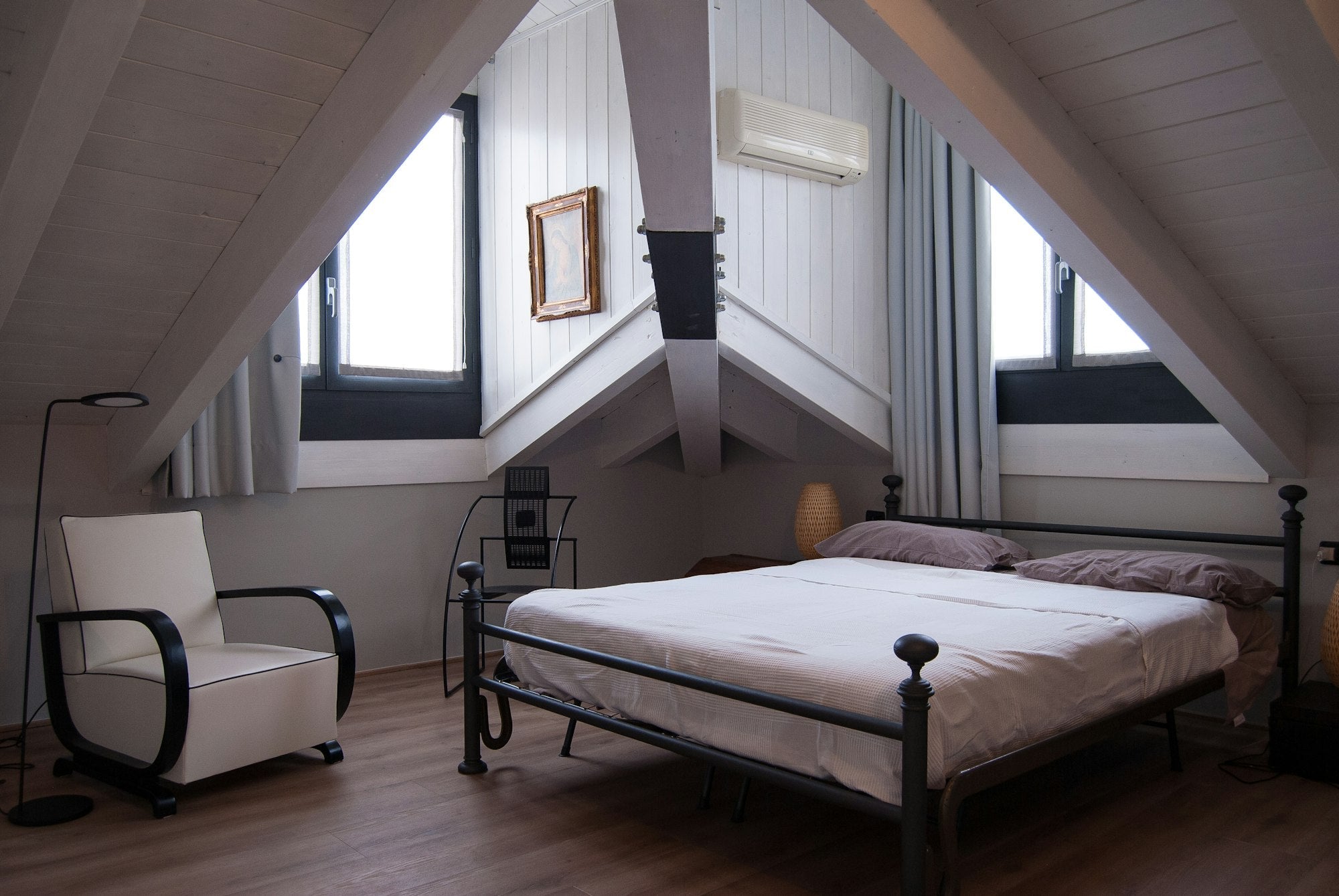
Why choose a low bed?
When considering the important factors for choosing bedding, you should ask yourself : Which bed should you choose to go with your mattress and box spring?
However, every sleeper has different habits and preferences. While mattress firmness has a significant impact on sleep quality, bed height is also an important factor. While some people prefer to sleep in a bunk bed or a fairly high bed, others prefer to sleep in a low bed or even on the floor. It’s therefore important to consider your options and choose the ideal height for your bed. Here are 4 reasons to choose a low bed for a good night’s sleep.

Sleeping on the floor, but with a box spring and a bed frame
There are more people who prefer to sleep on the floor than one might think. In Japan, this is actually the norm. However, the Japanese do not use beds or even mattresses like Westerners do. Instead, they use futons. The futon is thus an alternative for those who like to sleep close to the floor while still enjoying a comfortable sleep. The cotton futon, which is 5 to 15 centimeters thick, is placed on a tatami mat or rice-straw boards to cushion the hardness of the floor and keep the futon in good condition.
Placing a mattress directly on the floor is not recommended for several reasons. Without a box spring, the mattress does not get enough ventilation, which can be problematic, especially for people who sweat a lot at night. Without a box spring, moisture from sweat cannot be properly wicked away and instead becomes trapped in the mattress resting directly on the floor. This can lead to mold spots or even sagging over time. Buying a mattress is a significant investment. It’s therefore a shame to damage it and shorten its lifespan.
To address this issue, it’s recommended to lift the mattress off the floor regularly to let it air out, which can be a hassle given that mattresses are heavy and bulky. The best solution, then, is to choose a low bed with a footless bed frame so that the sleeping surface remains as close to the floor as possible. Thanks to the bed frame, the mattress can still be placed on a box spring, allowing for easy ventilation.
With a low bed and the optionto place the mattress on a box spring, comfort is also improved. If you want to avoid using a futon and keep a traditional mattress while sleeping as close to the floor as possible, a low bed is the best option.
Make the most of the space under the bed while keeping it dust-free
A low bed also has the advantage of not leaving any unused space underneath, since the space is relatively small. However, to enhance the feeling of being in contact with the floor and ensure there is no empty space between the sleeper and the floor, you can opt for a storage bed.
A storage bed providesstorage space underneath the bed. You can choose a storage bed with drawers or one that lifts up to access the space beneath the bed frame. Either way, this type of bed is very practical, since it allows you to store clothes or bulky household linens such as throws, pillows, or even comforters. To keep the bed low to the floor, you should choose relatively low storage compartments as well.
Whether it has storage or not, a low bed has a bed frame that extends all the way to the floor, which means dust can’t get under the mattress. This is another benefit for those who are tired of constantly sweeping or vacuuming under their bed, since that area is particularly hard to reach.
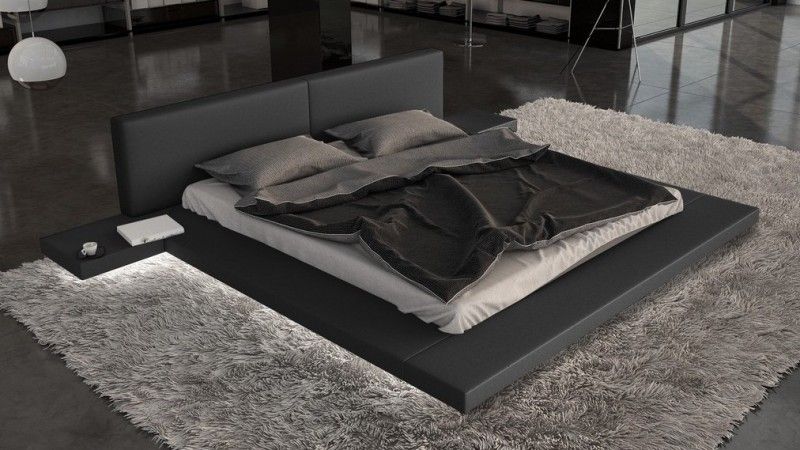
Making it easier to get in and out of a low bed
Many beds come in a standard height. However, not all sleepers are the same height. This is especially true for children. Over time, getting in and out of a bed that’s the wrong height can cause knee or back pain. Therefore, it’s important to choose a bed height based on your height, since someone who is 1.60 m tall has different needs than someone who is 1.90 m tall.
So, the principle is simple: the taller a person is, the higher the bed should be. Therefore, low beds are not recommended for tall people, but may be perfectly suitable for shorter individuals. The most important thing is that it should be easy to get in and out of bed without any effort, since, over time, repeated movements can lead to health problems.
While most bed manufacturers opt for a standard height between 50 and 55 cm, it’s important to note that this height is suitable for people who are about 1.75 m tall. For shorter people, a low bed is a great alternative for taking care of their back, knees, and even hips. To determine if a bed is the right height, simply sit on the edge with your feet flat on the floor. If your legs and thighs form a right angle, the bed is the ideal height.
By performing this check, you can see that:
- that a person who is 1.60 m tall needs a bed that is 45 cm high;
- that a person who is 1.75 m tall needs a bed that is 50 cm high;
- ...that a person who is 1.90 m tall needs a bed that is 55 cm high.
The Low Bed: The Ideal Solution for Children
But what about the little ones? Children also need a bed that’s the right height for their size. Childhood is all about growth, which is why it’s important to choose a bed that’s the right fit—one that doesn’t require any effort for the child to get in and out of bed.
In addition, a low bed has the advantage of aligning with the Montessori approach to education, which emphasizes a child’s freedom of movement. A low bed allows children to be more independent and get into bed on their own, just like grown-ups. This benefits both the child—who learns to perform daily tasks without an adult—and the parents, who gain more freedom and time.
One last little advantage of a low bed for kids: by eliminating the empty space under the bed, there’s no risk of finding monsters hiding there!
We recommend these other pages:
- What are the advantages of a platform bed?
- What are the criteria for choosing an oak bed?
- What is a Zen bed, and how do you choose the right one?
- What type of bed should you choose based on your mattress?
- What kind of bed should you choose based on your bed frame?
- What type of bed should you choose based on your body type?
- What kind of bed should you choose for a child?
- How do you choose a designer bed?