

Zen Beds: Features and Selection Criteria
The current trend in bedroom decor focuses on harmony and a soothing atmosphere. If this kind of ambiance appeals to you, the next step is to decide which furniture, decorative items, and bed to choose—along with your mattress and box spring —to create the bedroom of your dreams.
Why not go for a Zen bed? It’s one of the centerpieces of Japanese interior design and Feng Shui philosophy. While its design generally remains quite similar, it comes in a wide variety of styles, sometimes drawing inspiration from sources other than the Land of the Rising Sun. We’ll tell you more about this type of furniture and the factors to consider when buying the Zen bed that’s right for you.

The authentic Zen bed, a piece of furniture of Japanese origin
Through Feng Shui and meditation, Japan is known for its culture of well-being, tranquility, and connection with nature. It’s no surprise, then, that the Japanese are the originators of what is known as the Zen bed. This type of furniture, in its most traditional form, features several distinctive elements:
- a large tatami mat, made of woven rice straw, on which the bedding rests;
- a futon-style mattress made of cotton, which is only a few centimeters thick and can be rolled up thanks to its flexible construction;
- Sometimes a wooden slatted bed frame, with or without a headboard, although traditionally, the mattress is placed directly on the floor, on the tatami mats.
In the West—and even in Japan—this traditional Zen-style bedding can be reimagined, for example, by replacing the 100% cotton futon with a mattress made of coconut fiber, memory foam, natural latex, and so on.
Other Zen-inspired bed designs
In the world of interior design and home decor, the Zen style is a fundamental trend that can be incorporated into every room in the house. That’s why designers have created other styles of beds that could be described as “Zen,” even though they don’t follow the tradition of the Japanese bed.
In this category, you can find other bed models, such as:
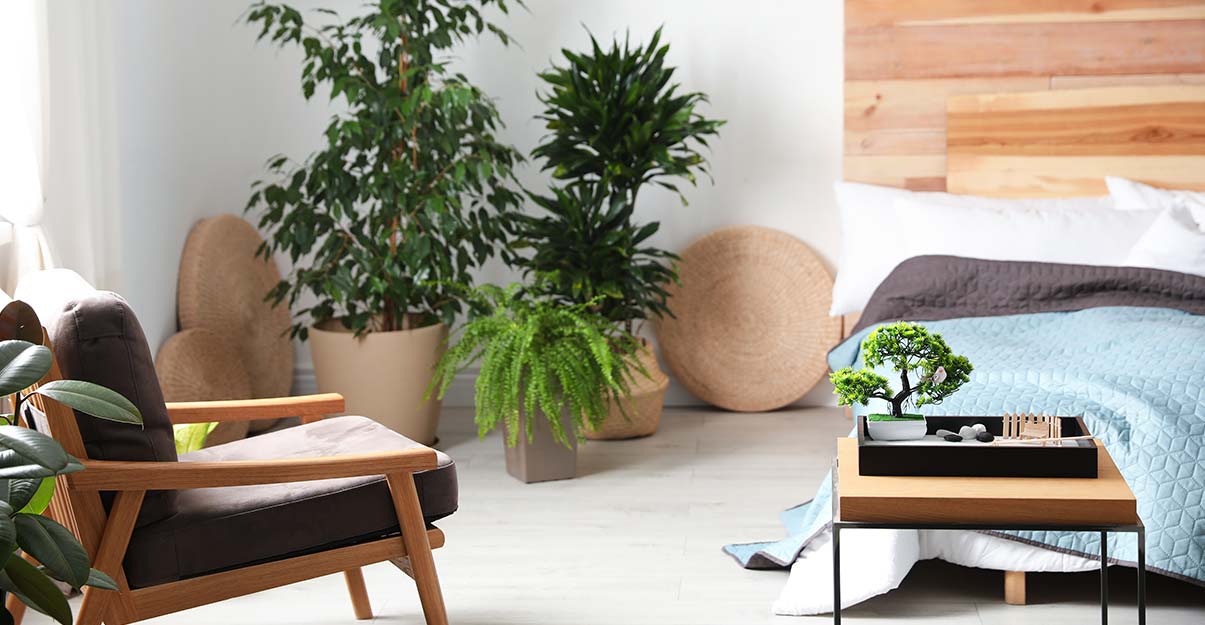
- wooden platform beds, set close to the floor, which can be designed in a rustic, contemporary, or other style;
- round beds, whose curves evoke a sense of softness and calm;
- Minimalist bed frames with clean lines, no headboard, and placed directly on the floor—sometimes even without legs.
They are usually covered with bedding in soft colors, such as beige, sky blue, off-white, pastel pink, etc., to create a relaxing atmosphere in the bedroom. However, there’s nothing stopping you from choosing a set in darker shades or with patterns.
Tips for Finding the Perfect Zen Bed for a Bedroom
Since there are so many different types of Zen beds available, it’s important to find a model that fits the available space in the bedroom, offers maximum comfort, and complements the room’s decor.
Pay attention to the dimensions of the sleeping area
According to Feng Shui principles, it’s advisable to place the headboard against the south wall for optimal sleep, and possibly against the east wall if that isn’t possible. It’s also best to avoid positioning the bed facing or near the bedroom door and/or between two windows, so as not to be disturbed by the flow of vital energy. That being said, we now have a better idea of where the Zen bed should be positioned, and this will partly determine its dimensions. There must be enough space to move around the bed, and its sides should not be placed too close to the walls.
Of course, the dimensions of the bed also depend on the person or people who will be sleeping in it. The 140 x 190 cm size is the most common and provides plenty of space for one person to sleep alone or for two people to sleep together. For added comfort, some people prefer a mattress that is 160 or even 180 cm wide and 200 cm long.
To save space—or, conversely, to make the most of a large area—you can adjust the size of the bed frame or tatami mat. These elements can either be almost the same size as the mattress—for space-saving and true minimalism—or be much larger, defining a spacious sleeping area.
Choose the color and style of the bed frame
Once the technical specifications for the furniture’s dimensions have been defined, it’s time to focus on the style of the Zen bed. Here, personal taste and the atmosphere you want to create in the room are what matter most.
We highly recommend choosing a natural bed base—that is, one made of wood. There are Zen-style beds crafted from all kinds of wood: beech wood with its versatile light brown hue, the exotic okoumé wood with its orange-brown color, bamboo poles that form a frame surrounding the mattress, poplar with its light tones, a bed frame covered in beige linen, teak with its raw, natural look, and more.
As for the bed’s design, there’s a wide variety to choose from here as well. You can opt for a solid model or one with cleaner lines, for a bed frame that rests directly on the floor or one with legs, for a frame that extends beyond the mattress and can serve as a nightstand, and so on. The Zen bed frame can also serve a practical purpose, thanks to built-in storage, such as built-in compartments on the sides and front of the frame.
Choose a high-quality mattress
Those who want a genuine Japanese bed should opt for a futon. Its thin profile isn't necessarily recommended for people who suffer from back and neck pain, but today there are futons designed to better conform to the body's shape and ensure greater comfort while sleeping.
Otherwise, you can always opt for a more traditional mattress made of natural latex, with springs, or with memory foam. The key is to find a mattress that provides good support, allows air to circulate, and does not contain any harmful substances.
Finding the Right Sleeping Height
One of the distinctive features of the Japanese bed is its low height and proximity to the floor. In fact, this is partly what gives it its Zen feel and unique style.
Generally, it is recommended to purchase a box spring and mattress that allow the sleeper to sit on the bed at a 90° angle when their feet are flat on the floor. Obviously, this is not the case with a traditional Zen-style bed, which is typically between 15 and 30 cm high. Nevertheless, for older adults or those who have some difficulty moving around after a good night’s sleep, a bed that is too low is not recommended. It is therefore better to design the room in a Zen style using shapes, colors, materials, and bedding, while choosing a bed frame that is taller than that of standard Japanese beds.
We recommend these other pages:
- What are the advantages of a platform bed?
- What are some good reasons to choose a low bed?
- What are the criteria for choosing an oak bed?
- What type of bed should you choose based on your mattress?
- What kind of bed should you choose based on your bed frame?
- What type of bed should you choose based on your body type?
- What kind of bed should you choose for a child?
- How do you choose a designer bed?