

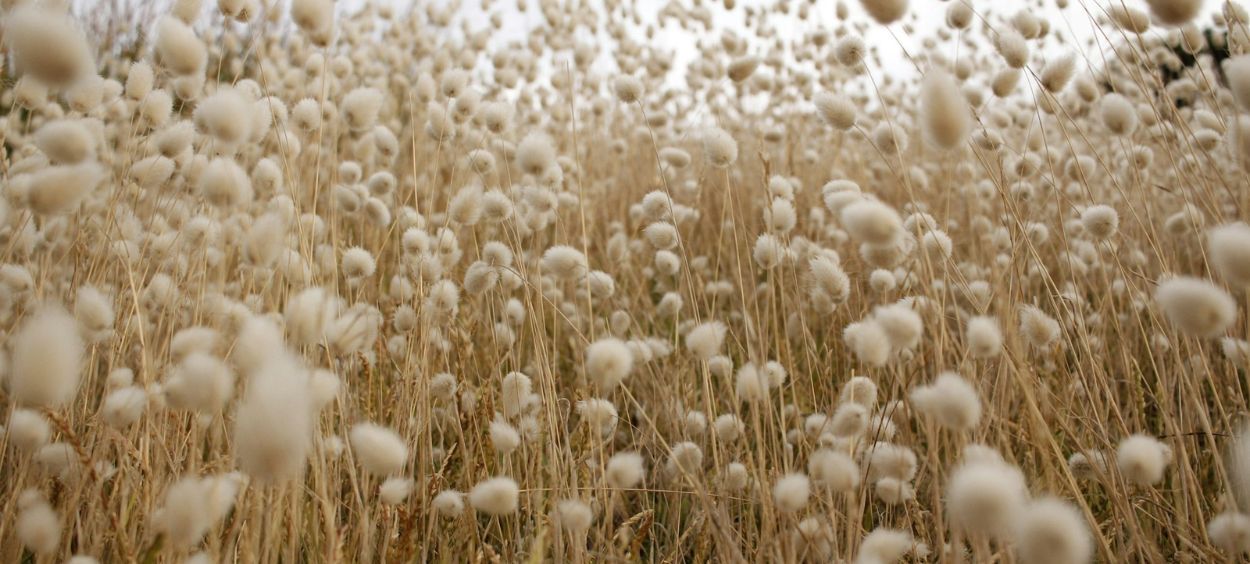
Every year, no less than 18 million metric tons of cotton are grown. Only 0.7% of this cotton is organic. This large-scale cultivation has significant environmental impacts. So, aside from the fact that the term “organic” is reassuring and sounds more eco-friendly, what’s the difference between the two? In practical terms, what does it mean to sleep in organic cotton sheets? How different are they from sheets made from conventional cotton? Organic is great, but why? We’ll break it down for you!
Let's be clear: conventional cotton farming isn't very eco-friendly
Cotton comes from the cotton plant and is harvested using large harvesters. The world’s leading producers are India, followed by China and the United States. Today, it is mainly used in the textile industry, which is worth $37 billion a year. In other words, cotton carries a lot of weight, despite appearances. It just goes to show that you can’t judge a book by its cover...
Figures like these give us an idea of the enormous impact cotton can have on the planet—not to mention its economic and social consequences. Just imagine: Take 2 to 3 percent of the land currently under cultivation worldwide.Now, consider the 16% of pesticides used worldwide, some of which are classified as particularly dangerous by the WHO.
Finally, heavy metals such as lead and chromium are used to dye cotton. Taking jeans as an example again: 1 kg of pigment used to dye them requires several hundred kilograms of petroleum, solvents, and 1,000 liters of water. Not to mention the soil depletion caused by intensive farming. That, in a nutshell, is what conventional cotton entails. In light of this, a greener form of agriculture has emerged with the rise of organic cotton.

Organic cotton: A solution for more sustainable and responsible production
Overall, here are the differences between conventional and organic cotton farming.

And here are a few figures that speak for themselves...
Impact on Water: Managing Water Sources Carefully
1 T-shirt = 70 showers, 1 pair of jeans = 50 baths: when you consider that India and China—the world’s top cotton producers—are also two countries facing serious freshwater shortages, it makes you want to take action... Several figures have been cited to compare the differences in water consumption between conventional and organic cotton. However, it’s not easy to give an exact figure for the savings achieved: it depends on the method of comparison and the type of crops being compared (irrigated versus non-irrigated).The most frequently cited reference comes from the Textile Exchange report “The Life Cycle of Organic Cotton Fiber” from 2014. It covers annual production figures from India, China, the United States, Turkey, and Tanzania. The report finds that organic cotton cultivation uses 91% less water than conventional cotton cultivation.
- The problem?As Mars-Elle points out in her article, there are some inaccuracies in the climate data. For example, soil permeability and rainfall levels can vary greatly from one country to another and from one geographic region to another. And the data on irrigation rates in these same areas aren’t specified precisely. Given that rainwater is rarely sufficient to irrigate fields andthat water must be diverted from rivers, lakes, and aquifers, this can leave even the most rational among us perplexed.
In addition, there is a 2016 report by WWF and C&A that assesses the total water consumption for growing conventional and organic cotton on several farms in different regions of India (2013 and 2014 crops). The result: the water footprint of conventional cotton cultivation is 25 times higher than that of organic cotton cultivation.
- The problem? Even though this study is more accurate than the previous one, the areas studied require little or no irrigation, which is not very representative of conventional cotton fields. Based on these two studies, we can say that organic cotton farming is less water-intensive than conventional cotton farming—but be sure to cite your sources, read the reports carefully, and take the methods used into account. :)
No, organic cotton isn't always as white as a sheet

By producing and consuming differently, we discover all sorts of wonderful things. Notably, that cotton—which we imagine to be immaculately white—is only white because it’s often bleached using dyes. In reality, in its natural state, cotton is more of an ecru color. Let’s take a moment to look at the cotton life cycle before it ends up in your Kipli mattress orpillow cover. When the plant blooms, the fruit capsules burst open. A white fluff emerges. Oh! That’s beautiful. That’s when the cotton is harvested. It’s compressed into a large bale using what’s called a baler, and then the cotton fiber is separated from the capsule residue and seeds in a ginning machine. But in unbleached fabrics,the capsule residue remains visible as black specks. Don’t worry—these spots are simply a natural characteristic of cotton. They may appear as shown in the photos of our pillows and mattresses below.
After all, those little beauty spots are what give our mattresses and pillows their charm, aren’t they? You can send us a photo of your pillow help@kipli.com if you happen to notice these little spots, and we’ll be able to confirm whether they’re indeed Nature’s little quirks.
How can you tell if your bedding is really made of organic cotton?
GOTS and OCS: The Essential Certifications for Organic Cotton
The Global Organic Textile Standard ( GOTS) is the world’s leading certification standard for organic textiles. GOTS guarantees that the cotton in a product is grown organically. The certification focuses on what happens after harvest and tracks the cotton throughout the supply chain to ensure that clothing, sheets, towels, furniture, and other items are safe, manufactured responsibly, and meet stringent social and environmental criteria. The Organic Content Standard (OCS), on the other hand, provides assurance from an independent organization that the organic content of the textile can be traced back to its source.
Watch out for greenwashing...
If you see “Sustainable Cotton” on a product’s label, the cotton used is not necessarily organic.
Similarly, some labels are misleading, as ADEME points out. This is particularly true of the BCI label, which has appeared relatively recently and is very easy to obtain, but does not mean that the cotton is organic.
On the Line: Are There Limits to Organic Cotton?
Lower water consumption, fewer health problems, more environmentally friendly, more sustainable… Organic cotton has a more positive impact than conventional cotton. But organic cotton is still cotton, and therefore a water-intensive crop. So, to reduce our use of this precious natural resource, let’s keep a few simple, common-sense rules in mind. Let’s gradually try to change our consumption habits andbuy fewer products, but ones of higher quality so they’ll last longer.
Sources:Mars-Elle,The Good Goods,Organic Center, Greenpeace,France TV Info, ADEME (infographics), Le Revers de monlook,ARTE Radio, Planetoscope,Cash Investigation, Consglobe