

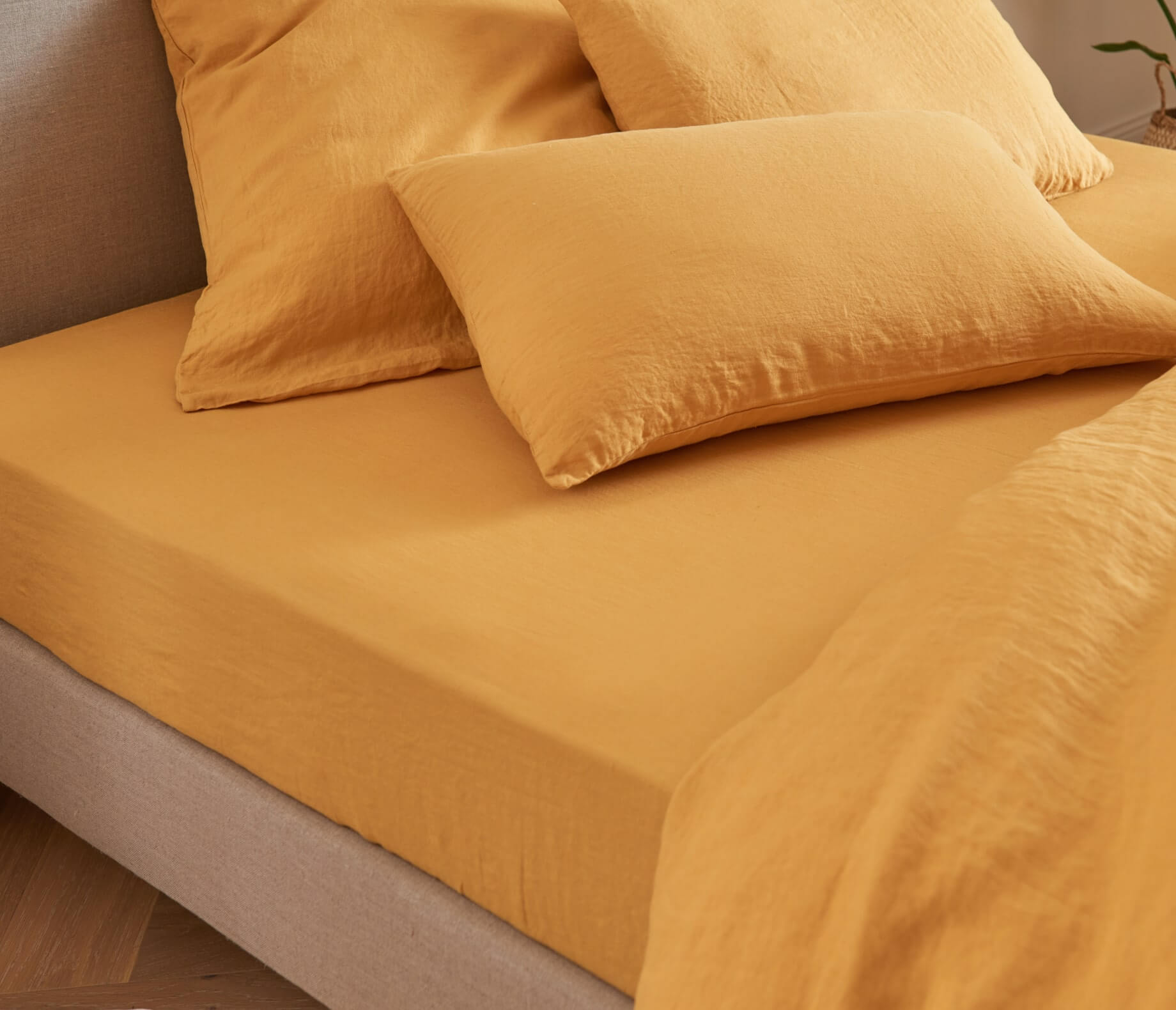
To ensure optimal comfort and a restful night’s sleep, the quality of your bedding is just as important as that of your mattress. When it comes to choosing the fabric for your bedding set, there’s no shortage of options: cotton, cotton percale, polyester, silk, satin, flannel, and more. Or why not linen? Both trendy and timeless, this fabric adds an elegant touch to your home.
Once you've determined the size of your sheets, it's time to choose your new bedding set. How can you navigate the different quality options available? How do you choose the right product? Learn all about the features of this fabric and the factors to consider when making your purchase.

The Properties of Flax
Flax, which has been woven into fabric and widely used for centuries, is a plant with many beneficial properties. Its fiber, used to make linen fabric, is also considered one of the most environmentally friendly fibers currently available on the market.
-
A natural fabric with many qualities
A high-quality fabric used all over the world, linen has many excellent qualities. Both strong and durable, linen ensures unmatched longevity for your bedding if you care for it properly. It is also extremely healthy and has the unique property of causing no allergic reactions: it is the ideal fabric for sensitive skin. Biodegradable and natural, it is also particularly environmentally friendly.
As for its use, it is very comfortable because it is a particularly breathable and absorbent fabric: it helps prevent any discomfort caused by sweat or moisture. This also gives it thermoregulatory properties.
Finally, a bedding set made from a fabric as beautiful as linen always makes a statement in a bedroom: favored by interior designers and home decor magazines, it’s a sure bet for dressing up your bedding.
-
A fabric that transcends the seasons
Although this fabric has many qualities, one of its greatest is undoubtedly its thermoregulatory properties: it is indeed capable of retaining heat very effectively when the ambient temperature is rather cold, making it perfectly suited for the winter months. When it’s hot (or even very hot, such as during a heat wave), linen will also be your best ally, as it will keep you cool and prevent discomfort thanks to its breathability.
Its thermoregulatory properties make it a fabric that works year-round: your linen bedding set will bring you just as much joy in winter as in summer, and will remain suitable no matter the time of year.
-
The Promise of Better Sleep
All these qualities make linen the ideal choice for a better night’s sleep. Indeed, thanks to its thermoregulatory properties (mentioned earlier), it naturally helps your body better regulate its temperature: the impact on your sleep cycles and your nights in general is undeniable. Faster sleep onset, fewer nighttime awakenings, and higher-quality (and therefore more restorative) sleep: a linen bedding set will thus significantly improve the quality of your sleep. Linen has also been proven to have calming and soothing properties—ensuring you enjoy peaceful nights.
The Different Qualities of Linen Bedding
It’s not always easy to navigate the wide variety of linen textiles available on the market, and not all of them are created equal. Several factors can indeed be decisive for the final quality of the garment, including, in particular:
- the origin of the flax and the presence of certifications (European Flax or Master of Linen);
- the quality of the fibers used to weave the fabric;
- the evenness and density of the weave;
- any treatments applied to the fabric.
To make it easier to choose the right sheets, there’s no secret: you should go by how they feel to the touch. In general, the higher the quality of the fibers selected for weaving (i.e., long and fine), the softer and more pleasant the final fabric will feel. The origin of the fiber will also often affect its quality:linen from France or even Europe is generally of much higher quality than linen grown and woven in Asia, for example.
When it comes to treatments, washed and treated linen fabric is often softer and more supple than woven linen left “unfinished.” These treatments can also be more extensive, resulting in different finishes for the fabric (such as linen satin, for example). In any case, it’s important to know that the fabric will become softer and more supple with each wash. Note that linen fiber blended with cotton fiber will also result in a softer and more supple fabric: this is called “blend.” It is no longer pure linen, and its properties will be somewhat different.
Finally, keep in mind that it’s not always wise to rely on the price of the product. Even though you can almost always expect to pay more for a linen set than for a cotton one, the price doesn’t always reflect the quality, so it’s best to examine the fabric yourself and find out about the quality of the fiber used.
How to Maintain the Quality of Your Linen Bedding When Washing It
Linen is very durable: if you take good care of it, a linen bedding set can last for many years. However, there are some best practices you should follow to ensure you don’t damage your linen items.
Washing is a necessary step for your bedding sets, but how can you be sure to get them thoroughly clean without damaging them? First and foremost, you can soak your sheets, duvet cover, and pillowcases in cold water before the first wash to loosen the fibers and prepare them for washing.
When it comes to washing, start by separating whites from colors to prevent bleeding. You should then wash linen at 40°C to ensure you don’t damage or break the fibers. If your linens are made from high-quality linen, you can increase your washing machine’s temperature to 60°C. However, always use a moderate spin cycle—ideally no more than 800 revolutions per minute—to ensure the fibers don’t break. Finally, for drying, you can hang it to dry or tumble dry it at a moderate temperature. As for ironing, it isn’t necessarily required:the natural wrinkled look of linen is part of the fabric’s charm.
We recommend these other pages:
- How do you choose bedding for a baby?
- How to Choose Cotton Gauze Bedding?
- How to Choose Percale Bedding?
- How do you choose cotton satin bedding?
- How do you choose flannel bedding?
- What makes high-quality bed linens?
- How to Choose a Pillowcase
- How do you choose a duvet set?
- How to Choose a Fitted Sheet?
- How to Choose a Duvet Cover?