

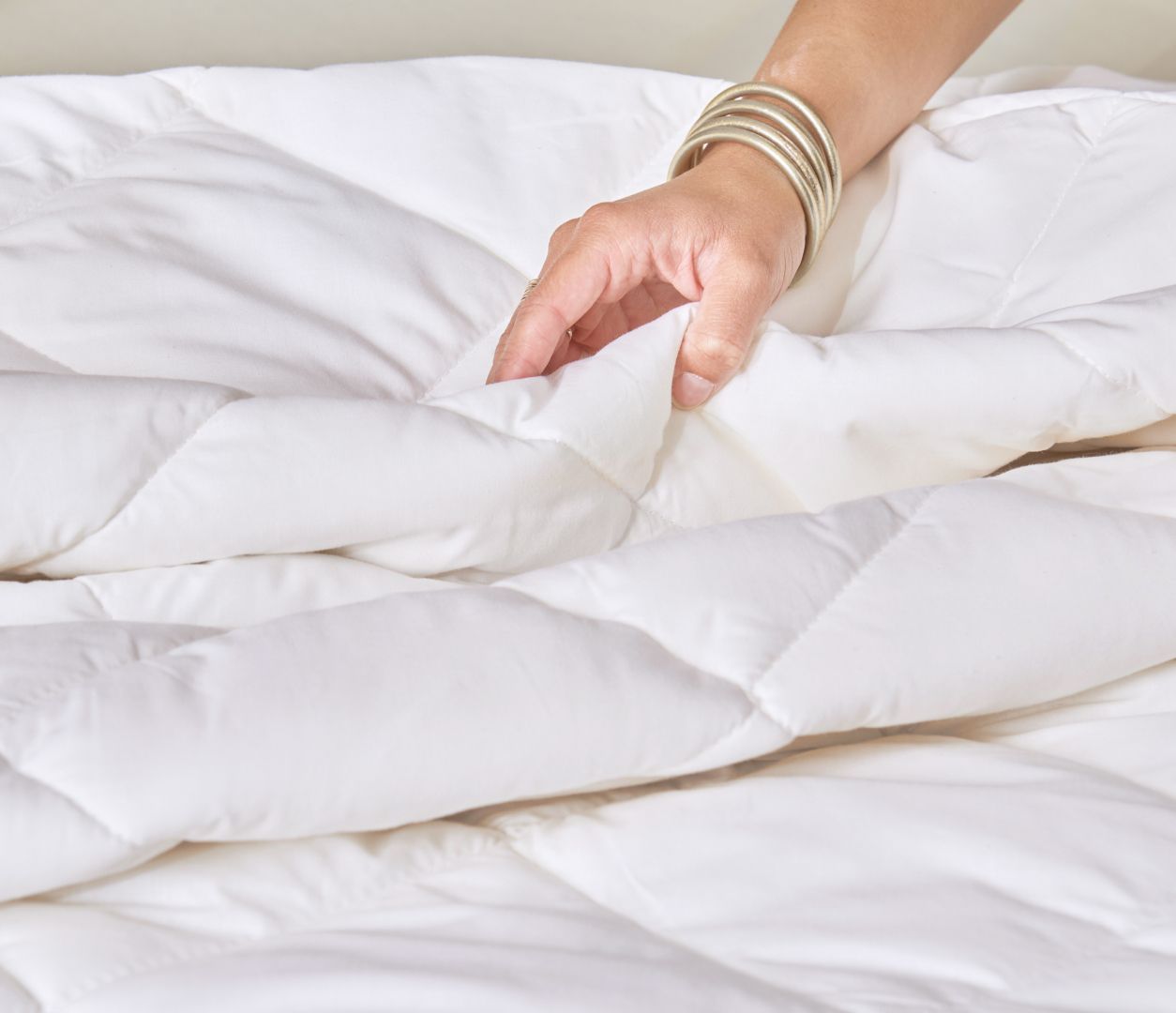
A comforter is a bedding item that keeps you warm no matter the season. It provides a cozy feel and optimal comfort. To enjoy all its benefits, it’s essential to know how to choose the right comforter. Once you’ve done that, the most important thing is to keep it clean.
The best way to do this is still to wash it regularly and using the proper methods. However, given the characteristics of this comforter (its weight and the type of filling), caring for it can be more or less demanding. It’s therefore helpful to know a few tips to make the process easier. Here’s how to properly wash a comforter.

Machine-wash the comforter
Like any other bedding item, a comforter needs to be washed from time to time. This should be done about twice a year, depending on the type of filling. Whether the filling is synthetic or natural, the process must be carried out in distinct steps to preserve the comforter’s quality.
Check the washing instructions for the comforter
Before machine-washing your comforter, check to see if this cleaning method is suitable for it. This information is usually listed on the product label. The label also indicates whether or not the comforter can be tumble-dried.
In addition, you should also determine the best washing temperature based on the filling. For example, a synthetic comforter should be machine-washed at 40 °C. For fillings made of natural materials such as down and feathers, the washing temperature should not exceed 60 °C. This is sufficient to eliminate any dust mites that may have taken up residence there.
Prepare the comforter for washing
After removing the duvet from its cover, the second step is to inspect it before putting it in the washing machine. This step is important because it helps preserve both the duvet and the washing equipment.
The inspection involves identifying stubborn stains and any small holes in the cover. If necessary, these small holes should be sewn up using a needle and thread. Otherwise, they may grow larger and allow the filling to escape. The loose filling can also get caught in the machine and damage it.
Pre-wash the comforter
It's common to see stains on a comforter that don't come out in the washing machine. These are usually food, drink, or lipstick stains. You should remove these by hand-washing the comforter first before putting it in the washing machine.
For grease stains, simply pour a small amount of white vinegar on the stain and let it sit for a few minutes. Washing with soapy water afterward will remove the stains. However, if the stains are not caused by grease, treating them with 70°C alcohol will suffice. Treating them with hydrogen peroxide or diluted bleach is also an effective alternative.
Put the comforter in the washing machine
There are certain rules to follow when loading the comforter into the washing machine. The first is to check the machine’s capacity. If the capacity is too small for the comforter, the results will be poor. This is because once the comforter gets wet, it will take up more space and become heavier. As a result, the washing machine will not be able to ensure a thorough wash.
You should make sure that the drum capacity matches the size of the comforter. A washing machine with a 5-kg capacity can handle a 140 x 200 cm comforter. However, you’ll also need to consider the comforter’s thickness. Ideally, choose a machine with a capacity of about 10 kg. There should be some space left inside, and the door should close easily after you’ve placed the comforter inside.
Also, laundry should be folded accordion-style to make washing easier. A good tip to help it stay soft is to put 2 or 3 tennis balls inside.

Choose the right laundry cycle for your comforter
For example, when machine-washing a white comforter, set the machine to the "whites" cycle and a delicate cycle. The spin cycle should be set to moderate to avoid twisting or damaging the comforter. As for the rinse cycle, it can be run at a maximum speed of 1,000 revolutions per minute.
To make dissolving the detergent easier, we recommend using a mild liquid detergent. This method prevents foaming and makes rinsing easier. A "wool-specific" detergent is best suited for washing a duvet with natural filling. However, you should avoid using fabric softener on it.
Drying the comforter
The comforter must be completely dry before storing it. To ensure this, put it in the dryer if the care label indicates that this is acceptable. Otherwise, spread it out in the sun on a flat surface if the weather permits.
If the outdoor conditions are not suitable, dry the laundry in a warm but well-ventilated room. With this method, it will take several days for all the moisture to be completely removed.
If the label on the comforter states that it cannot be machine-washed, an alternative solution must be considered.
Wash the comforter by hand
You can wash a comforter by hand if you don't have a washing machine or if the care instructions call for it. In either case, it's best to choose a suitable detergent and place the bedding in a bathtub.
To make it easier to wash the comforter by hand, treat stains as they appear. Once you’ve identified a stain, shake out the comforter to shift the filling so you can scrub the fabric in the stained area. To remove stubborn stains, you can use bleach, hydrogen peroxide, vinegar, or alcohol.
Once the comforter is soaked with water, it becomes very heavy. You’ll need more than two hands to wring it out, and you should do so gently. If this task seems too difficult, using a professional service is a good option.
Choosing Between a Laundromat and a Dry Cleaner
It’s clear that not every household owns a washing machine. Furthermore, even for those that do, capacity issues sometimes make hand-washing the only option. Since this is by far the most difficult option and may not be as effective, washing the comforter at a laundromat is the best alternative.
In fact, coin-operated laundromats are unique in that they have high-capacity equipment. The drums of these machines are large enough to accommodate all sizes of comforters and pillows. They also have dryers and areas for hanging laundry to dry, if needed.
In addition to this option, you can also take your comforter to a dry cleaner. Since the service is provided by professionals, your comforter will be handled properly. Whether it’s made of natural materials or not, a comforter can also be dry-cleaned.
Ultimately, it should be noted that a comforter should be washed at least twice a year, either in the washing machine or by hand, depending on the instructions on the label.
We recommend these other pages:
- What size comforter should I choose?
- What size duvet should I choose for a single person?
- What size duvet should you choose for two people?
- How do you choose a comforter for a child?
- How do you choose a comforter for a baby?
- What kind of comforter should you choose for the summer?
- What kind of comforter should I choose for winter?
- Should you choose a 4-season comforter?