


We’ve all heard of Feng Shui—the rules for organizing our homes that are said to allow energy (called “Chi”) to flow more freely. It’s clear that a cluttered or poorly maintained home affects our well-being. A tidy, well-organized home helps clear the mind—but that’s not all. So what about Feng Shui as it relates to materials, orientation, and the cardinal directions…? The translation of Fēng Shuǐ is literally“wind and water”— elements of movement found everywhere on the planet and essential to life. It’s a name that perfectly defines this rich discipline, which goes far beyond simply arranging your furniture according to the compass.
The Origins and History of Feng Shui
Feng Shui originated in China and has a long history, as it isan ancient tradition that has been practiced for over 3,000 years. Back then, during the Tang Dynasty (618–960 CE), Feng Shui was used to select the most suitable sites for establishing villages. Applied to homes, tombs, and military strategy, Feng Shui evolved over the course of successive Chinese dynasties. Initially, it was a discipline whose masters’ secrets were reserved for the emperor, but these secrets later spread to the nobility. An integral part of Chinese culture, Feng Shui contributed to the construction of remarkable structures such as the Forbidden City.
During the Cultural Revolution, Feng Shui was banned under Mao Zedong, who viewed it with disfavor. Old translations and ancient cultures were thus suppressed to make way for new customs. As a result, the Feng Shui masters of that era fled to other Asian countries such as the city-state of Singapore, Taiwan, and Malaysia. Others emigrated to the West, which allowed this discipline to develop on other continents, particularly in Anglo-Saxon countries. At the end of the Cultural Revolution in 1976, Feng Shui was reintegrated into Asian culture.
With the introduction of Feng Shui into Western cultures, this discipline has been greatly simplified to make it easier to apply and to help it blend more seamlessly into local lifestyles.
Feng Shui is a complex , ancient art based on Chinese cosmology and the principles of Taoism. It is difficult to provide a single definition of it; in fact, there are several methods known as “schools”:
- School of Form: This is the oldest method, based on an analysis of the environment and external features (mountains, rivers, or any other man-made structures, such as roads)...
- Compass School: As the name suggests, this school focuses on the eight cardinal directions and uses precise calculations. This method is intended for interior design.
- Black Hat School: Modern Feng Shui that has been integrated into Western cultures, particularly in the United States. It includes meditation, prayers, and other mantras. It is a simplified method that does not incorporate the directional aspect based on the cardinal points.
The Use of Feng Shui in Our Western Societies
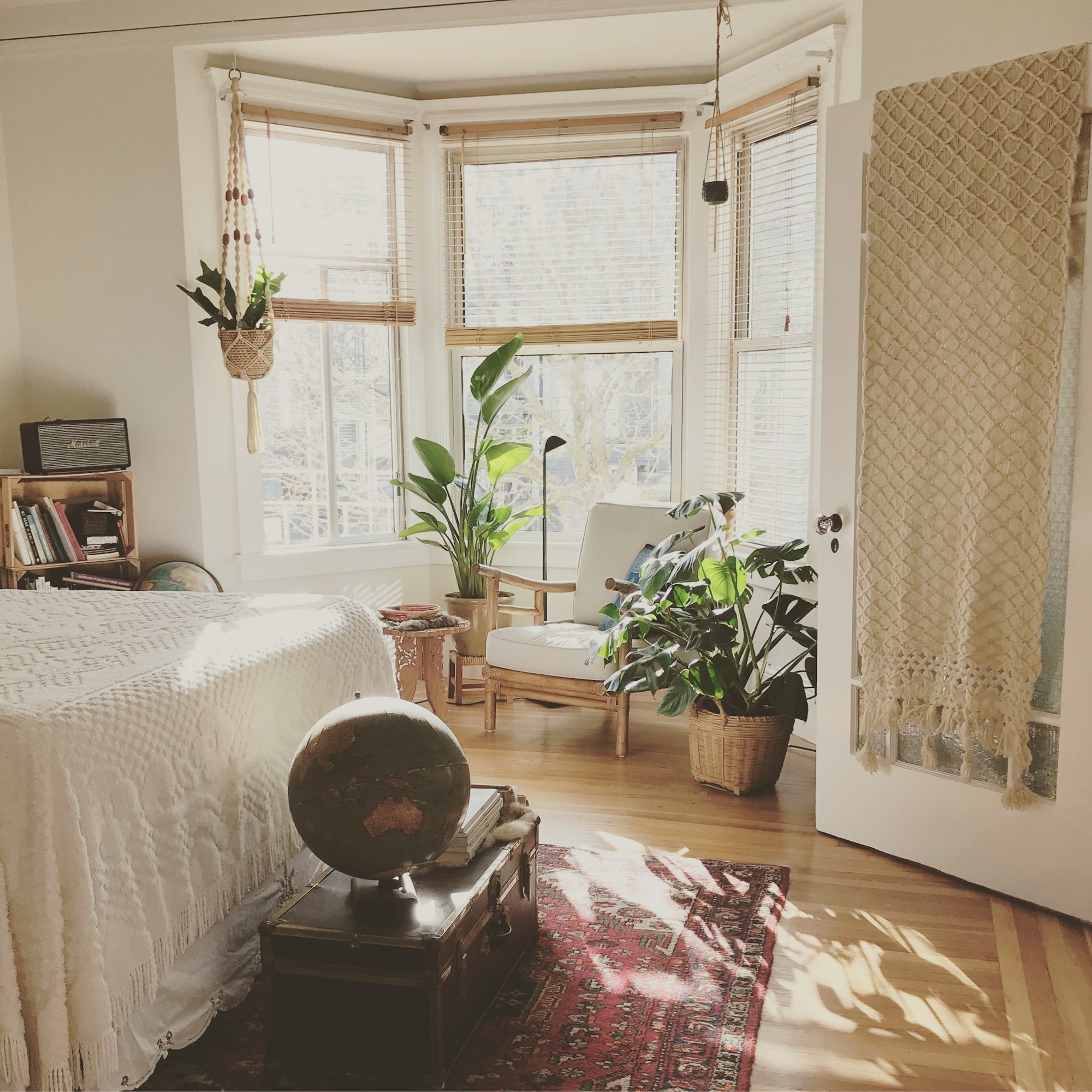
Feng Shui is defined as an ancient art or discipline. However, it is difficult to consider it a science—unless it is a science of energy. For at the heart of the practice lies Chi, or the vital energy that connects all elements of the universe. There is, therefore, a real connection between the visible, tangible world and the invisible. Harmonizing one’s interior spaces is said to bring well-being and serenity. This isn’t limited to homes; it’s also sought after for the design of professional spaces. Many companies have already turned to Feng Shui experts, including Nature & Découverte, Sephora, British Airways, and Nike. It is indeed taken seriously, even in our very down-to-earth societies.
Although Feng Shui as practiced in the West is simpler than traditional Feng Shui, it yields good results by following guidelines that are quick and easy to apply.
Our homes are quite different from those of Asians. In fact, we tend to accumulate more possessions and use a lot of decorative items. So, the key to getting off on the right foot is to sort through your belongings regularly. Throw away what you no longer use, give away what you no longer need, and put each item in its proper place. Dust off furniture and objects to promote the flow of chi, which is hindered by clutter and dirt.
Once you’ve completed this step, you need to clearly define the purpose of each room and arrange them in a way that raises their vibrational frequency: the entryway, the dining room, the kitchen, the bedroom, and the bathroom. There are many recommendations for this, and they depend largely on the layout, the amount of natural light, and the size of your home.
There's no need to provide specific rules, but we can list a few general recommendations:
- Use the right colors for each room: there are so-called YIN colors ( cool and pastel tones) and so-called YANG colors ( warm and bright tones). Yin colors are ideal for rooms meant for rest and relaxation, such as the bedroom, bathroom, or living room. Yang colors are perfect for active areas such as the entryway, kitchen, or office.
- In keeping with this balance between Yin and Yang, the five elements — wood, fire, earth, metal, and water —play a significant role in our interiors and create harmony when properly arranged. Wood is represented by plants, wooden structures, or solid wood furniture. Fire can be represented by candles or a fireplace. Earth is represented by anything made from clay , such as pottery. Metal, like wood, can be incorporated into the structural elements of a house or building, or into furniture. And finally , water can be introduced through an indoor fountain.
- Houseplants and flowers are a great way to energize Chi, provided you take care of them. Any dying plant should be treated or removed from the home. The same goes for wilted or even dried flowers, as they symbolize death. Cacti are not recommended because they are too spiky, and their spines subconsciously evoke negative images.
- The use of mirrors is recommended in Feng Shui because they help ward off negative chi and add light. However, care must be taken with their placement. A mirror opposite the front door, for example, is frowned upon because it encourages you to leave the house, as the image of the door opening appears right in front of you. Mirrors in an adult’s bedroom are also discouraged because they are yang objects. But they are, of course, acceptable in the bathroom—we simply couldn’t do without them in that room.
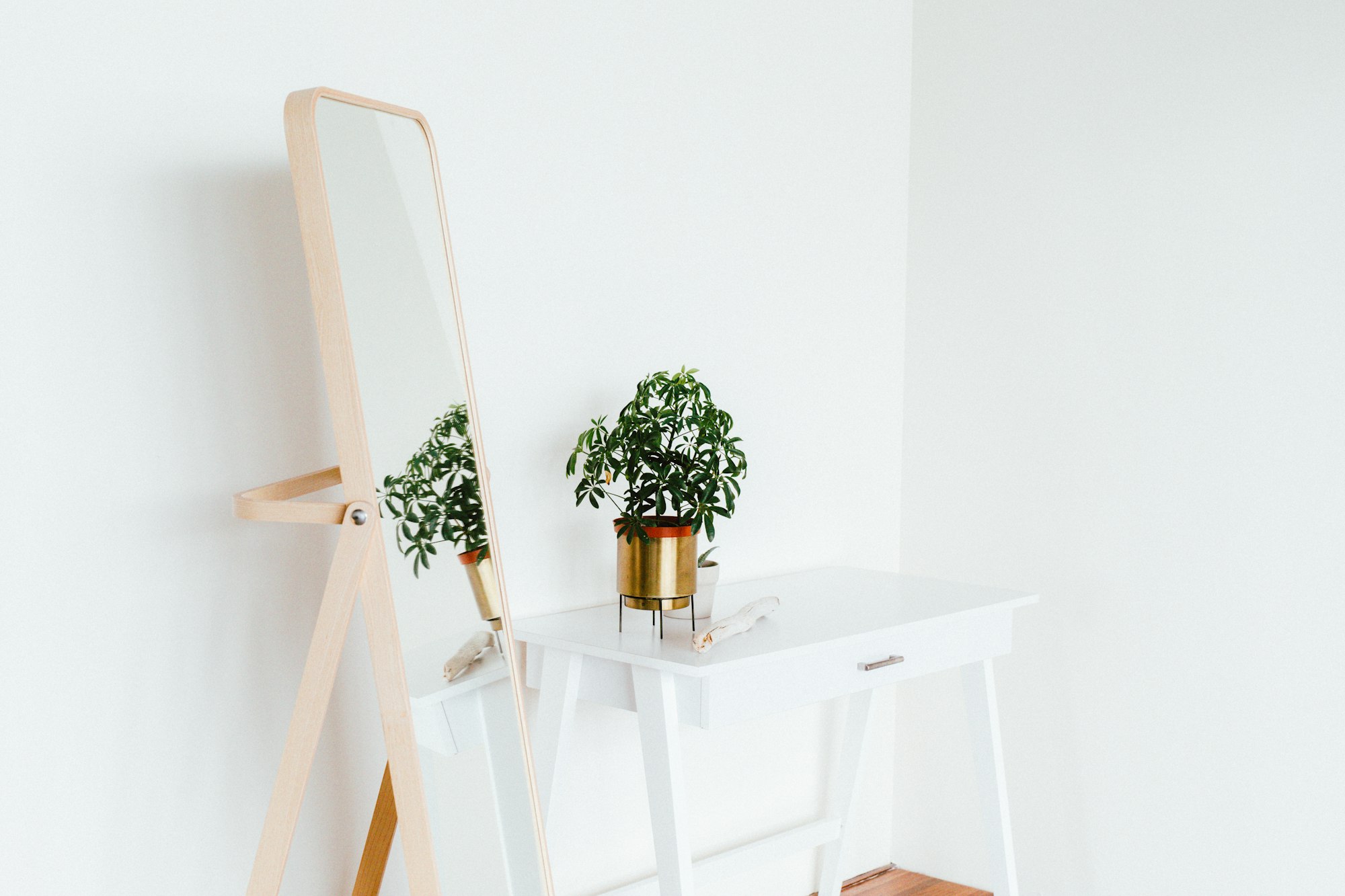
In other rooms, and when used as a decorative item, make sure it reflects beautiful things.