

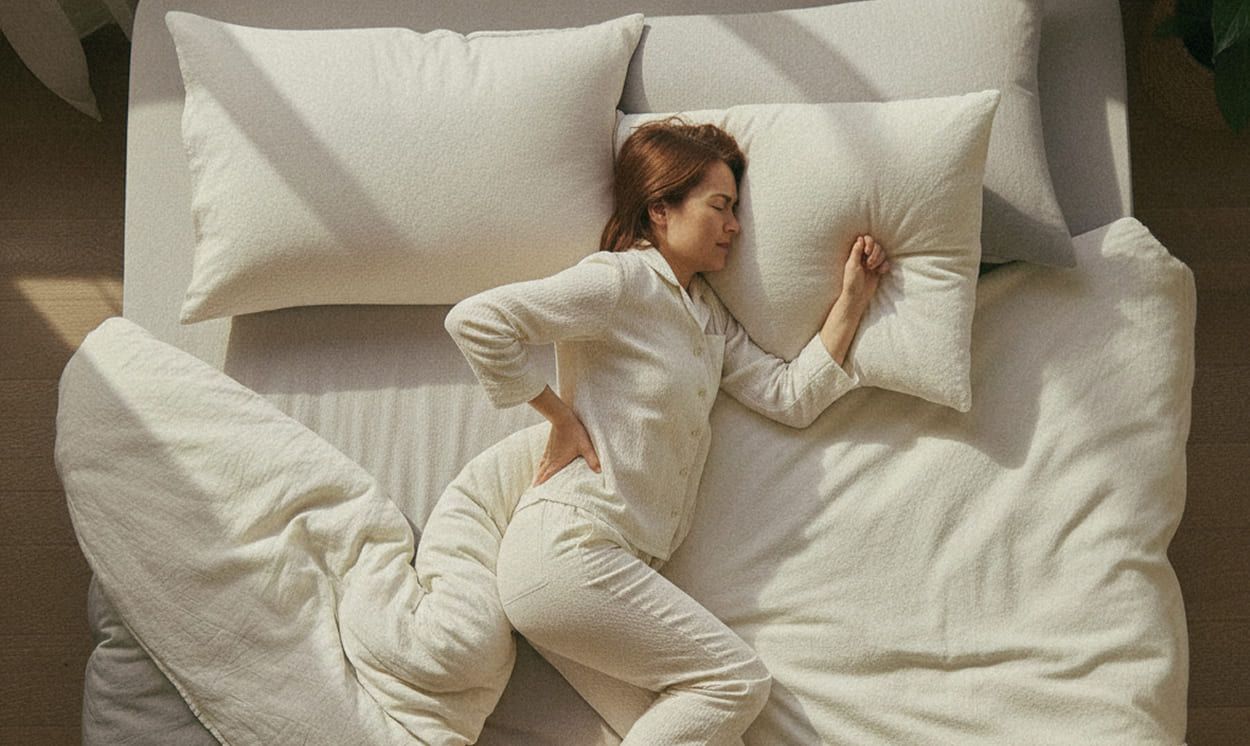
When a herniated disc occurs, it’s not just the day that becomes more difficult. At night, every movement feels more difficult: turning over, finding a comfortable position, getting out of bed in the morning… Things that used to come naturally suddenly require more energy.
Yet sleep remains one of the times when the body can truly recover. The goal isn’t to “push through” the pain, but to create an environment that supports the spine rather than putting additional strain on it: sleeping position, mattress, pillow, small habits before bed… These are all ways to make nights a little more restful, in addition to medical care.
Herniated Disc and Sleep: What Really Happens

A herniated disc occurs when part of an intervertebral disc protrudes from its normal position. Depending on its location (cervical, thoracic, or lumbar) and severity, it can irritate a nerve root and cause pain in the back, neck, or along an arm or leg. When lying down, one might think the pressure would decrease; in reality, staying in the same position for several hours can trigger certain tensions or numbness.
At night, part of the process comes down to the details: how the pelvis is supported, the degree of curvature in the lower back, the alignment of the neck, and the quality of the mattress and pillow. In our article“Back Pain at Night, Back Pain Upon Waking: What to Do?” we’ve already discussed the link between bedding and back pain. Here, we’ll take a closer look specifically at herniated discs and possible adjustments you can make to your sleep routine.
This information is general in nature and is not a substitute for medical advice. If you experience severe pain, loss of strength, sensory disturbances, or unusual symptoms, it is essential to consult a healthcare professional (doctor, specialist, physical therapist, etc.). The purpose of this article is to help you manage your sleep, not to provide a diagnosis.
The Best Sleeping Positions for a Herniated Disc
The Back: Often a Good Starting Point for the Lower Back
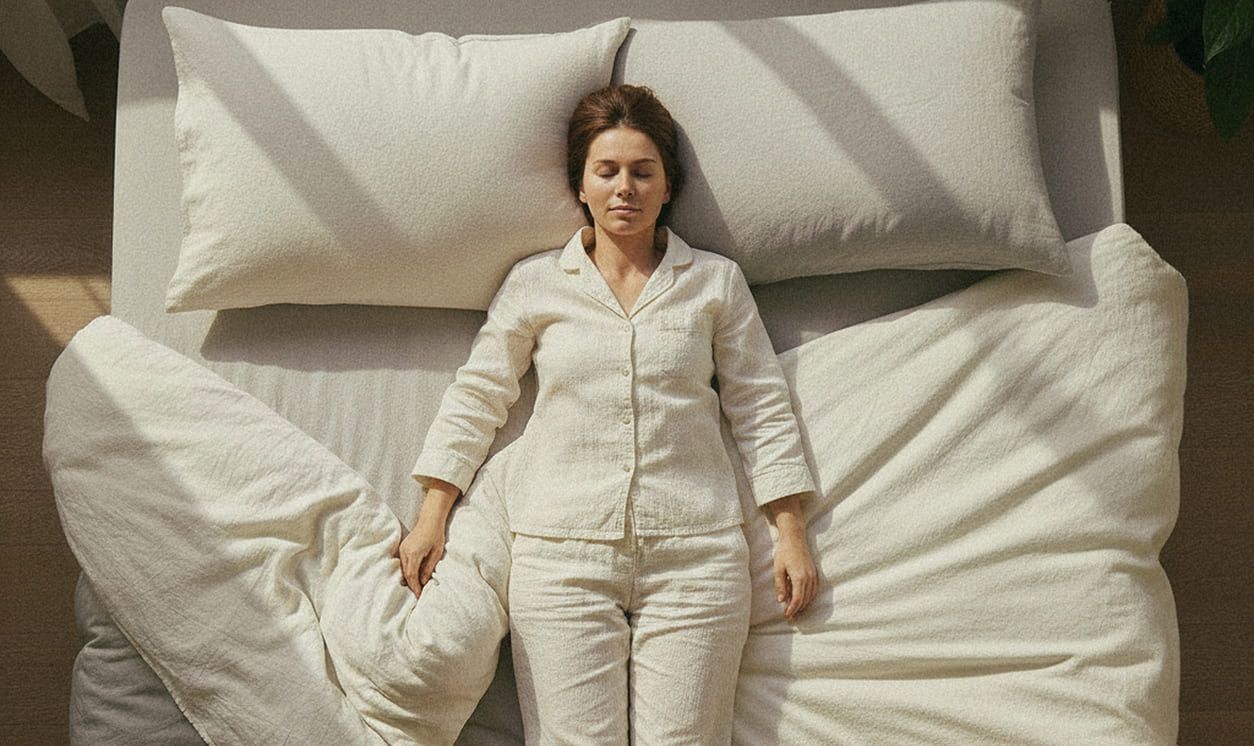
For many people, sleeping on your back remains the most neutral position for the spine. Body weight is better distributed, and it’s easy to adjust a few support points. Slipping a small pillow or bolster under your knees, for example, helps reduce the lumbar curve and ease pressure on the discs in the lower back.
The pillow also plays a role: if it’s too high, your head tilts forward and your neck muscles tense up; if it’s too flat, your neck tilts backward. The idea is for your head to remain in line with your spine, without exaggerating the natural curve of your neck.
On the side: supporting the pelvis–spine axis

The side-lying position is often well tolerated, especially when you take the time to “get into” it. Slightly bending your knees and placing a pillow between your legs helps keep your pelvis aligned, rather than letting it tilt forward or backward. If you feel a gap at your waist, a small cushion slipped between your side and the mattress can also help reduce muscle compensation.
If the herniated disc is more pronounced on one side, some professionals recommend favoring the side that is less painful. This is something you should discuss directly with the healthcare professional managing your case, as every situation is different.
What about the prone position?
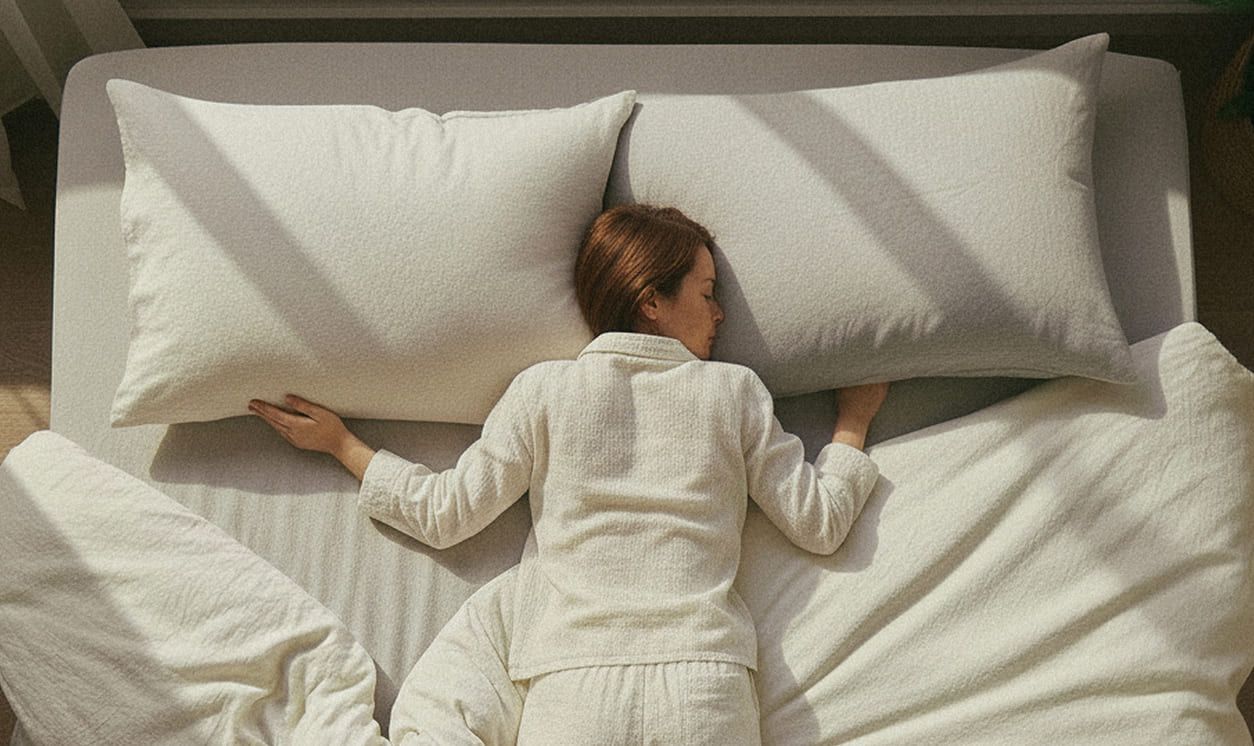
The prone position is generally the most challenging. The neck is turned to the side, and the lower back tends to arch, which can exacerbate certain types of pain. If you can’t do without it, you can—in consultation with your healthcare provider—try placing a small pillow under your pelvis to reduce the arch and choose a very thin pillow, or even sleep without a pillow under your head.
What kind of mattress should you choose if you have a herniated disc?

A mattress won’t cure a herniated disc, but it can really make the difference between a restless night and a more restful sleep. A very soft mattress causes the pelvis to sink, the spine to curve, and the muscles to work harder to compensate. Conversely, a mattress that’s too firm creates pressure points on the shoulders and hips, which can trigger pain or tingling.
The goal is to find a mattress that provides balanced support: firm enough to support the spine, yet comfortable enough to conform to the body’s natural curves. In our guide, “Mattresses for Back and Neck Pain: How to Choose the Right One,” we detail the criteria to consider: density, comfort zones, elasticity, and breathability.
100% natural latex stands out for its ability to conform to pressure without compressing. It adapts to your movements throughout the night while returning to its original shape, which helps maintain better spinal alignment as the hours go by. That’s why we’ve chosen it as the core of our mattresses, with no synthetic foam or added chemical treatments.
The Pillow: A Friend to Your Neck and Back
When we talk about herniated discs, we usually think of the lower back. However, the upper spine is just as important. An unsuitable pillow can create constant tension in the neck, which then affects the entire muscular system. The goal is to fill the space between the head, neck, and mattress without forcing the neck forward or backward.
A natural latex pillow can be a good option: it remains springy, conforms to the neck, and doesn't lose its shape over time. Its breathability helps prevent your head from getting too hot, which contributes to more restful sleep and fewer nighttime awakenings to "readjust" your position.
Simple Steps to Take Before Bed to Reduce Pain
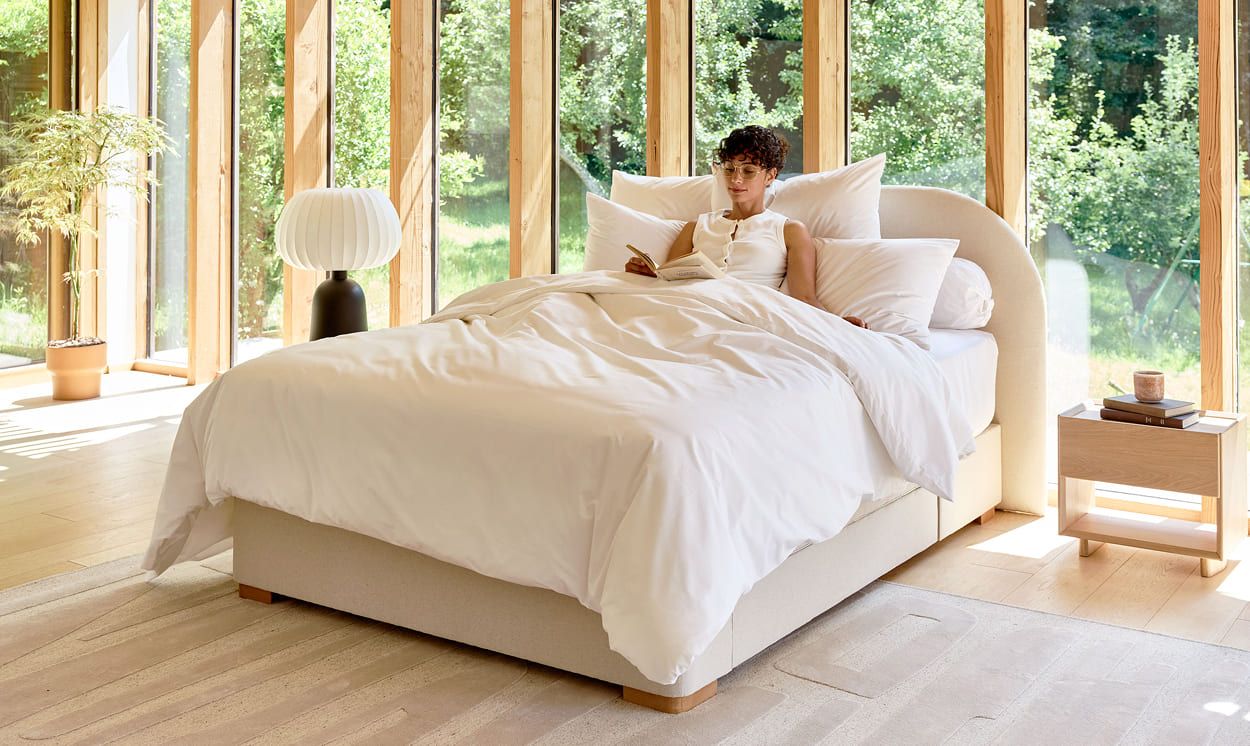
With a herniated disc, even simply going to bed can become a source of anxiety. Establishing a few calming routines before bedtime can help the body “wind down” from the day and prepare for rest, without having to manipulate the spine yourself.
In consultation with a physical therapist or healthcare professional, a few minutes of gentle stretching may sometimes be recommended: take deep breaths, lengthen the spine, and gently move the pelvis or shoulders, always staying within a comfortable range of motion. The idea is never to force anything, but to restore some mobility to areas that have been under a lot of strain.
The atmosphere in the bedroom also matters: a moderate temperature, lighting that gradually dims, and a bed that’s already made to avoid sudden movements when you start to feel tired. These are small adjustments, but they reduce the amount of effort required right before you lie down.
When should you seek professional advice?
Even with proper bedding and adjusted sleeping positions, certain situations require immediate medical attention: severe or unusual pain, significant radiating pain in a limb, loss of strength, sensory disturbances, difficulty controlling the sphincters, or the onset of a fever. In these cases, seeking medical advice takes priority over everything else.
When symptoms are milder, it’s still helpful to check in regularly with your doctor or physical therapist to discuss changes in pain, activities you should adjust, recommended exercises, as well as choices regarding your mattress, pillow, and sleeping positions. The goal is to align the various aspects of your daily life toward the same objective: protecting your spine and promoting recovery.
A herniated disc sometimes forces us to slow down. It can also be an opportunity to rethink how we sleep, to choose bedding that better supports our bodies and helps our homes breathe more freely. A good mattress, a suitable pillow, and simple habits aren’t a substitute for medical care, but they can make the journey more comfortable, night after night.
Kipli, plain and simple.