

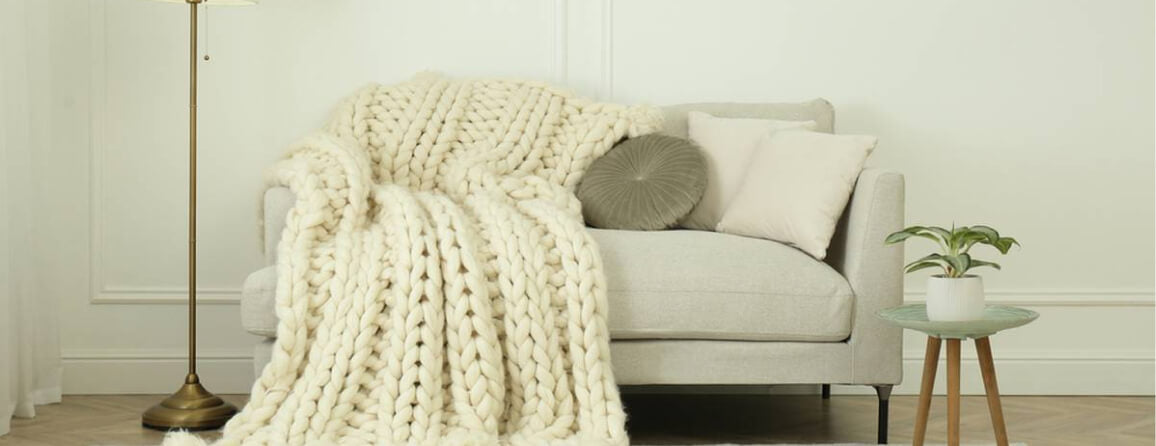
Wool Throw: How to Choose One?
Throws are becoming increasingly common in homes, whether for their comfort or because they blend so easily into interior decor. They’re used as blankets to stay warm in the winter, but also as bedspreads or draped over the sofa.
But how do you choose the right throw? The material is certainly the most important factor to consider. It affects the throw’s quality, comfort, and durability. You should therefore choose from natural materials (cotton, silk, wool, linen, etc.), synthetic materials (fleece, acrylic, polyester, faux fur, etc.), or blended materials.
Wool is very popular for throws: a wool throw is breathable, absorbs moisture, provides warmth, and promotes relaxation. But you still need to choose the right one. Let’s explore the main criteria for choosing a wool throw.

Things to Know Before Choosing a Wool Throw
A wool throw combines comfort and style to create a cozy, warm atmosphere at home. However, before choosing one, it’s important to know how to care for this unique material.
A winter blanket
A wool throw is known for its softness and the warmth it provides. It’s particularly well-suited for staying warm during the cold season, but it can be too warm to use as a blanket in the summer. Of course, in that case, it can also be used as a bedspread or to decorate the sofa.
However, to stay warm in the summer when needed, it’s best to have a throw made of a lighter, more airy fabric, always opting for natural, breathable materials like cotton or linen. In fact, it’s easier to have throws made of different materials at home so you can adapt your interior decor to the changing seasons.
This throw is not recommended for people with allergies or sensitivities
Wool is particularly allergenic. Upon contact with wool, people who are sensitive or allergic may experience symptoms such as itchy skin, eye irritation, and a runny nose. People prone to allergies are therefore advised to choose a blanket made of cotton or any other natural, non-allergenic material. Wool throws should also be avoided for children and babies, as their skin barrier is much thinner and more sensitive.
A throw that requires special care
Household linens and bedding may be easy to care for, but some items require very special care. To preserve the quality of your wool throw for many winters to come, you should:
- Wash it by hand, or possibly in the washing machine, but at a low temperature;
- Do not change the temperature during cleaning, so that it does not get damaged or shrink;
- Do not use detergent that is too abrasive;
- air it out regularly;
- Avoid ironing, which isn't necessary anyway.
If in doubt, the easiest thing to do is to have a professional clean your wool blanket at the end of winter.
What kind of yarn should you choose?
Wool refers to various natural textile fibers derived from the fleece of animals. The thickness, softness, strength, and suppleness of wool depend on its source. The main types of wool are:
- sheep's wool, a classic choice, is moisture-resistant but very heavy and not very soft;
- lamb's wool, which is softer and fluffier than sheep's wool and remains the warmest type of wool;
- Merino wool (from Merino sheep), which is suitable for all temperatures and keeps you warm without making you sweat. It is finer and softer than regular sheep's wool and doesn't itch;
- cashmere (from Kashmiri goats in India), which is very fine and expensive, but also varies in warmth and softness depending on the number of threads used in weaving;
- camel wool, which is similar to cashmere, very rare, and therefore expensive;
- alpaca wool (from alpaca llamas), which is known for its thermal insulation properties, while also being lightweight, soft, and durable;
- mohair (from Angora goats native to Asia Minor), which has the same thermal properties as alpaca wool, with a unique sheen and texture, even though it is not very supple;
- Angora wool (from Angora rabbits), which is very soft and fine, but not very elastic.
In any case, everyone can find the perfect blanket for them based on the characteristics of each type of wool.
Should you choose a throw made of wool blended with other materials?
It is not uncommon to find textile products made from blends of materials. These blends generally help meet consumer expectations and make the products easier to care for over the long term. However, the blend can cause a wool throw to lose its 100% natural look.
The materials most commonly combined with wool for throws are:
- other types of wool, since blending different types of wool is very common in the textile industry to take advantage of the benefits of each;
- cotton, to make a blanket that's a little less warm and softer;
- synthetic materials (acrylic, polyester), which make the throw softer and available in a wider variety of colors and patterns, and also make it easier to care for.
Which wool throw should you choose?
In addition to the comfort they provide, throw blankets are interior decor items in their own right. It’s therefore important to choose not only their colors and patterns, but also their size, based on the room’s decor style and where they’ll be placed.
The Colors of Throws
The natural materials used to make throws offer limited options in terms of colors and patterns. The materials’ original colors are preserved (usually neutral and light), which is not the case with synthetic throws, which can feature brighter and more eccentric colors due to the manufacturing processes they undergo.
This 100% wool throw is usually white in color. It therefore complements any interior design style and helps create a cozy, warm atmosphere in the room.
The size of the throws
The choice of size for a wool throw depends mainly on how it will be used. If it’s used as a blanket, you should consider the height of the people who will be using it. The most common sizes for throws are 130 x 180 cm, 140 x 200 cm, 150 x 200 cm, and 180 x 220 cm.
Whether you use it as a bedspread in the bedroom or as a throw on the sofa in the living room, you should consider the size of each piece of furniture, although any size may work. While large throws offer more options for covering the entire piece of furniture—or can even be tucked away—small throws are usually folded or draped over a piece of furniture.
We recommend these other pages:
- What material should you choose for your sofa throw?
- What material should you choose for your throw blanket?
- Why choose a cotton gauze blanket?
- How do you choose the right blanket size?
- What color should you choose for your throw blanket?
- Solid-color or patterned throw: Which one should you choose?
- How do you choose a throw blanket for a child?
- Which blanket should you choose for a baby?
- How do you choose a throw based on the season?
- How do you drape a throw over a sofa?
- How can I use a throw blanket to cover a sofa in an attractive way?
- What's the difference between a throw and a sofa blanket?
- How to Choose a Sofa Throw?