

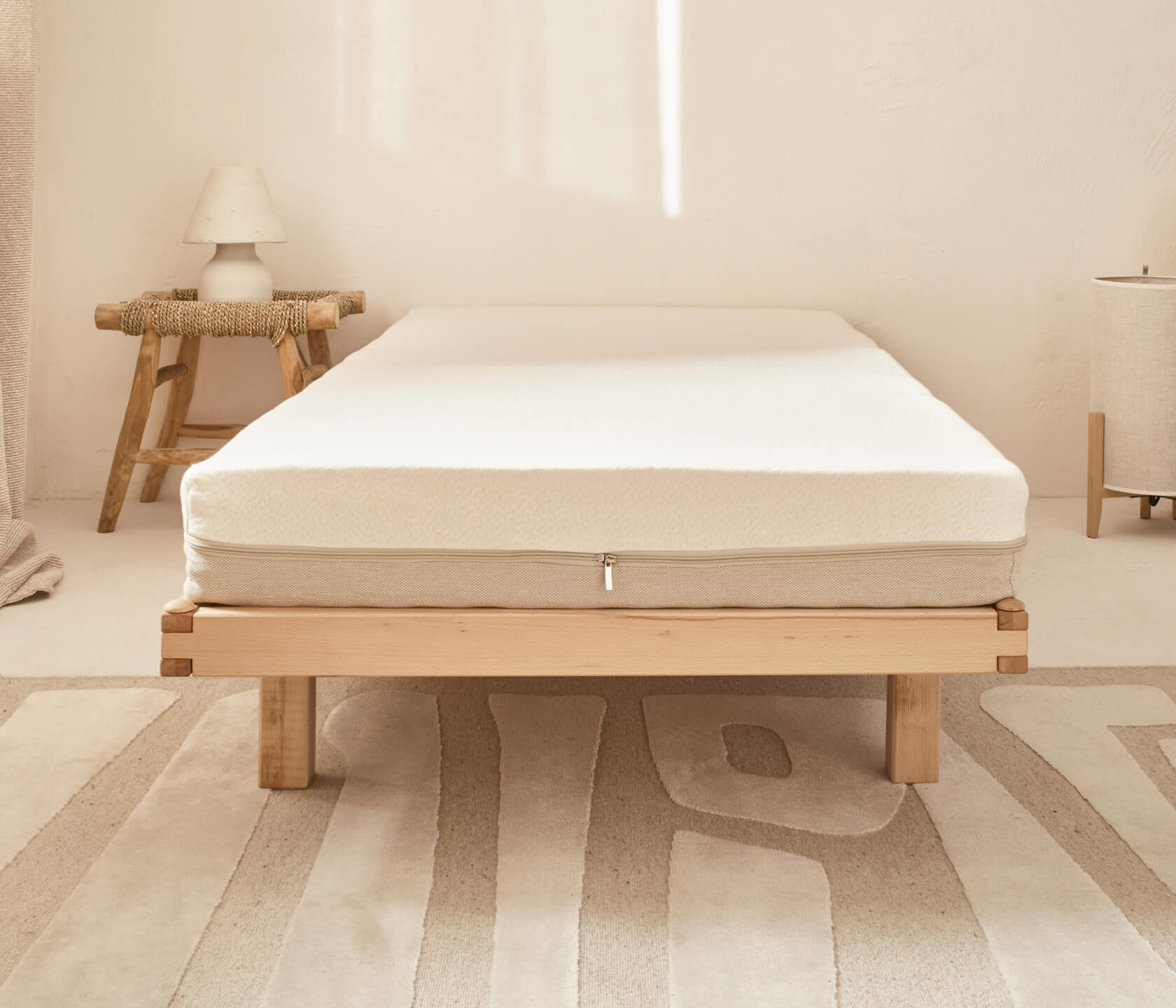
Single mattresses can be a good fit in many situations: for setting up a bedroom for a baby, a child, a teenager, or even a college student; for providing an extra sleeping space in an office or a small room; or simply for single people.
Since a single mattress can be adapted to many different situations, manufacturers offer a wide range of single mattress sizes. This raises the question: Which mattress size should you choose?
In addition to the standard size for single mattresses (90x190 cm), you can choose narrower, wider, or even larger mattresses to suit the sleeper’s body type or the room where the bed will be placed.
To help you make the best choice, we invite you to keep reading and discover all our tips on single mattresses.
Important Factors to Consider When Choosing the Size of Your Bed
Choosing the right bed is essential for getting a good night's sleep and waking up feeling refreshed. So be sure to choose a bed that suits your needs.
In addition to the type of mattress (foam, memory foam, innerspring, etc.), the size of your mattress is an essential factor to consider. The length and width of the mattress should be appropriate for your height and body type.
Tip: Choose a mattress that is 15 to 20 cm longer than your height.
But the size of the mattress can also be determined by the available space in the bedroom. It’s therefore best to take measurements before buying a bed and mattress, and to keep in mind that you’ll need 60 cm of clearance on either side of the bed to move around it comfortably.
Finally, the last factor to consider when choosing a mattress size is the one that will be of interest to us going forward: the number of people sleeping in the bed. For people who sleep alone, it’s sometimes wiser to opt for a single mattress designed for solo sleepers. Single-size mattresses are suitable for babies, children, teenagers, and adults, which is why manufacturers offer a variety of sizes to better suit the user’s needs.
The different sizes available for single mattresses
There are several mattress sizes that may be suitable for one person. It’s helpful to know the different options so you can choose the mattress size that best suits your needs.
The 90 x 190 cm mattress
The 90 x 190 cm mattress is the standard size for a single person. This size is suitable for the vast majority of people, including children, teenagers, and adults.
The advantage of a 90 x 190 cm mattress is that it’s very easy to find a bed frame, box spring, and bedding that fit this very common size. Foam, memory foam, springs, latex —mattresses in this size are also available in all types of materials.
For children : The advantage of choosing this mattress size for a child is that you won't need to replace it over time as the child grows.
For adults: This standard size fits most adults. It is wide enough to allow for comfortable movement. As for the length, it is suitable for people who are no taller than 1.70 meters.
The 70 x 140 cm mattress
Its small size makes this mattress ideal primarily for babies. In fact, its dimensions allow it to fit into cribs with railings that prevent young children from falling out while they sleep at night or during naps.
The 70-centimeter width is enough for the child to move around. The length means you won't have to replace the bed every two months as the child grows.
These mattresses are usually foam mattresses, as they provide the support that is essential for young children's development.
The 100 x 200 cm mattress
The French population is getting taller and taller. 5% of women are taller than 1.75 meters, and 10% of men are taller than 1.80 meters.
For older children, there are single mattresses that are slightly larger than the standard size. These mattresses measure 100 x 200 cm—10 cm wider and 10 cm longer than standard single mattresses.
People who are larger in build will also have more width to work with, ensuring greater comfort at night.
The 80 x 200 cm mattress
Less common, the 80 x 200 cm single mattress is originally designed for adjustable beds with one or two sleeping surfaces that operate independently of each other. This type of mattress is therefore ideal for electric bed bases.
However, the narrow width may be a drawback for sleepers who move around a lot at night, but the length, on the other hand, may be suitable for taller people. These dimensions are commonly found in beds for children or teenagers, who don’t need much width but benefit from the extra length as they grow.
Our Tips for Choosing the Right Size for Your Single Mattress
As you may have noticed, manufacturers offer a variety of sizes for single mattresses. Choosing the right size for your single mattress depends on various factors related to the sleeper’s key characteristics: age, height, weight, and circumstances. For example, a child and an adult will not have the same needs when it comes to bedding.
It's also a good idea to choose the size of your single mattress based on the available space in the room, especially in a student studio or a small bedroom.
Here are a few of our tips to help you choose the right size for a single mattress:
- For adults: A standard-size mattress (90x190 cm) will suit the vast majority of adults. If you are taller or have a larger build, you may want to choose a larger mattress size (90x200 cm, 100x200 cm, etc.);
- For teenagers: the standard size may be suitable, but it's also possible to choose a narrower size, such as the 80x200 cm mattress;
- For children: A standard single mattress is also an option, as are 80 x 200 cm mattresses, but you’ll need to pay close attention to the thickness to ensure the mattress is suitable for the child’s weight;
- For babies and toddlers: Mattresses come in several sizes (70x140 cm, 60x120 cm) to fit cribs.
In addition to size, you should also pay attention to the mattress’s composition: foam, memory foam, latex, springs, etc. We strongly recommend avoiding mattresses made of synthetic materials that contain chemicals. Foam mattresses can also trap heat and moisture, which can promote the growth of dust mites and bacteria. To avoid this problem, you may want to consider mattresses made from materials such as natural latex.
We recommend these other pages: