

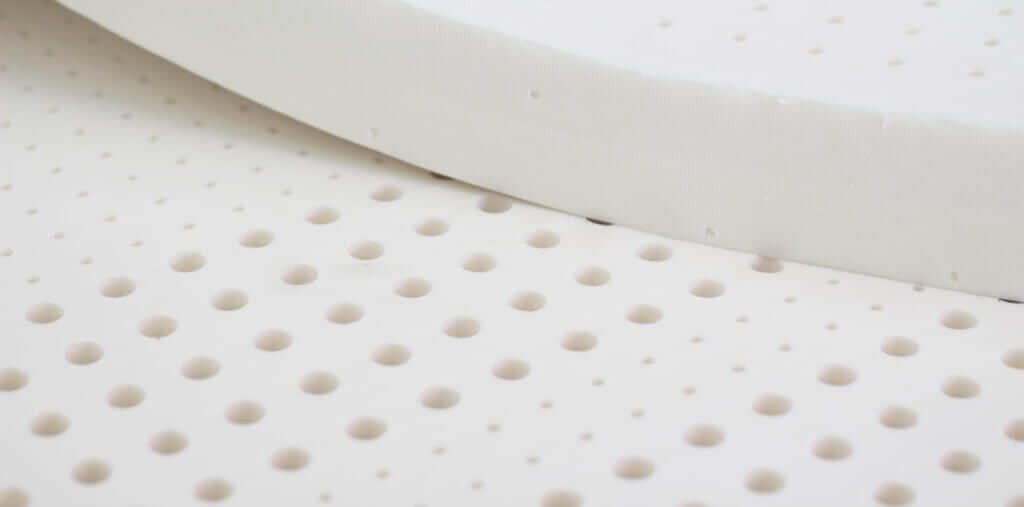
Choosing a mattress can be difficult given the multitude of factors to consider: density, breathability, firmness, hypoallergenic properties, number of support zones, thickness, and so on. This requires paying close attention to technical details, such as understanding the composition of mattresses available on the market. Among the materials most commonly used in mattress manufacturing is natural latex.
A popular material in high-end mattresses, natural latex is valued for its mechanical resilience, durability, and natural breathability. What are the other characteristics of natural latex? What are the differences between natural latex and synthetic latex? What advantages does natural latex offer compared to springs or polyurethane foams? Here, we take a closer look at the composition and properties of natural latex mattresses.
The Core of a Natural Latex Mattress
The natural latex used in mattresses comes from the sap of the rubber tree. Initially a liquid, it is mixed with vulcanizing agents to make it firm while ensuring its elasticity. A mattress labeled "natural latex mattress" refers to a mattress that has:
- The composition is 85% natural latex (the remainder being vulcanizing agents that make it denser and stiffer);
- the ability to avoid emitting volatile organic compounds (VOCs), which are substances sometimes used in bedding (mattresses, pillows) and that can be inhaled by sleepers while they sleep (independent certifications, such as Eco-Institut, guarantee the absence of harmful emissions).
The core of a mattress is its center or heart; it consists of a block of integrated materials or a single component. The purpose of this part of the mattress is to provide support for the sleeper’s body. Natural latex cores can range in thickness from 10 to 25 cm. It’s worth noting that natural latex cores provide true independent sleeping zones. They absorb the sleeper’s movements and prevent them from transferring to other areas of the mattress, unlike spring mattresses, for example.
The density of natural latex in mattresses determines the quality of support and firmness: soft, firm, supportive, etc. The choice of density depends on the sleeper’s needs, weight, sensitivity, and potential health issues (allergies, osteoarthritis, rheumatism, etc.). The firmer the mattress you’re looking for, the higher the density you’ll need.
The cellular structure of natural latex mattress cores allows them to regulate the temperature of the sleeping surface while you sleep. As a result, mattresses made of natural latex are well-suited for sleepers who are prone to night sweats, for example. Finally, natural latex’s thermoregulatory and breathable properties make it a hypoallergenic, dust-mite-resistant, and antibacterial material.
The filling of a natural latex mattress
The padding or quilting layer covers the core of the natural latex mattress. The preferred fillings for natural latex mattresses are plant-based materials: linen, cotton, bamboo fibers, or coconut fibers, among others. The airy, fibrous structure of linen or cotton padding provides the mattress with a “breathable” layer. In reversible mattresses, sheep’s wool or alpaca wool may be used on the side designated for winter use.
The fabric cover of natural latex mattresses
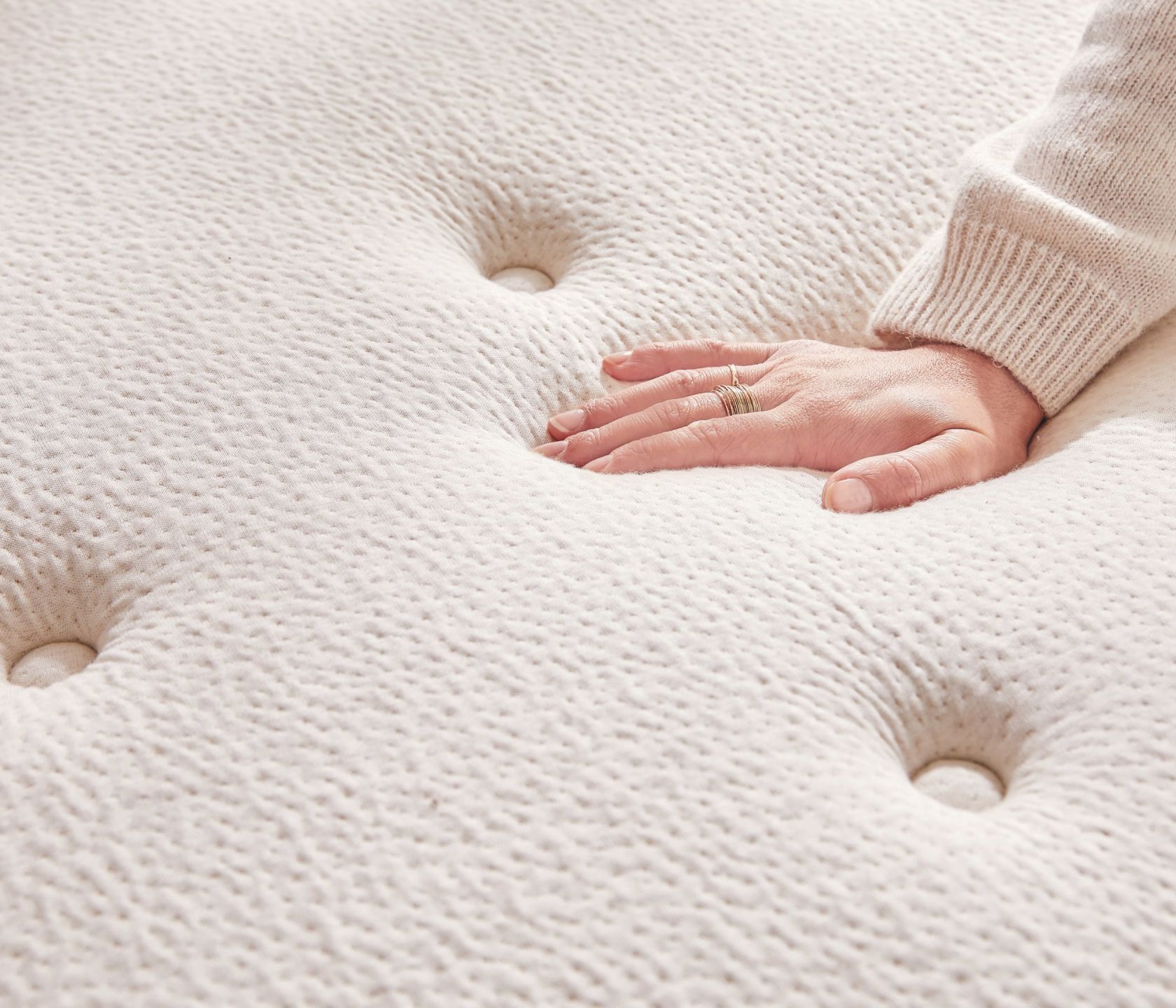
The mattress cover envelops the core and the natural latex filling. It serves asthe mattress’s outer layer. The cover and the filling determine the mattress’s feel—that is, how it feels when a person lies on it (soft, firm, supportive, etc.).
The materials used in the mattress cover, as well as its stitching, determine its density, breathability, and firmness. Thus, the mattress covers used in natural latex mattresses can be:
- organic cotton to ensure a soft, plush feel. In addition, organic cotton is known for its absorbency. It is therefore well-suited for wicking away sweat and regulating body temperature in hot weather;
- Sheep's wool is used not only for the comfort it provides, but also for its thermal insulation properties. It is often used in reversible mattresses or those with a summer side and a winter side.
Thus, the choice of materials used addresses various needs: temperature regulation, breathability, whether firmness is required or not, etc.
The Differences Between Natural Latex and Synthetic Latex
Synthetic latex, as its name suggests, is produced through petrochemical manufacturing processes. It mimics natural latex in terms of its hypoallergenic properties and breathability. The manufacturing process for synthetic latex reduces the cost of mattresses made with it. Unlike natural latex, which is derived from the sap of the rubber tree, synthetic latex is therefore an affordable material.
However, the density of synthetic latex does not exceed 70 kg/m³, whereas that of natural latex can reach 95 kg/m³. Nevertheless, synthetic latex offers superior mechanical resilience and durability compared to other materials used in mattress construction, such as synthetic foams (polyurethane, memory foam, etc.).
The Benefits of Mattresses Made from Natural Latex
Natural latex mattresses offer a variety of benefits that make them highly sought-after and popular sleeping surfaces:
- adaptability to all body types thanks to their elasticity;
- breathability resulting from the air pockets in the latex, which helps keep the mattress cool and ensures the sleeper's comfort;
- The hypoallergenic properties of natural latex make it an ideal material for people with sensitivities;
- their lifespan, which exceeds 10 years and can reach 15 years in some cases;
- separate sleeping surfaces and the absence of noise caused by movement during sleep;
- taking into account the different support zones. This can range from 3 to 7 support zones managed by each mattress;
- Since the production of natural latex mattresses is environmentally friendly, it has a low ecological impact compared to that of mattresses made from synthetic materials derived from petrochemicals (polyurethane foams).
In conclusion, natural latex mattresses are made from the sap harvested from the Hevea tree. In addition to their natural composition, they offer properties that are difficult to replicate with synthetic products. Kipli mattresses are classified as “100% natural latex” mattresses and are therefore composed of more than 85% natural latex. Eco-friendly and durable, they stand out from synthetic foam and spring mattresses due to their comfort and lifespan of over 10 years. The high cost of these mattresses is therefore offset by their durability and properties, including being hypoallergenic and thermoregulatory.
We recommend these other pages: