


Un sommier, on le choisit parfois à la fin. Pourtant, c’est lui qui porte tout le reste : le matelas, le corps, les nuits qui s’allongent. Un sommier bois massif, lui, ne cherche pas l’effet : il cherche la tenue. La stabilité, la respiration, le temps. Et c’est souvent là que la différence se ressent : dans le silence d’une structure qui ne bouge pas, et dans une matière qui reste simple.
Table of Contents
- • Why Solid Wood Is a Game-Changer
- • Firm or flexible slats: Which type of support should you choose?
- • Wood types: okoumé, beech, oak… how to choose
- • Finishes and Health: What We’d Rather See (and Not Breathe In)
- • Three Kipli versions of the solid wood bed frame
Why Solid Wood Is a Game-Changer

Solid wood is a living material. It has a grain, a density, and a history. But above all, it bears the weight of everyday life. When a bed frame is designed using solid wood—with sufficiently thick wood sections and precise joints—it doesn’t just look the part. Itholds up. And that durability translates into very tangible benefits: a more stable structure, fewer micro-movements, less noise, and a sense of a secure foundation, night after night.
Another thing we love about asolid wood bed frame is the way it ages. Wood can develop a patina, settle, and tighten up. A well-designed piece stands the test of time without losing its function. If a support point shifts, a slat wears down, or a detail shows signs of wear, the solution is often simple: replace a slat, tighten a joint, or adjust a leg. In other words, we extend the life of the object instead of replacing it.
Conversely, many standard structures use engineered panels (particleboard, melamine-faced panels, etc.). These allow for rapid, large-scale production, but they often requireresins,adhesives, and finishes that provide greater coverage...
Et il y a un autre point, plus discret, mais essentiel : la réparabilité. Un sommier en bois massif est souvent conçu comme une charpente : des pièces qui s’emboîtent, qui se démontent, qui se remontent. C’est précieux si l’on déménage, si l’on veut faire durer, ou simplement si l’on préfère un objet qui reste compréhensible.
Firm or soft slats: Which type of support should you choose?
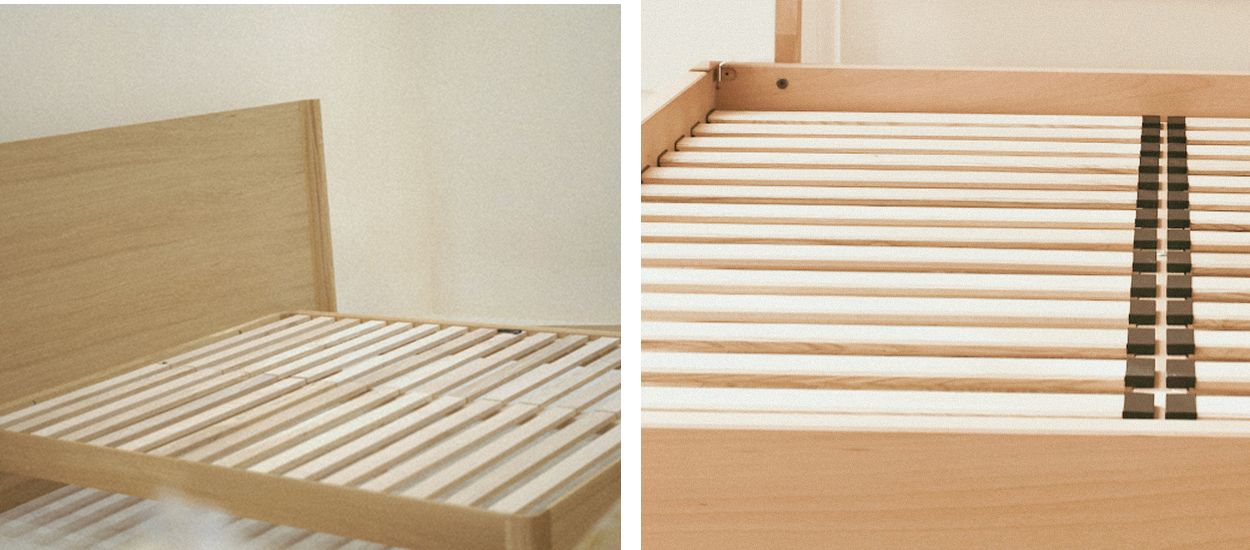
Le mot sommier recouvre deux choses : la structure… et le travail des lattes. C’est souvent là que le ressenti se joue. Les lattes sont la zone de contact entre le matelas et le lit : elles peuvent rendre un couchage un peu plus ferme ou un peu plus accueillant, elles participent à la bonne tenue du matelas dans le temps, et elles influencent aussi la ventilation sous le couchage un détail discret, mais précieux au quotidien.
Rigid slats: firmer support, very clear
Firm slats provide a morestableand“secure” feel. They’re often a good fit for people who prefer a firm sleeping surface or who want to maintain the mattress’s contour (especially with naturally elastic materials like latex). The key point:uncovered slatsallow forbetter air circulation beneath the mattress, which helps keep your bedding more breathable, night after night.
Flexible slats: more bounce, more comfort
Soft slats provide a bit moregive: they better accommodate your movements and offer a more “springy” feel. They may be a good fit if you’re looking for a more enveloping sensation, or if you prefer less “firm” support. It’s neither better nor worse—it’s a matter of personal preference, body type, sleeping position… and the mattress.
Wood Types: Okoumé, Beech, Oak… How to Choose
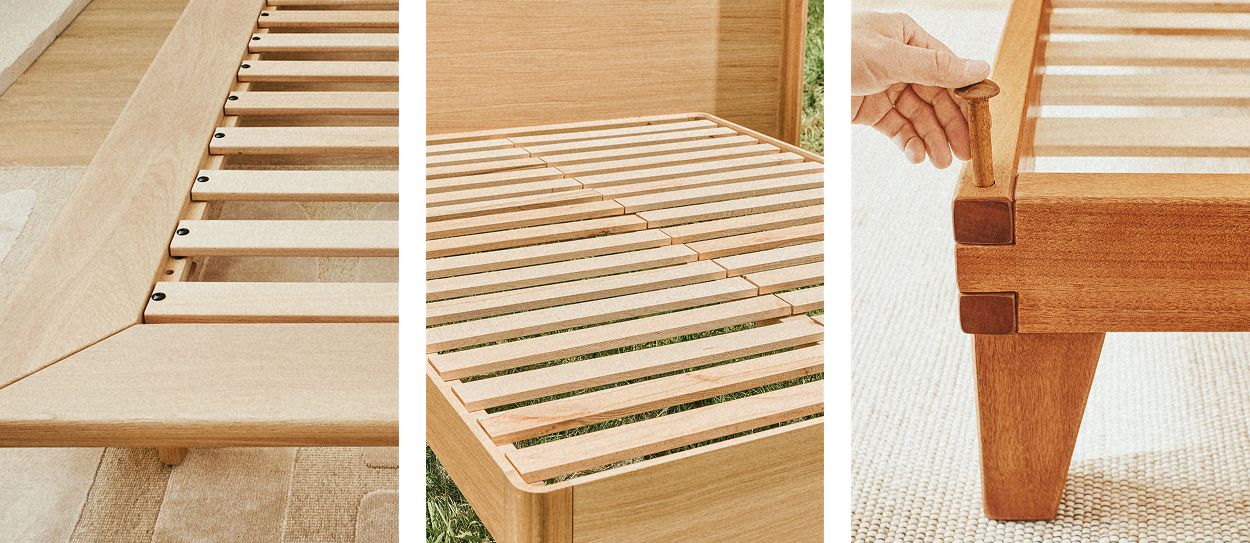
Solid wood comes in different species, and each has its own character. The color, the grain, the density, the way the wood ages over time… all of these factors matter just as much as the design. But to simplify your choice, you can start with a Kipli guideline: look for a wood species that’s suitable for its intended use, and one with a provenance that’s as clear as possible. A bed is a piece of furniture that’s handled frequently (assembly, moving), that lives in a bedroom, and that needs to remain sturdy for a long time.
Okoumé oftencaptivateswith its warmth and visual softness: an amber hue and a subtle presence that blends in easily.Beech, which is denser, evokes a “workshop-like” precision: a stable wood, perfect for clean lines and pieces designed to last.Oak, for its part, offers obvious sturdiness and a timeless quality that transcends styles: it adds structure to a bedroom without making it feel heavy.
Ultimately, the right question isn’t “Which wood is best?” but “Which wood tells the right story for me?” If you’re looking for a lighter, more minimalist look, beech or oak are often the best choices. If you prefer a more amber hue, okoumé might be the obvious choice. And in any case, look for transparent information: the wood’s origin, the workshop where it was made, and finishes described as understated.
Finishes and Health: What We’d Rather See (and Not Breathe In)
A solid wood bed frame is, first and foremost, wood. But it’s also the materials that protect it:oil,wax, andvarnish. These finishes serve a very simple purpose: to protect the wood from everyday wear and tear, make it easier to maintain, and preserve the wood’s appearance over time. The goal isn’t to sound “natural” in theory, but to remain consistent in your choices—especially in a bedroom, where you’re seeking a more serene environment.
In practical terms, a “minimalist” finish can be recognized by two things: itallows the wood to show through(you can see the grain and feel the texture), and it avoids adding unnecessary complexity. This is also where the issue ofVOCs(volatile organic compounds) serves as a useful indicator: when a brand specifies “VOC-free,” it signals a commitment to indoor air quality and careful control over the products used. And even when the finishes are safe, one precaution remains essential: ventilate the room regularly, especially after installing new furniture.
At Kipli, we prioritize finishes that reflect this philosophy of simplicity.The LUCA line features a hand-applied finish (oil or vegetable wax, depending on the piece), designedwithout glueoradded chemical treatments: a clear, artisanal approach. ForNOVAandLIVIA, the philosophy is the same:VOC-freeorwater-basedvarnishes to keep the room “calmer,” a visible material, discreet protection, and overall consistency.
Three Kipli versions of the solid wood bed frame
To make this all a bit more concrete, here are three ways Kipli uses solid wood. Not to “sell a model,” but to show how choices in materials, slats, craftsmanship, and finishes make a real difference.
Traditionally assembled,with no screws or plastic parts, made of solid wood and finished by hand. A piece designed to evoke a serene, open-frame structure, where simplicity translates into true comfort.
NOVA: Local Precision
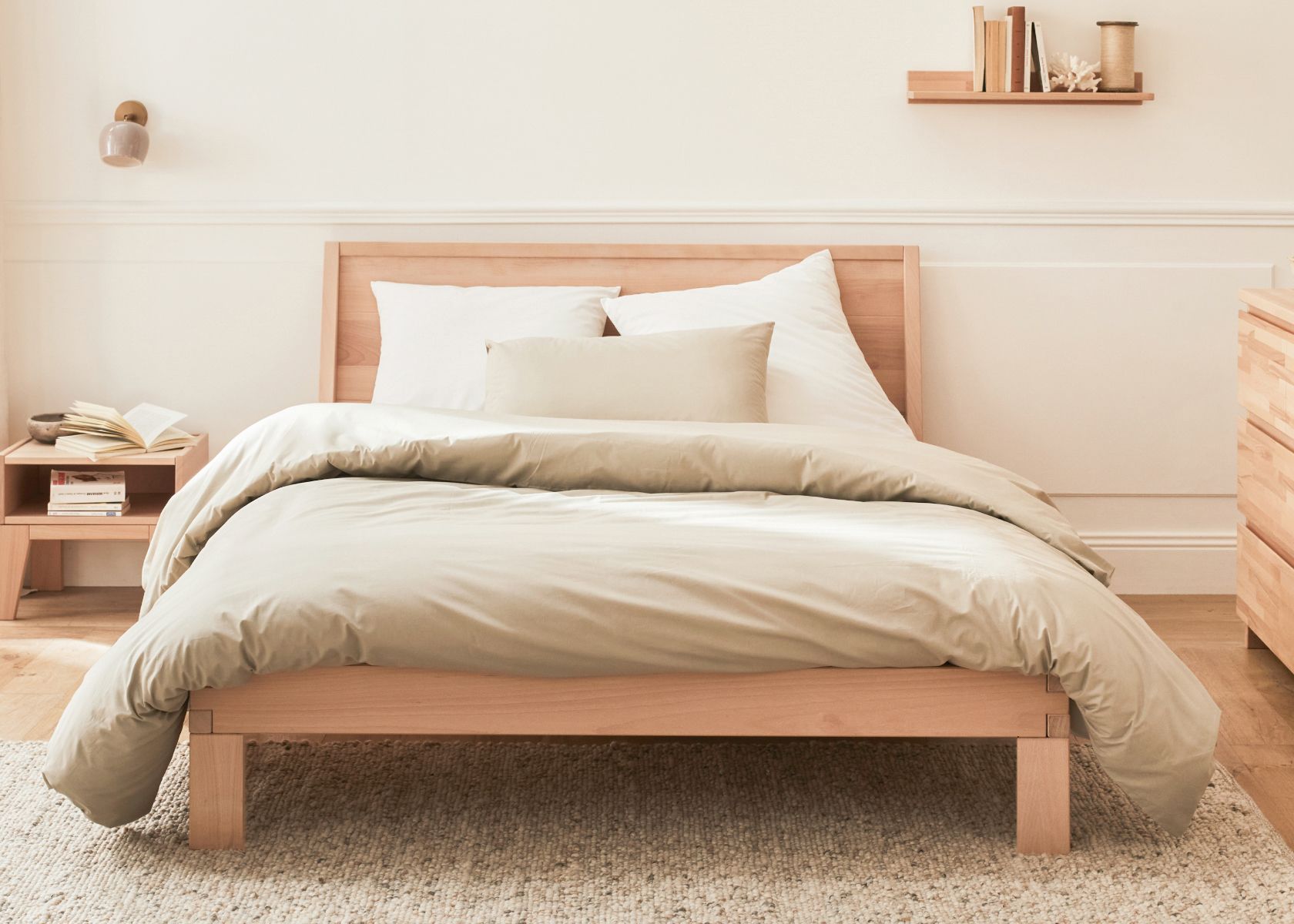
Solid French beech (PEFC, Bois de France), VOC-free finishes, and the option to choose a more adaptable support system thanks to the slats. A modular bed, designed to adapt to your sleeping style.
See NOVA
Discover the material-based approach
LIVIA, the stable platform
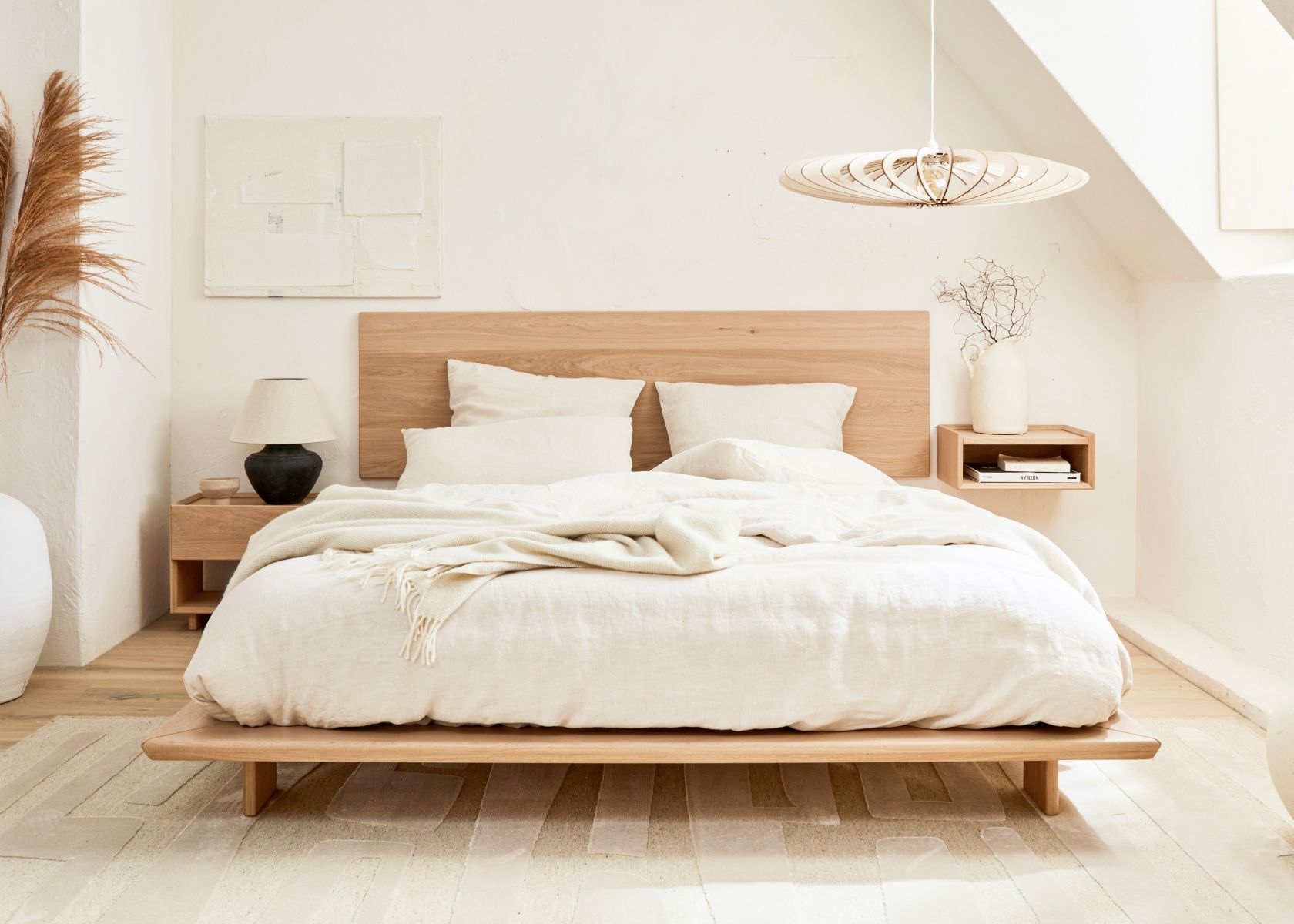
Solid French oak (Bois de France), made in France, with a water-based, VOC-free finish, andrigid, uncoated slatsforfirm support and good breathability.
Ultimately, choosing a solid wood bed frame means choosing a base that doesn’t make noise: a material that’s easy to understand, a stable structure, proper ventilation, and finishes designed to remain understated. These are details that aren’t meant to impress, but that make a difference over time. At Kipli, we love this idea: designing pieces that stand the test of time, that respect the bedroom as a place of rest, and that simply make room for what matters most: a good night’s sleep.
Kipli, plain and simple.