


Children's Duvets: The Ultimate Guide to Choosing the Right One
When it comes to bedding and blankets, the comforter immediately evokes a sweet sense of nostalgia. Some may even remember nights spent at their grandmother’s or great-grandmother’s house during their earliest childhood! Long considered outdated or out of style, the predecessor to modern comforters is making a strong comeback in the bedrooms of both adults and children. Its aesthetic appeal is a hit in homes, as it adds a timeless touch to interior decor, but it’s above all its gentle warmth that parents seek to help their children sleep soundly.
Which comforter should you choose for a child? At what age can you start using one in a baby’s bedding? Materials, sizes, and uses—find all the answers to your questions and the best buying tips in this comprehensive guide.
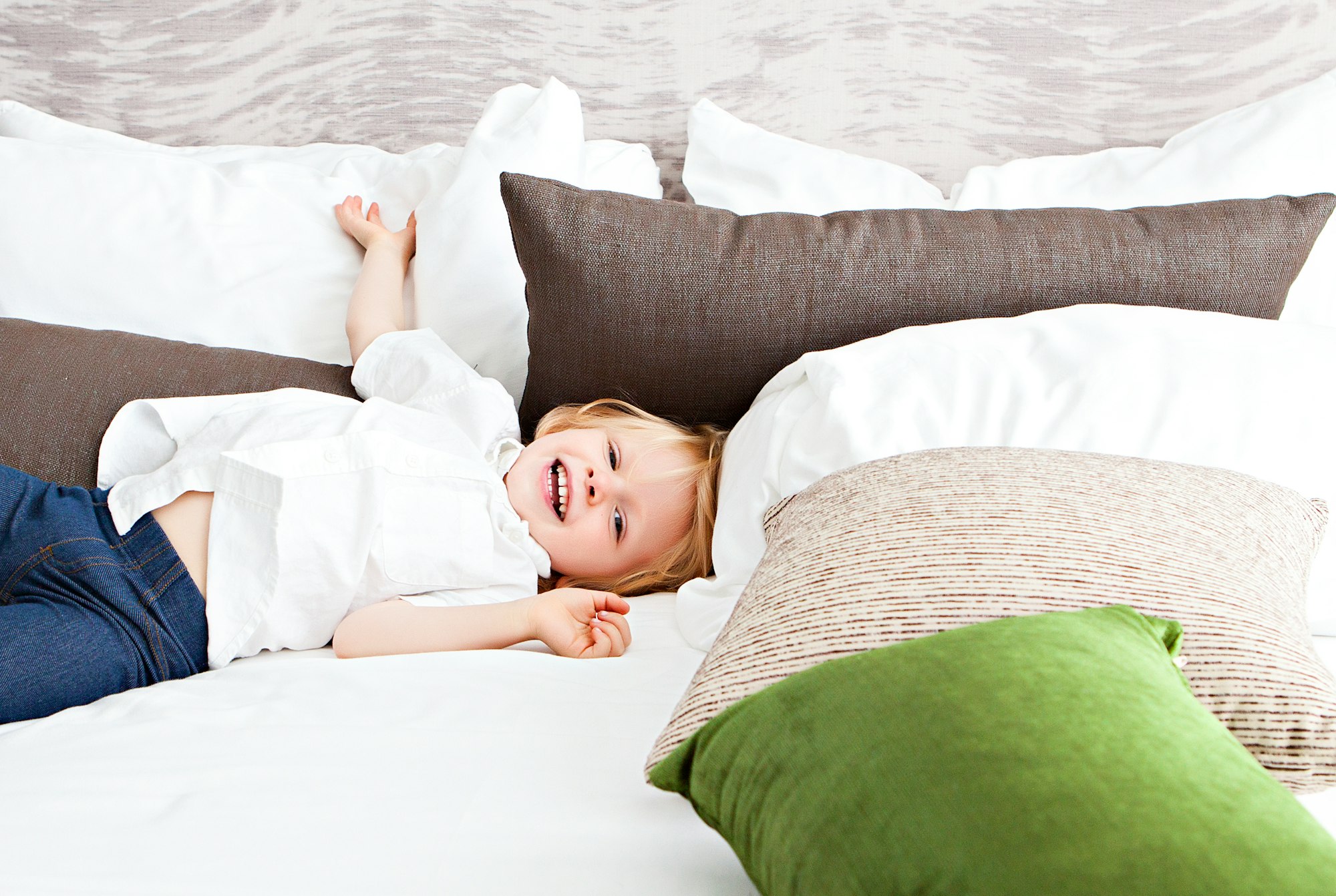
Why use a comforter in the kids' room?
Although often likened to a small comforter or throw, the eiderdown has some very distinctive characteristics. In the Middle Ages, this bedding item was placed beneath the sleeper to insulate them from the straw mattress and provide greater comfort. With the advent of cotton mattresses, its use changed, and it came to be placed on top of the sleeper, like a blanket.
These days, in modern homes, it’s a common sight in both adults’ and children’s bedrooms, valued both for the extra warmth it provides in winter and for its decorative appeal. It differs from a comforter in two specific ways: its extraordinary loft and its dimensions, which fit the mattress perfectly. This type of blanket does not hang over the sides of the mattress, nor does it cover the area reserved for the pillow.
Quilted or old-fashioned: Which type of comforter should you choose for your child?
The old-fashioned comforter is reminiscent of the one Grandma used to use. It’s known for its fluffy, cozy, and soft appearance, which is reminiscent of a giant pillow placed on top of the bed. Playful and unique, this type of bedspread is a hit with little ones.
The quilted comforter—also known as a flat comforter, American-style comforter, or piqué comforter—is characterized by diamond- or square-shaped stitching across its entire surface. It is prized for its neat, polished look, especially in a child’s bedroom. You can choose bright colors or patterns to perfectly match your little ones’ favorite themes.
At what age can a child start using a children's comforter?
Comforter blankets—whether quilted or traditional—are not suitable for infants due to the risk of suffocation they may pose. In a crib, babies don’t need them anyway, since a sleep sack is much better suited to their needs. It’s recommended to wait until your child moves to a crib with railings before adding one to their sleeping area.
Starting at 18 months or one year of age, it’s perfectly fine to let your baby sleep with a duvet or comforter of the appropriate size during naps. It’s best to wait until your child is 2 years old before using one all night long. For added safety, keep a close eye on young children while they’re getting used to this new item to ensure it doesn’t obstruct their breathing in any way.
What materials should you choose for a children's comforter?
The word “édredon” has its roots in the Nordic languages. It is often associated with the Danish root “ederdun,” but it is the Icelandic word “æðardúnn”—literally “eider down”—that most closely reflects its etymology in the ancient Viking languages.
-
A traditional eiderdown comforter
The eiderdown comforter can therefore be considered the original, but it is a luxury product due to its many qualities and its rarity. This filling material is the warmest and lightest in the world. No other material on the planet can rival its insulating power for such a light weight.
The eider, a seabird native to subarctic regions, likes to nest on Iceland’s rugged coastlines. The Land of Ice and Fire, where the bird has been protected since 1847, is by far the world’s leading producer of this precious down, far ahead of Canada and the other Scandinavian countries.
-
Duvets made of natural or synthetic materials
Fortunately for the average consumer, there is a wide variety of duck- and goose-down comforters available on the market, which helps keep the purchase price down. The average cost remains fairly high compared to synthetic materials, but it’s important to be mindful of the toxicity of textiles derived from the petrochemical industry. They emit large amounts of VOCs (Volatile Organic Compounds) and are likely to cause health problems, particularly in children. The Oeko-Tex label ensures that products contain no harmful substances.
Down and feathers also offer unmatched thermoregulatory properties. With this filling, traditional comforters are naturally fluffy and, above all, more durable. With proper care, they can easily last between 10 and 15 years.
How do you choose the right size comforter for a child's bed?
As mentioned earlier, a duvet is significantly smaller than a comforter. To choose the right size, simply refer directly to the length and width of the bed. The width is the same, but to determine the ideal length, you generally need to subtract 30 cm from the head of the bed to leave enough room for the pillow. Some manufacturers offer sizes that are exactly the same as the mattress, but this isn’t usually the norm. To simplify things, here are the standard comforter sizes available on the market:
- For toddlers between 18 months and 3 years old—that is, for a standard-size bed measuring 60 x 120 cm—duvets should ideally measure 60 x 80 cm and no larger than 60 x 120 cm;
- Children's beds measuring 70 x 140 cm are suitable for children up to age 5; the standard size for comforters is 70 x 110 cm, but they can be as large as 70 x 140 cm;
- From age 5 through adolescence and even into adulthood, children sleep in a single bed, which measures either 90 x 190 cm or 90 x 200 cm; the most suitable comforter size for this bed is 90 x 160 cm or 90 x 170 cm.
How do you care for a child's comforter?
The main drawback of traditional comforters is that they are difficult to care for because of their loft. On a daily basis, simply shaking out the comforter is enough to restore its fluffy appearance, but when it comes time to wash it, it’s best to take it to a professional dry cleaner. In a child’s bedroom, bedspreads often get rough treatment, which is why it’s best to protect them with a cover—also known as a comforter cover—that’s machine-washable and easy to replace.
Quilted comforters are easier to care for because the down, distributed throughout the bedding, is held in place by the seams. Generally, machine washing requires the delicate cycle and a temperature not exceeding 20 to 30 °C. On the label, manufacturers provide instructions to follow to prevent premature wear.
Choosing a comforter for a child requires special consideration based on the child’s age—in terms of shape, materials, size, and intended use. Prices vary widely depending on the type of filling used. As with duvets, some brands provide warmth ratings or weight specifications based on the season: the thickest comforters are for winter, and the lightest are for summer.
We recommend these other pages: