

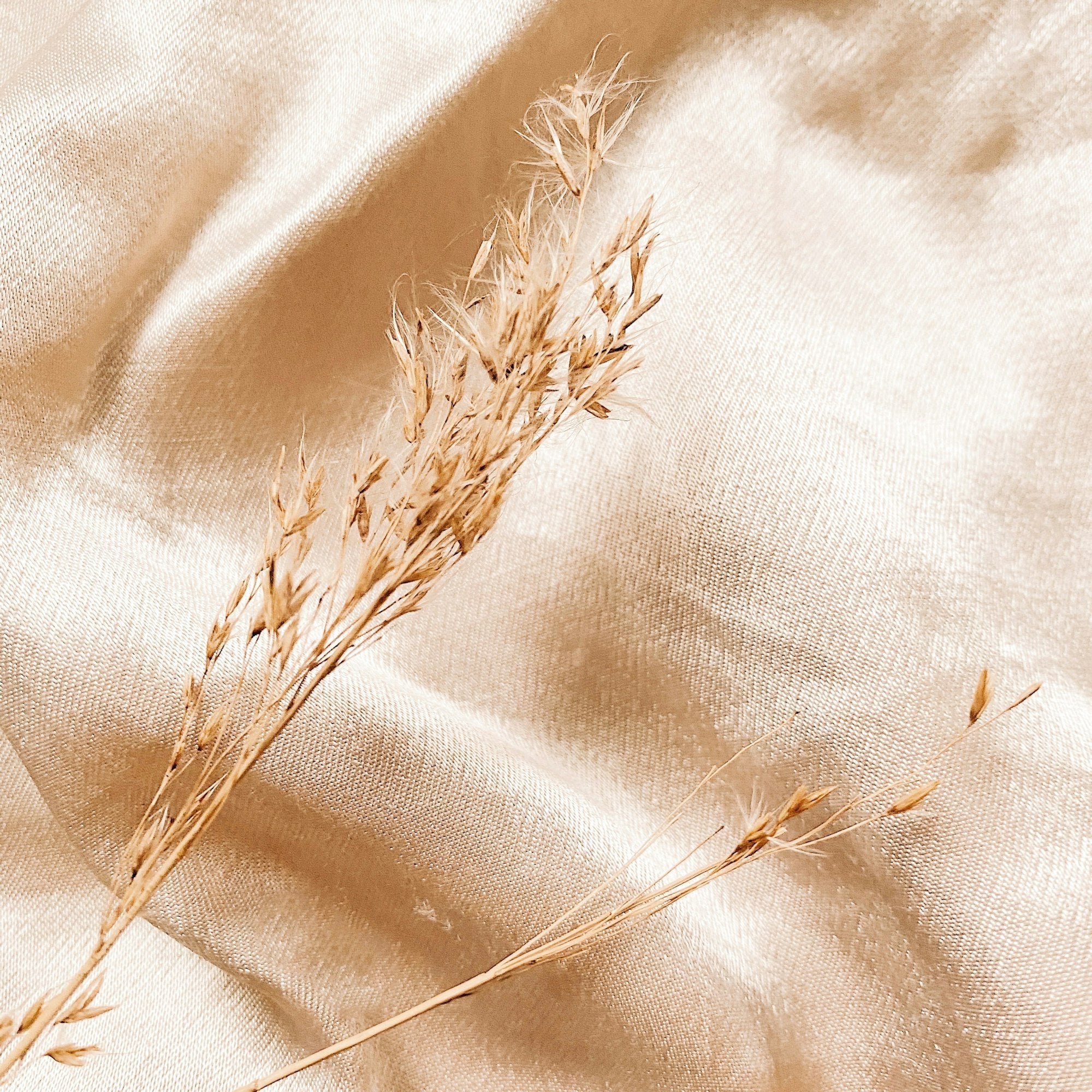
If there are any materials that never go out of style, linen is certainly one of them. However, it is still not appreciated enough… Eco-friendly and sustainable, linen offers excellent breathability and durability. Unlike most textile fibers, it softens with time. In addition to these inherent qualities, it comes mainly from France and certain neighboring countries (Belgium, the Netherlands). In fact, France is the world’s leading producer of linen (accounting for nearly 80% of global production)!
In this article, we’ll show you why you’ll love linen all year round and for every possible use… A journey through the world of cultivated linen, from its history to current trends.
What is flax, and what is its history?
Flax, or Linum usitatissimum in Latin ( ), is a plant known as a bast herb. This means it has a soft stem and its fibers are located within the stem, where they are protected. Flax grows quickly, taking only about 100 days to mature.
Flax fibers are used primarily in the textile industry (mainly for fashion but also for insulation), and the seeds are used to produce flaxseed oil, which is rich in omega-3 and omega-6 fatty acids.
The use of flax is nothing new: it is said to be the oldest textile in the world. The earliest traces of flax date back to 36,000 BC in a cave in western Georgia. Linen played an important role in Egyptian history. Called “woven moonlight” (no less…), linen was sacred during the time of the pharaohs and served as a symbol of purity. There are depictions dating back 5,000 years that illustrate the flax harvesting process of that era.
A team of French researchers studied the flax fiber used to make burial cloth. The cloth has retained all of its properties nearly 4,000 years later... That speaks to its durability.
The Gauls As for them, they also grew flax: they used it for clothing and for make sails for boats.Charlemagne went a step further and promoted the linen craft by including it in the Capitular of Villis, which lists the plants mandated for cultivation in the gardens of the royal estate. He thus ensured that linen was used at court as well as in every household by providing them with the necessary equipment.
He wasn't the only monarch to have celebrated linen... Louis XIV, too, was captivated by this fiber and showcased it in tapestries and clothing. And given his influence, linen quickly spread throughout the king's court.
In the 19th century, the industrialization of the cotton industry had a negative impact on flax cultivation, which fell out of favor. This trend was further exacerbated by the advent of synthetic textiles in the 20th century.
The linen industry experienced a revival in France between the two world wars and is gradually making a comeback.
The global history of linen is rich and far from over. Today, with the resurgence of natural and local products, linen has a rightful place.
Linen: A Versatile Fabric with Many Qualities
Linen has had its moments of glory throughout history, and for good reason. It’s a fiber that’s considered particularly useful for summer clothing, especially in hot weather. But it’s much more than just a summer fabric; it’s a fabric that can be part of our daily lives regardless of the season or how it’s used.
-
An eco-friendly culture
The production of everyday consumer goods is under scrutiny by consumers. With growing awareness of the environmental impact of everything from cultivation and manufacturing to distribution, manufacturers must continually find new ways to offer eco-friendly products. The textile industry is no exception—far from it.
Natural products are all the rage and are highly valued everywhere. To meet growing demands regarding production methods, flax checks all the boxes.
First, it is grown primarily in France (Normandy, Picardy), Belgium, and the Netherlands. That’s a real boon, because the benefits don’t stop there.
It is an annual plant that thrives in a temperate climate. It is sown between March and April and blooms in June.
This plant requires very little water. In fact, the rainwater typical of northern climates is more than enough for it. It requires virtually no irrigation, and the use of pesticides or fertilizers is not essential for its healthy growth.
In addition, as we saw earlier, the entire plant is used. Nothing is thrown away. No waste is produced during its cultivation: the byproducts are used in paper manufacturing or to make plant-based bedding.
Unfortunately, part of the flax productionis shipped to China to be processed into clothing. Aside from the fact that the carbon footprint is disastrous, Chinese factories use dyes and chemical treatments. As a result, the ecological benefits of flax are completely lost.
That is why we should promote European flax, which is grown and processed locally, in order to benefit from unique expertise that yields high-quality products with an attractive appearance.
-
Technical and Aesthetic Qualities of Linen
Linen is a breathable fabric that also regulates body temperature. It helps retain heat in the winter and allows air to circulate, which provides a cooling sensation in the summer.
In addition, linen is the fabric with the highest absorbency. It can absorb nearly 20% moisture while still feeling dry to the touch.
Thanks to these qualities, linen is also naturally antibacterial and hypoallergenic because it dries very quickly and prevents moisture from building up—and all the problems that come with it.
History has shown that linen is very durable. It is a fiber that stands the test of time without deteriorating (provided it is of good quality). Linen fabric lasts twice as long as cotton fabric . It also has the advantage of not losing its shape over time or developing flaws such as pilling, as cotton does.
Linen may feel rough at first, but it softens with each wash. This is yet another sign of its great durability, since not only is it sturdy, but its texture also improves with each wash.
Caring for linen is actually very simple; if it’s thick and of good quality, it can be machine-washed at up to 60 degrees. Otherwise, washing it at 40 degrees is more than enough.
Flax fiber has a unique aesthetic appeal. It has captivated people throughout history and has been prized for clothing, decoration, and sacred purposes among the Egyptians.
It is a timeless material that is both elegant and rustic. Its sometimes crinkled appearance conveys a reassuring and warm sense of authenticity.
It is not smooth, but its irregularity embodies the many qualities mentioned earlier.
Linen has it all: it’s eco-friendly, strong, durable, hypoallergenic, and has an unmistakable style. It comes from France and neighboring countries, but isn’t valued enough.
At KIPLI, we wanted to let our customers enjoy this beautiful fabric by developing a line of linen bedding Made entirely in Europe, with no middlemen. To achieve this, we work with artisans who have mastered the art of linen production in order to restore its former glory.Captivated by this fabulous fabric, we also use linen for our Tapissier bed and our storage bed to give the wood a simple, refined look. Impressed by the quality of this fabric, it was only natural that we decided to use it to craft our sofa.