

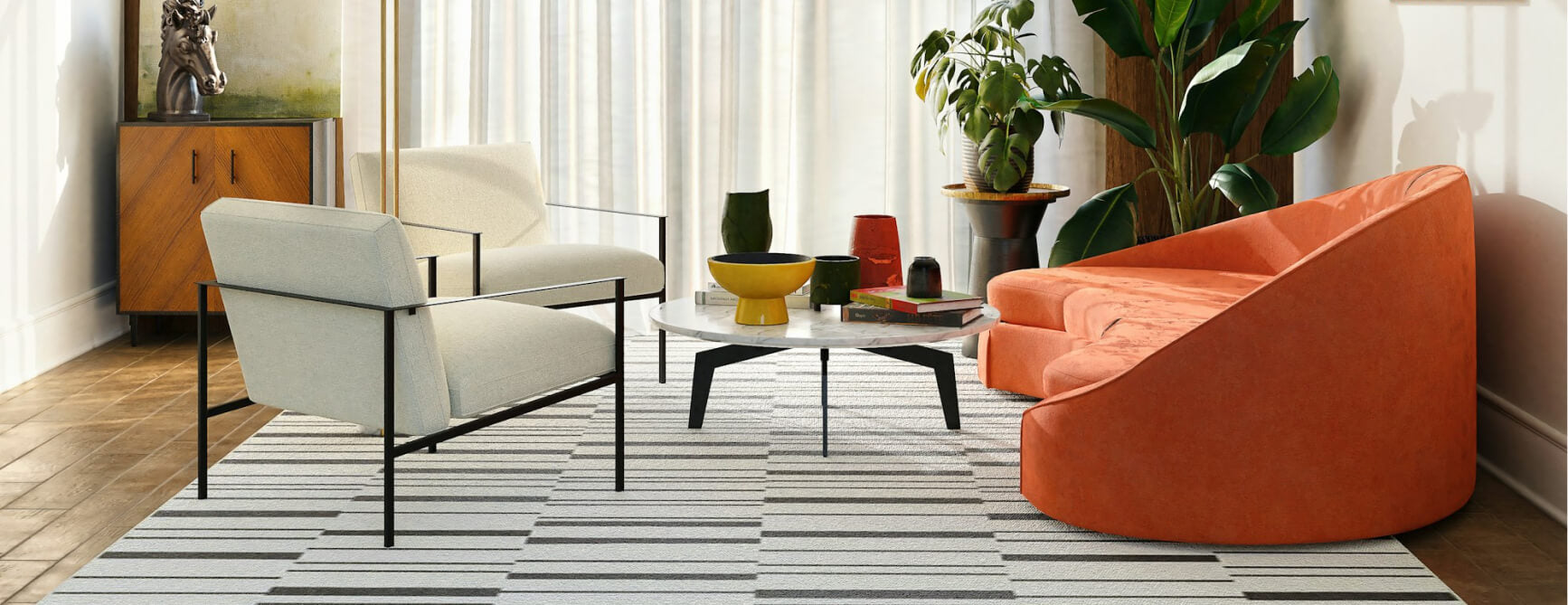
Guide to Choosing Living Room Furniture
When decorating and furnishing a living room, several factors must be taken into account: the available space, the decorative style to be incorporated, and the selection of a wide variety of furniture. All of this must be done without losing sight of the overall harmony. Indeed, with so many elements—sofas, armchairs, a bookcase, one or more coffee tables, and a TV stand—how can you maintain an original and well-thought-out interior design?
In this guide to choosing living room furniture, we’ll explore the criteria to consider when selecting your pieces. What questions should you ask yourself before making a purchase? How can you balance aesthetics, practicality, and ethical considerations? How can you stay true to your interior design style when buying new furniture? Let’s take a closer look at living room furniture.
How to Choose the Right Bookshelf?
A bookcase can serve many purposes: holding books and decorative items, providing storage, adding a simple touch to a wall, and so on. Therefore, to choose the right bookcase, it’s important to determine how it will be used before making a purchase. There are many questions to consider in this context.
- What items do I want to include in the library (number, size)?
- Where should I put the bookcase (living room, hallway, on the wall, on the floor, etc.)?
- Do I need a bookcase with or without cabinets (with or without glass doors)?
These questions will help you determine what kind of furniture to buy:
- a wall-mounted bookshelf designed to save floor space;
- a bookshelf that spans an entire wall in the living room or in a hallway;
- A modular bookshelf that allows you to change its configuration and layout as you wish.
When it comes to dimensions, you need to consider the space allocated for the bookcase as well as the size of the items it will hold. In a hallway, the focus should be on the depth of the bookcase. For books or bulky decorative items, you’ll need to consider the height between the shelves and their width.
Finally, the choice of material for the bookshelf can be made by balancing several aesthetic, budgetary, and eco-friendly criteria. To do this, you can look for products from a sustainable economy while taking your interior decor into account. In this context, and to suit all decorative styles (minimalist, chic, industrial, etc.), wooden bookshelves remain a safe bet.

How to Choose the Right Coffee Table?
As an essential piece of furniture used every day, a coffee table should be chosen to combine practicality and style. Here's why.
-
Criteria for Choosing a Coffee Table
Coffee tables are pieces of furniture that serve both functional and practical purposes, as well as aesthetic and decorative ones. Used daily in living areas (such as the living room), coffee tables can serve various functions, such as:
- putting away items in the living room (remote control, books, etc.);
- the display of decorative items;
- the option to use it as a side table or a dining table.
However, a coffee table should be chosen based on the available space to avoid clutter. In addition, to help you choose the right coffee table, you can establish selection criteria by answering the following questions.
- How tall are the armchair and the sofa?
- What storage solutions are needed?
- What is the desired decorative style?
The purpose of a coffee table is to allow you to reach it without having to stand up or move. Therefore, the height of the coffee table should be determined based on the furniture it is meant to complement.
When it comes to style and decor, the coffee table should be chosen to blend harmoniously with the rest of the room, which is why it’s important to define your decorative style and the look you’re going for: classic, minimalist, modern, etc. This step helps you determine which materials to look for in a coffee table: wood, stone, glass, or metal.
-
High-Quality Wooden Coffee Tables
Although glass or metal coffee tables are an option, wooden coffee tables remain a timeless classic. Indeed, wood—which is sturdy, timeless, and versatile—is a material that can be incorporated into a variety of decorative styles.
- For an industrial or rustic style, you can choose a coffee table made of untreated wood to create a bold and authentic look.
- For modern styles, wooden coffee tables can be chosen in a design with clean lines.
- For a bohemian or hippie style, you can choose a classic wooden table, or one made of bamboo or wicker.
It’s also possibleto combine several coffee tables of different sizes when the space and layout of the living room allow it. The goal? To create a more fluid look. Furthermore, from a practical and ergonomic standpoint, these different tables can be moved around and used as side tables as needed.
How to Choose the Right Wooden TV Stand?
Wooden TV stands have their own unique characteristics. Below, we outline the specific factors to consider when choosing this type of furniture.
-
Criteria for Choosing TV Stands
Just as with a coffee table, when choosing a wooden TV stand, you should consider not only the size of your living room but also the height of the armchairs and sofas around it, as well as the size of the TV. Ideally, a TV stand should:
- be longer than television;
- be sturdy enough to support the weight of the television and decorative items;
- be the right size for the available space.
When a TV stand also needs to serve as storage for books or knickknacks, for example, it might be a good idea to look for TV stands with wooden or glass-fronted cabinets.
In addition, TV stands, just like the rest of the living room furniture, may require some maintenance. For this reason, it may be a good idea to opt for furniture with clean, sleek lines that make cleaning easy and require little time or energy.
-
The Qualities of a Wooden TV Stand
Wooden TV stands are suitable for a variety of decorative styles, such as:
- the industrial style;
- the rustic style;
- the bohemian or hippie style;
- the classic style.
Wood, as a material, has many qualities that make it a must-have when furnishing an apartment or house. In fact, it is a durable material that adds style and authenticity to interior design. It is also a material that ages beautifully and can be customized or modified as desired. Finally, it offers the possibility of creating furniture made from two materials, particularly by combining it with glass or metal.
Wooden TV stands also come in various shapes, such as:
- the low TV stand;
- the TV stand with storage;
- the corner TV stand.
Low TV stands are the best choice if you already have a bookcase or limited space. TV stands with storage combine the features of a bookcase with those of a traditional TV stand. However, they require more space due to their size. Corner TV stands, on the other hand, can be chosen to fit into a small space or to serve as a room divider in a large living room or lounge.
How to Choose the Right Armchair?
Armchairs and sofas are essential pieces of furniture for a living room. What factors should you consider when buying them? Here are our tips to help you make your purchase with confidence: choosing materials, dimensions, and more.
-
Criteria for Choosing an Armchair
Choosing an armchair requires an understanding of the selection criteria for this type of furniture, such as:
- the dimensions of the chair to consider;
- seating comfort;
- the firmness of the armchair or sofa;
- which type of material to choose;
- the breathability and non-toxicity of the fabric used to make the sofa.
These various factors take into account comfort during use, a visually harmonious appearance, and the health and safety standards of the materials used. To this end, it may be wise to opt for products whose quality is certified by organizations that specialize in monitoring the manufacturing of furniture and textiles. These types of organizations help meet the needs of consumers who are committed to making responsible purchases that respect both their health and the environment.
-
What Armchair Dimensions to Choose
To choose the right living room chair, you need to determine its dimensions before making a purchase to ensure they fit the available space in your home. To do this, consider the following factors:
- the available height for the chair so you can choose the most suitable backrest. Here, it’s important to take into account any wall-mounted furniture, if there is any;
- the available width along the wall or between pieces of furniture;
- the depth of the chair.
If the coffee table has already been purchased, the height of the sofa or armchair you plan to buy should also be determined based on the height of the coffee table.
-
Ease of Maintenance
When it comes to caring for a sofa or armchair, it is important to consider various aspects of this type of furniture:
- the type of fabric;
- the ability to remove the chair cover, if applicable;
- the fabric's durability and its resistance to washing or abrasion;
- the cost of cleaning supplies.
These factors help guide your choices toward armchairs made from durable, easy-to-clean materials. It’s also important to choose products that are intelligently and ergonomically designed, allowing you to easily change the look of your sofa or armchair. This feature offers several advantages, such as:
- the ability to change the look of your armchair when you get tired of the color of its cover;
- lower maintenance costs: the sofa's outer cover is machine-washable and does not require the purchase of special, expensive cleaning products;
- the assurance that the furniture will remain clean and healthy for everyone who uses it (children and adults).
Sofas that meet these various criteria are generally made from plant-based fibers, such as cotton or linen, and feature zippers that allow the various covers making up the sofa to be easily removed.
We recommend these other pages: