

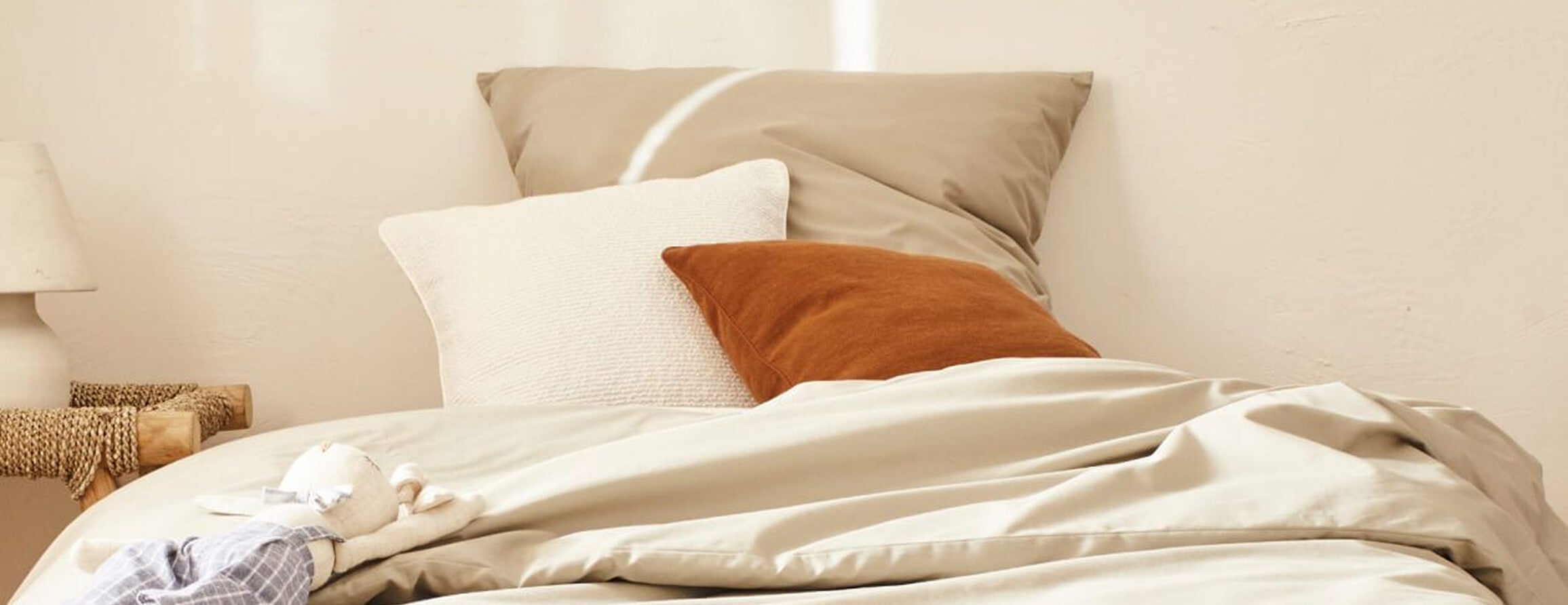
A comforter is an important part of a child’s bedding, given the touch of color, softness, and protection it provides. It combines comfort and safety for the child’s optimal well-being. However, it could be dangerous for a baby during its very first months. Since the reflex to pull the comforter down to breathe isn’t present at birth, it’s recommended to wait until the child is at least one year old before using a comforter. Until then, a sleep sack is the ideal choice for newborns.
While choosing a comforter may seem complicated enough, it’s even more so when it comes to choosing one for a child. However, keeping certain features in mind when making a purchase could make the task easier. Here, we’ll walk you through the key factors to consider when choosing a comforter for a child.
The size of the bed and the weight of the children's comforter
Once you’ve determined the child’s age, the very first factors to consider when choosing a children’s comfor e are the size of the bed and the weight of the comfor e. The ideal is to find a balance between a comfor e that hangs slightly over the edge of the bed and one that isn’t too heavy for the child.
In practical terms, if a child’s bed measures 60 x 120 cm, for example, it would be best to get a comforter that is 80 x 120 cm or 110 x 125 cm if the child moves around a lot while sleeping. A minimum difference of 20 centimeters is therefore required between the width of the bed and that of the comforter.
The weight of the comforter—which is still often referred to as “grammage”—deserves special attention, since the comforter must be light enough for a child to lift and heavy enough to keep the child warm.
The warmth rating of the children's comforter
The temperature of the child's sleeping environment and the child's tolerance for cool temperatures are important factors to consider when choosing a comforter for a child. There are various options available to meet specific needs.
Lightweight and moderate-weight comforters
A summer comforter is suitable for children who are sensitive to heat. It is a type of comforter designed for rooms where the temperature exceeds 20°. A lightweight comforter is therefore very useful in the summer.
A medium-weight comforter is ideal for rooms with temperatures between 17° and 20°.
Duvets with a "warm" and "very warm" rating
A warm comforter is ideal for children who are sensitive to the cold; it is useful in winter and is suitable for rooms with temperatures between 14° and 17°.
Much more useful in winter, a very warm comforter is the perfect solution for rooms where the temperature drops below 14°. In addition, there are “four-season” comforters on the market that are designed for use in any season.
The Filling of the Children's Duvet
The filling of a comforter can be natural or synthetic. This refers to the material used to make it.
Natural Duvets
This type of filling includes materials such as:
- down;
- silk;
- bamboo;
- wool.
Made from duck or goose feathers, down is widely used by duvet manufacturers because of the comfort it provides. In addition to being a good source of warmth, a down duvet regulates temperature and prevents night sweats.
Soft and durable, a silk comforter is a good source of warmth, even though it is quite lightweight. Bamboo, on the other hand, naturally absorbs moisture, neutralizes odors, and—most importantly—is antibacterial. As a result, a comforter made of bamboo fibers offers many benefits in addition to the warmth it provides.
When made from high-quality wool flakes, a wool comforter regulates temperature perfectly, ensuring just the right amount of warmth. It’s worth noting that cashmere wool is the best choice for wool comforters, even though it’s more expensive.
Synthetic Duvets
Unlike natural fillings, synthetic fillings consist of fibers designed to trap air. Duvets made from this type of material do not regulate temperature according to the sleep cycle and do not absorb moisture. The exception, however, is the cellulose duvet, which offers most of the benefits of a duvet with natural filling.
The Cover and Stitching of a Children's Duvet
Commonly known as a duvet cover, the cover is designed to prevent the filling from escaping. Therefore, it must be of good quality to fulfill this role effectively over the long term. Made from fabric with varying thread counts, the material used for the cover can be cotton or silk. The choice depends on both the user’s needs and budget.
However, organic cotton is the recommended material for the cover, as it wicks away moisture easily. It is important to note that thread count refers to the number of threads persquare centimeter and varies depending on whether the material is natural or synthetic.
Quilting is important for keeping the filling in place so that the heat accumulated overnight is retained. There are various quilting patterns, including straight-line, checkered, and wave patterns.
A diamond-quilted pattern is suitable for a natural comforter, while a tufted pattern would be better suited for a synthetic comforter. While the goal of choosing the quilting pattern in the first case is to distribute the filling evenly, the goal in the second case is to retain heat.
Care and Maintenance of Children's Duvets
Most comforters are designed to combat infestations of dust mites, bacteria, or bed bugs. Manufacturers can choose to apply pest-control treatments to either the filling or the cover.The use of essential oils encapsulated and embedded in the fabric is common and remains beneficial, as it is a non-allergenic and non-irritating process.
Proper care is essential, especially since this is a children's comforter. This involves shaking out and flipping the comforter from time to time, and washing it when necessary. Generally, synthetic comforters can be easily machine-washed without any problems, as long as the washing instructions are followed.
On the other hand, washing natural comforters requires so much care that it’s recommended to use the services of a specialist if you don’t have the time or attention to detail. Additionally, it’s worth noting that the ideal frequency for washing a comforter is once or twice a year for natural ones and six times a year for synthetic ones.
Ultimately, choosing a comforter for a child depends as much on the characteristics of the child's living environment as it does on the adult's preferences regarding the available comforter styles.