

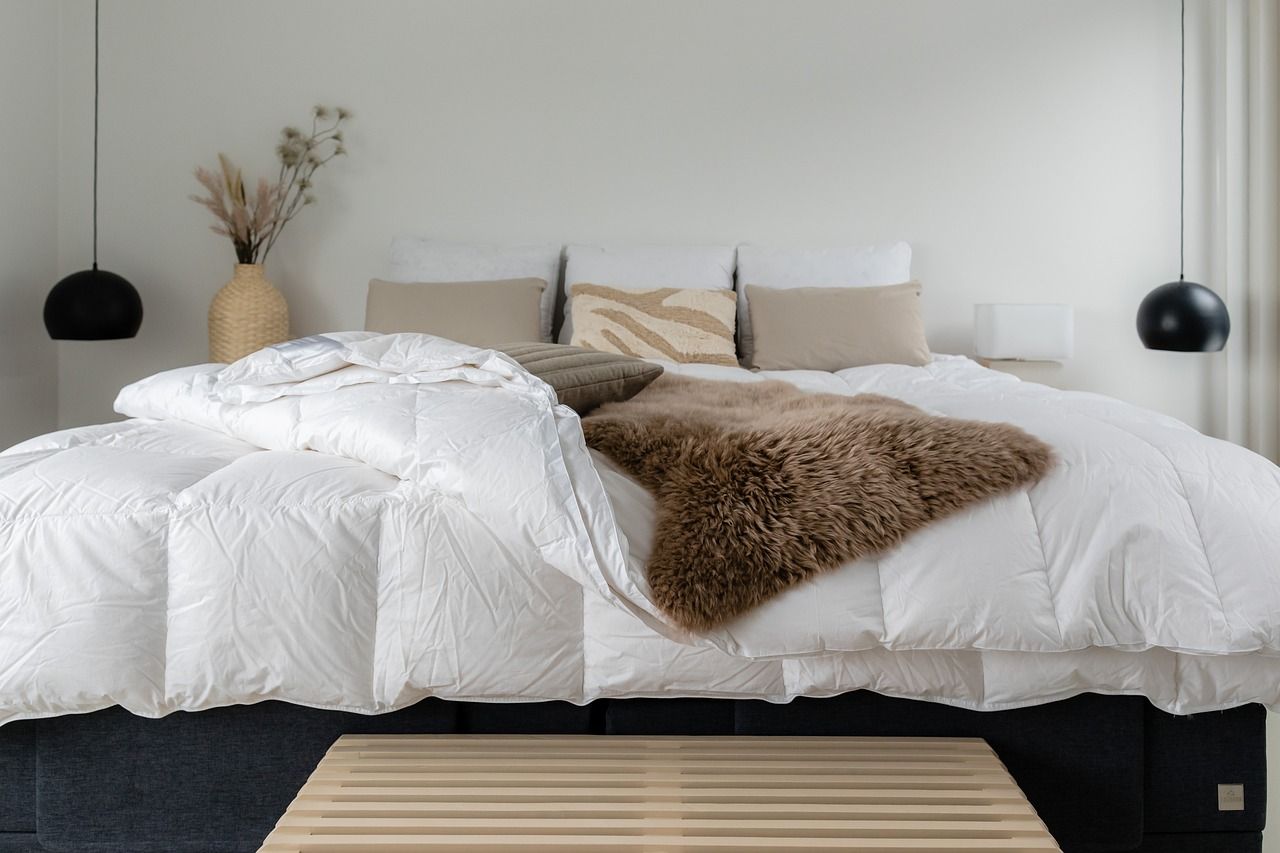
All our tips on how to choose the right comforter...
Duvets come in all shapes and sizes; some have warmth ratings, and even when they don’t, it’s hard to figure out which one to choose with all the different materials and weights...
At Kipli, we know a thing or two about comforters, and we’re going to walk you through everything you need to know to choose the right one. Follow our guide!

Our Tips for Choosing the Right Duvet Size
If you want to buy a new comforter to replace a worn-out one but can’t quite remember the size of the original comforter, it’s very simple. To choose the right comforter size, measure your comforter cover. It corresponds exactly to the comforter’s size. This way, you’ll avoid any unpleasant surprises when making your bed. If you’re buying a comforter for the first time and aren’t limited by the dimensions of your bedding, we recommend purchasing a 240x220cm or 260x240cm comforter (for an adult bed).The standard duvet size for an adult bed is 240x220 cm. This duvet size is suitable for standard-sized adult beds: 140x190 cm, 140x200 cm, and 160x190 cm, and may also fit a 160x200 cm bed. It allows two people to sleep comfortably together. However, for larger beds (queen-size beds at 160x200 cm and king-size beds at 180x200 cm), we recommend choosing a 260x240 cm duvet. It drapes more generously and is better suited for taller people.
Choosing the Right Duvet Size for an Adult Bed
- Mattress width: 140 cm
- Duvet size: 240x220 cm
- Duvet cover size: 140 cm. There are other standard duvet sizes in France; the 200x200 cm size is also very common. It’s suitable for a teenager or someone who’s used to sleeping alone in an adult bed. Finally, for a child’s bed, there’s only one size to remember: 140x200 cm.
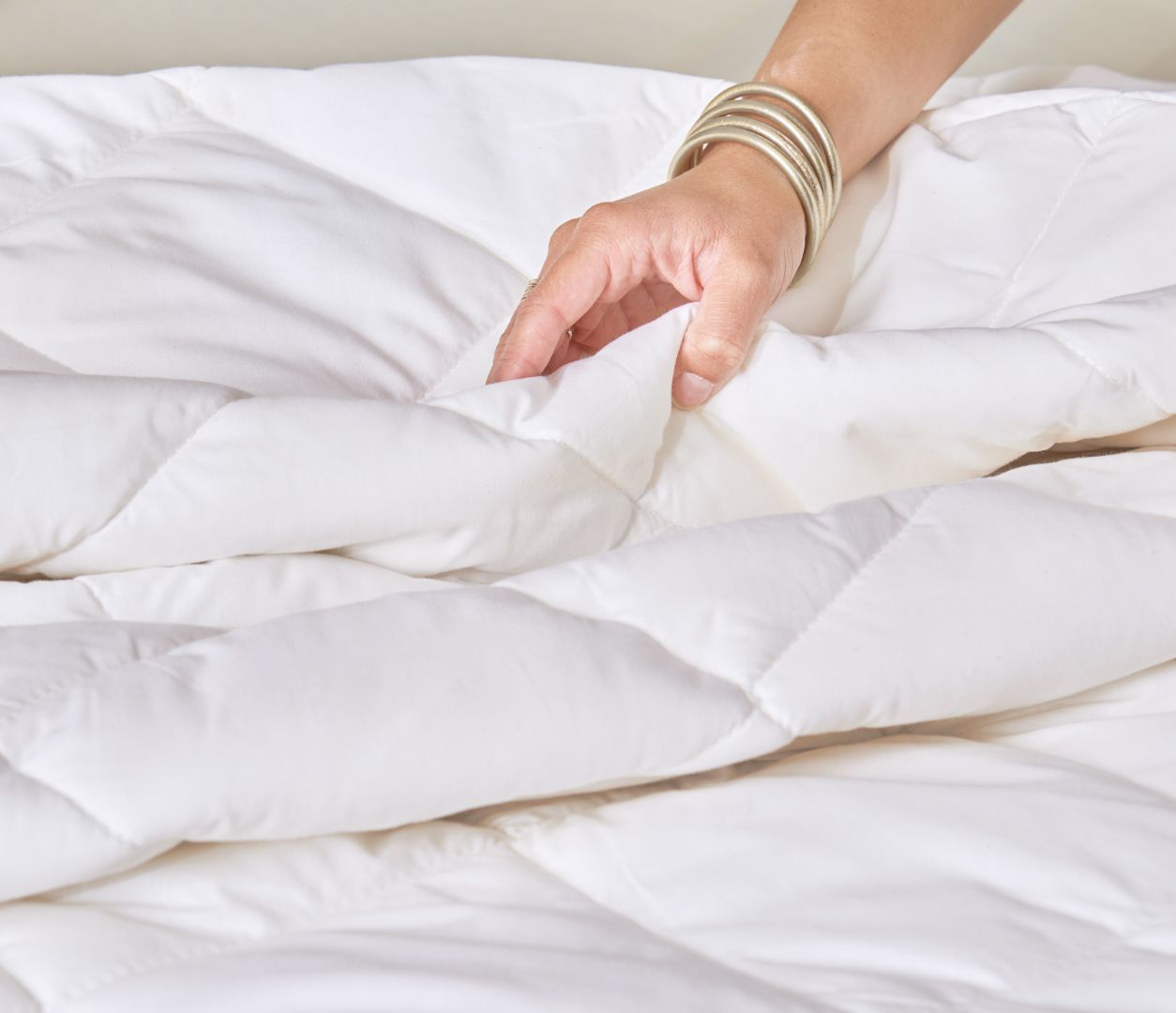
What material should I choose for a comforter?
To choose the right material for your comforter, you need to understand its composition. A comforter always consists of two parts: - The cover: this is the part of the comforter that comes into contact with you while you sleep - The filling: this is what “fills” the comforter—the material placed inside that provides warmth. There are three main categories of comforters.
A. 100% Synthetic Duvets
When choosing a comforter, you’ll mostly find 100% synthetic ones. Synthetic comforters have a 100% synthetic cover and filling, made from polyester (which is listed as polyester fiber or microfiber). These comforters are low-quality, but they have the advantage of being sold at very low prices. On the other hand, they have the drawback of creating a “sauna-like” effect while you sleep: they trap heat and cause you to sweat at night. Furthermore, they do not last very long. They also offer inferior comfort: they lack any loft.
B. Duvets Made of Both Synthetic and Natural Materials
Less common are comforters made from a combination of synthetic and natural materials . These are often comforters with a synthetic filling (polyester fiber or microfiber) and a natural cover (cotton or organic cotton). Brands that manufacture this type of comforter capitalize on the cover material (often cotton) to market the comforter as “natural.” However, the filling is indeed synthetic, and unsuspecting consumers can easily be misled. Be wary of this type of comforter, whose properties are similar to those of a synthetic comforter, although the cotton cover does have the advantage of preventing you from sleeping in direct contact with polyester.
C. 100% Natural Duvets
100% natural comforters are made from high-quality materials, so they are often more expensive than synthetic comforters. The most common types of natural comforters are those made from animal feathers and down.
These comforters all feature a filling made of duck or goose feathers and down, and a cotton cover.
Breathable and voluminous, they offer excellent comfort. However, their production is not very ethical. Sourced from the duck meat industry, particularly foie gras production, the feathers and down are generally harvested from the animals just before slaughter.
What material should you choose for a natural, vegan comforter? Kipli offers, among other things, two duvet models made from plant-based materials, thereby avoiding the use of petrochemical-derived materials and animal suffering.
There are duvet fillings made of lyocell (Tencel™,), also known as cellulose. This innovative material is a textile fiber derived from wood pulp. This highly breathable fiber keeps you warm without that unpleasant sweaty feeling. By choosing plant-based materials for its duvets, Kipli is committed to producing an ethical, sustainable, and healthy product. To learn more, read our article “Why Choose a Lyocell Duvet?".

How to Choose a Dust Mite-Resistant Duvet?
When looking for a dust-mite-resistant comforter, people tend to turn to synthetic materials or comforters treated with an anti-dust-mite treatment. However, this has drawbacks from both an environmental and a health perspective. Synthetic comforters are made of polyester fibers, a plastic derivative. Their production is polluting, and at the end of their life, they become waste that needs to be recycled. Furthermore, when you sleep in direct contact with polyester—or any product that has undergone chemical treatment—you breathe in tiny particles released from it night after night (these are known as VOCs: Volatile Organic Compounds). VOCs contribute to indoor air pollution and can have harmful effects on health.
Natural comforters are often lined with polyester or treated with chemicals to combat dust mites. This precaution is primarily due to the structure of feathers, which tend to easily trap dust and thus attract dust mites. The Kipli comforters do not have this problem since their filling is not likely to trap dust. Furthermore, the filling is arranged to form an“air cushion”inside the comforters, which enhances their breathability. Keep in mind that a natural comforter that is properly maintained—that is, washed regularly and stored in a well-ventilated room —will significantly limit the presence of dust mites.
What heat setting should you choose?
The warmth level of a comforter depends on the material chosen for the filling and the amount (weight) the manufacturer uses inside. We recommend that you refer to the seasonal ratings and the manufacturer’s recommendations for its products. Follow the seasonal ratings! The Kipli, for example, are designed to provide excellent warmth in winter and will also keep you comfortable during spring and fall nights.
We hope this article has been helpful to you.
Naturally, the Kipli Team