


While choosing the right mattress, box spring, comforter, and bedding is important, choosing the right pillow is just as important. The pillow determines how comfortable you feel, how well your body relaxes, and the quality of your sleep. Bedding specialists offer a wide variety of pillow models at various price points.
With so many pillows to choose from, you can opt for an ergonomic neck pillow tailored to your needs. The pillow’s shape, thickness, size, firmness, and filling all have a direct impact on its quality and its ability to prevent or relieve neck pain. Here are a few tips to help you choose the right neck pillow.
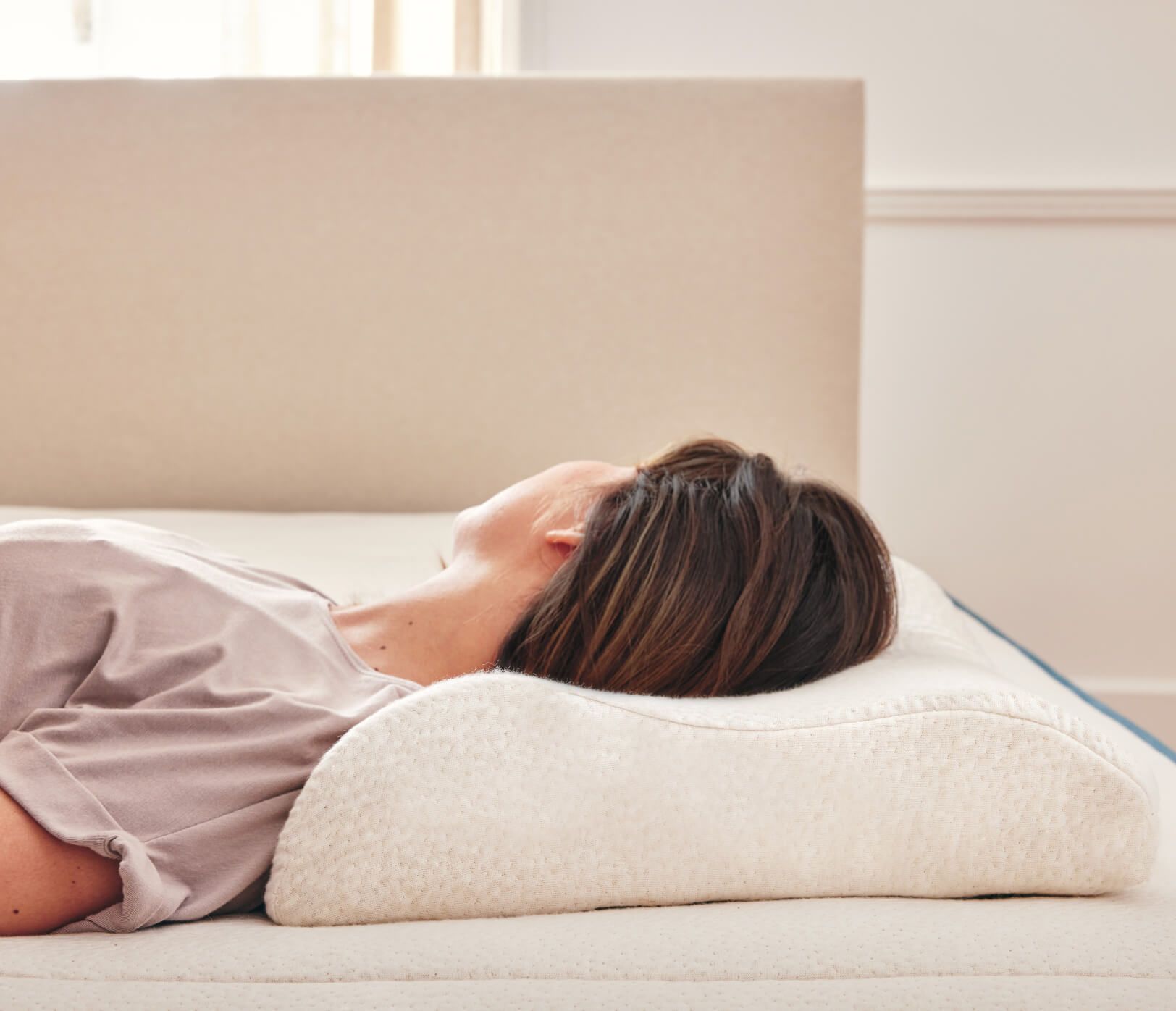
What is the purpose of an ergonomic neck pillow?
An ergonomic pillow does more than just provide comfort to sleepers. When properly adapted to each person’s sleeping position and body type, it helps support and stabilize the head and neck, thereby preventing or relieving neck pain (cervicalgia).
The cervical vertebrae make up the upper part of the spine. The first two cervical vertebrae, called the Atlas (C1) and Axis (C2), support the weight of the head and ensure proper rotational movement. It is therefore these two vertebrae in particular that must be properly supported and stabilized by an ergonomic cervical pillow.
An ergonomic pillow offers more comfort than a traditional pillow. Typically made from memory foam or latex, ergonomic pillows are characterized by a higher density at the ends than in the center. The even distribution of this density ensures ideal support for the head and neck, aligning them with the spine.
To prevent neck pain or relieve recurring pain (even if it isn't directly related to your pillow), you need to choose the rightergonomic neck pillow.

How do you choose the firmness level of a neck pillow?
The firmness level of an ergonomic neck pillow determines the type of support it provides. More than just a matter of personal preference, choosing the right firmness level for your neck pillow depends primarily on your preferred sleeping position each night. You’ll need to choose between:
- a soft neck pillow that provides gentle support for your neck and head; it's a good choice if you sleep on your stomach;
- a neck pillow that is neither too soft nor too firm (medium), providing better support for the neck and head; it is suitable if you usually sleep on your back or on your side;
- A firm pillow that provides the best possible support for your neck and head; it will be a better fit for you if you sleep on your back.
For optimal comfort and a good night's sleep, it's important that your neck pillow prevents you from feeling any pressure points or tension in your neck.
How do you choose the shape, size, and thickness?
There are two main types of pillows: classic shapes (rectangular or square) and wave shapes. Regardless of its shape, an ergonomic pillow must be denser on the sides than in the center. The exact dimensions of the pillow (length and width) vary from one brand to another, although there are standard sizes.
If you tend to change positions during the night, it's best to choose a rectangular neck pillow, which will give you more freedom of movement. The rectangular shape also helps relieve pressure on your shoulders, which promotes proper spinal alignment.
As for the thickness of the pillow (its height at the center), it should be suited to the width of your shoulders as well as your sleeping position. The wider your shoulders, the thicker your pillow should be, especially if you sleep on your side. Ideally:
- If you sleep on your stomach, or if you have narrow shoulders, choose a fairly flat pillow;
- If you prefer to sleep on your side, or if you have rather broad shoulders, choose a thicker pillow;
- If you sleep on your back, the thickness of the pillow alone will not determine how comfortable you feel or the quality of your sleep.
What about choosing the material for the filling?
The quality of a pillow depends in part on the materials it is made of. Several materials can be used to fill an ergonomic neck pillow, including polyester (fibers or microfibers), memory foam, and natural or synthetic latex.
By choosing a natural filling, your pillow will be soft, comfortable, and breathable, ensuring pleasant and restful nights. In fact, good ventilation keeps the pillow very hygienic: it does not promote the growth of bacteria and dust mites.
As for ergonomic pillows filled with synthetic fibers (memory foam and polyester), they tend to trap more heat, moisture, and odors. People with sensitive skin are at greater risk of allergic reactions to dust mites or to the chemicals used in the manufacture of synthetic components.
To properly care for your natural or synthetic pillow and extend its lifespan, its cover should be removable so it can be machine-washed.
In addition, it is safer to choose an Oeko-Tex-certified ergonomic pillow to ensure that the harmful substances used in its manufacture do not exceed regulatory limits.
Regardless of the material used to fill the ergonomic pillow, the fill density has a direct impact on the pillow’s firmness and weight. Since the density of an ergonomic pillow varies between the edges and the center, you should consider the average density, which should ideally be around 50 kg/m³.
More eco-friendly and healthier, natural latex neck pillows will provide you with all the comfort you need for restful nights. This is certainly true of the Kipli neck pillow, made from 100% natural latex and featuring an organic cotton cover. Of course, a neck pillow will only be beneficial if you also have a high-quality mattress.
We recommend these other pages:
- How to Choose an Ergonomic Pillow
- Should I choose a memory foam pillow?
- How do you choose a pillow for a child?
- How do you choose a pillow for a baby?
- How to Choose an Orthopedic Pillow
- Should you choose a firm pillow?
- How to Choose a Flat Pillow?
- When should you choose a feather pillow?
- What size pillow should you choose?