

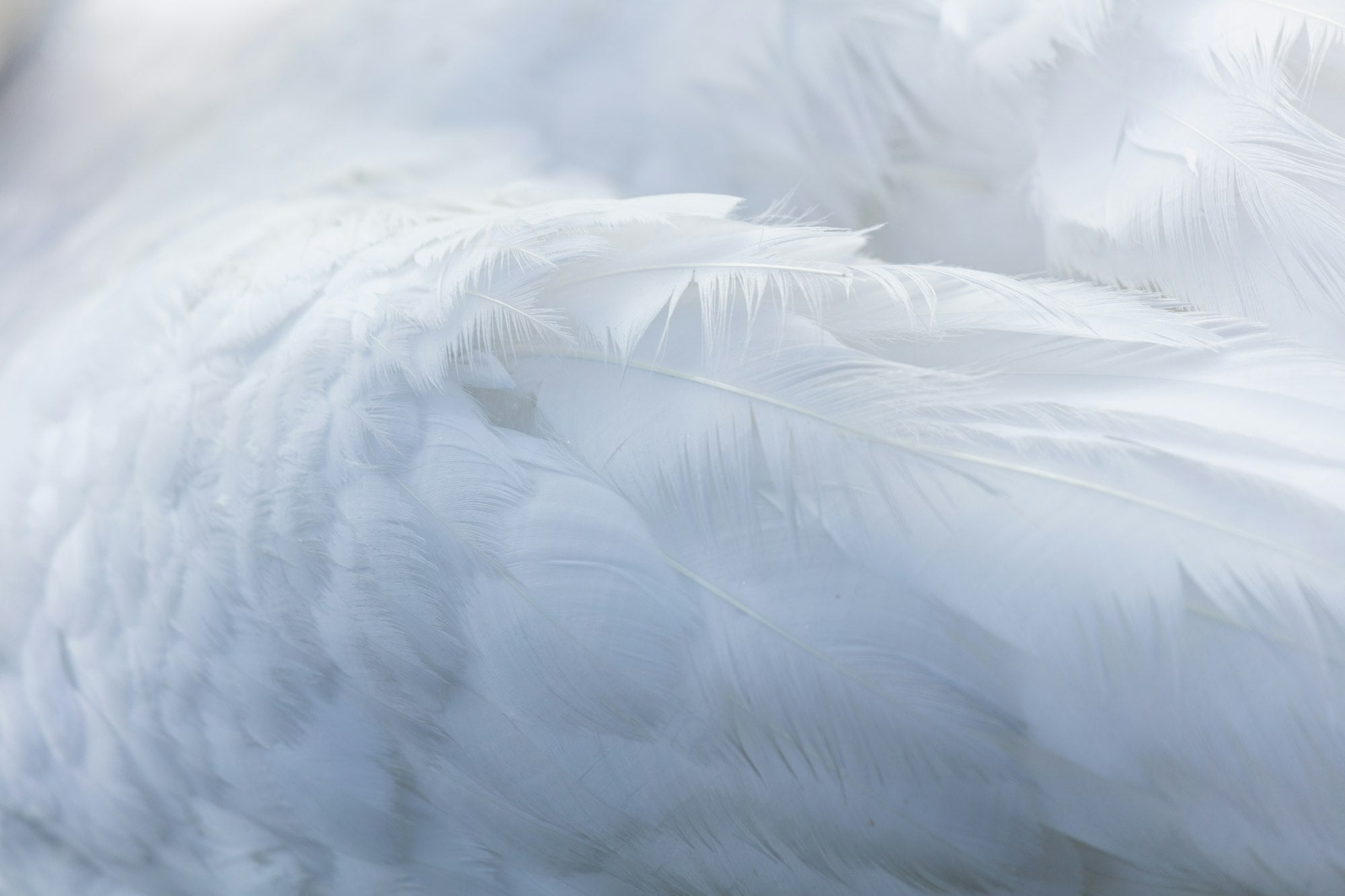
Our grandparents already loved it for its natural, high-quality comfort, and the feather pillow has not yet had its final say in the bedding market. Furthermore, the global context of climate change has sparked a passion for responsible purchasing, environmental conservation, and protecting one’s health.
Anyone wondering which pillow to choose to ensure a long, restful night’s sleep is likely interested in a down pillow. Praised for its hypoallergenic properties and cozy comfort, the down pillow has become a timeless classic.
Its natural composition (duck or goose feathers or down) is an alternative to potentially harmful products, such as polyether or polyurethane foam.
But when should you choose a down pillow? What are its pros and cons? And how do you choose the right one? We'll answer all your questions.

Good Reasons to Choose a Feather Pillow
Known for its plumpness and soft comfort, the feather pillow appeals to many people. But before we go over the guidelines for choosing a pillow suited to the sleeper’s body type (size, shape, thickness, etc.) and the proper use of a feather pillow, here are its main advantages:
- exceptional comfort if chosen wisely;
- a long service life—5 to 10 years if properly maintained;
- effective moisture regulation thanks to its natural breathability;
- a 100% natural and biodegradable filling;
- a natural anti-allergenic and anti-mite property;
- With high-quality thermal insulation, it keeps you warm in the winter and cool in the summer.
On its own, it seems like the perfect pillow, don't you think? Like any solution, the feather pillow also has its drawbacks, but we'll come back to that later.

Another reason to choose a down pillow is that they come in various levels of density—and therefore firmness.
- Sleepers looking for firm support—which ensures proper neck support and correct body alignment—should choose a "100% feather" pillow to reduce the risk of neck pain.
- People who prefer a slightly softer and more ergonomic pillow should choose one made of 70% feathers and 30% down. In fact, the more down a pillow contains, the softer it is.
- People who sleep primarily on their side should choose a firm, thicker pillow to fill the larger gap between their neck and shoulders.
- Sleepers who prefer sleeping on their backs should choose a medium-firm mattress—one that is neither too firm nor too thick.
However, feather pillows are not recommended for people who sleep on their stomachs—just like all pillows (and the sleeping position itself, which is considered too restrictive for the body). Only flat pillows are recommended, as they do not raise the neck.
Finally, there are also combination or hybrid pillows that suit a wide range of people thanks to their filling, which consists of feathers and microfiber flakes.
The Drawbacks of Feather Pillows
Who hasn't heard about the risks of allergies to the feathers in pillows? In reality, this is a common misconception, because few people are allergic to feathers. In fact, the respiratory problems attributed to the presence of feathers are more likely caused by dust mites and dust found in this type of pillow.
We did indeed mention earlier that feather pillows have natural anti-mite properties, which is true—but only if they are properly cared for and chosen carefully. Like any natural product that is not properly maintained, they can become a breeding ground for parasites, such as dust mites.
To minimize this risk, we recommend choosing a high-quality down pillow manufactured to the highest standards, which includes: thorough washing of the filling and sterilization at very high temperatures. It’s also important to note that it must have undergone anti-mite treatment. However, rather than opting for a chemical treatment (which leaves potentially harmful residues in the pillow), choose a pillow that has been treated naturally (with neem oil, for example).
It’s worth noting that feather pillows are primarily chosen for their natural composition, which is synonymous with environmental friendliness. The use of harmful treatments would therefore be counterproductive. And since we’re on the topic of feather pillow manufacturing, let’s take this opportunity to shed light on a common and controversial practice: the method used to harvest feathers or down from ducks or geese.
Unfortunately, there are manufacturers who have no regard for animal welfare. Some do not hesitate to practice live plucking, which involves pulling feathers from animals while they are still alive. It should be noted that feathers, unlike hair or wool—which can be sheared—are embedded in the animal’s flesh and contain nerves. Live plucking is therefore an extremely painful practice. The animal rights organization PETA has conducted several investigations into the origin of feathers to raise consumer awareness about the sources of the feathers and down used in textile products (pillows, comforters, “down jackets,” etc.).
Far be it from us to accuse anyone of anything; we simply wanted to draw your attention to the need to carefully verify the origin of the feathers when making your selection.
Caring for a Feather Pillow
We have discussed this point several times: the quality of a down pillow depends largely on the choice of filling, but also on how it is cared for, which, among other things, allows it to:
- reduce the risk of allergies to dust mites and dust;
- help extend the pillow's lifespan;
- to ensure lasting comfort by preventing the feathers from settling;
- to improve the breathability of the filling.
First of all, a feather pillow should be shaken once or twice a day (morning and evening). This helpsremove accumulated dust, and it also breaks up clumps of feathers and distributes them evenly throughout the pillow.
Since feathers can absorb moisture (from the air, sweat, etc.), it is recommended that you air out your pillow at least once or twice a week by leaving it out in the open. This advice applies to bedding in general. It is advisable not to make your bed as soon as you wake up, but to wait about ten minutes to allow the bedding to breathe and release the moisture produced during the night.
Finally, it is recommended that you machine-wash it (regardless of the filling) at least twice a year. However, the presence of feathers makes drying the pillow a very time-consuming process. That is why we recommend running as many spin cycles as necessary to remove as much moisture as possible.
In response to the initial question, “Should you choose a feather pillow?”, we can see that there is no right or wrong answer—only a bad choice is possible.
We recommend these other pages:
- How to Choose an Ergonomic Pillow
- Should I choose a memory foam pillow?
- How to Choose a Neck Pillow
- How do you choose a pillow for a child?
- How do you choose a pillow for a baby?
- How to Choose an Orthopedic Pillow
- Should you choose a firm pillow?
- How to Choose a Flat Pillow?
- What size pillow should you choose?