

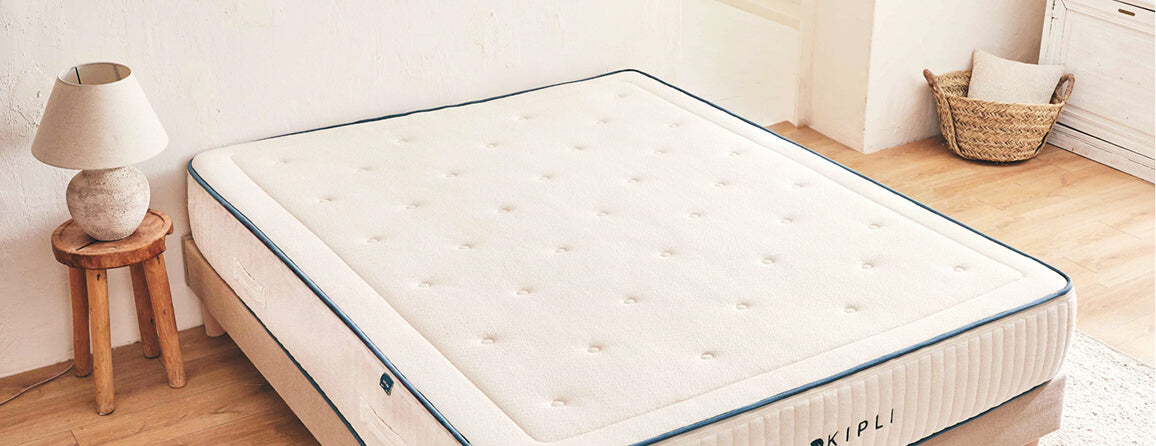
Just like our beloved planet, mattresses don’t last forever and must therefore be cared for so they last as long as possible. However, they have the advantage of being able to be replaced when they start to deteriorate and no longer meet their users’ expectations. Faced with an increasingly demanding clientele accustomed to high-quality bedding, hospitality professionals have fully understood the importance of offering their guests quality mattresses to ensure their satisfaction.
For this reason, replacing your mattresses is essential, but it often represents a significant investment—so you might as well choose a model that will last for many years and, among other things, help build your establishment’s reputation. With that in mind, let’s take a look in this article at the signs that indicate whether your mattresses are still in good condition and why replacing them is a wise decision.
Why is it important to replace the mattresses in your business accommodations?
Nevertheless, this is an essential decision that will prove beneficial for your business website and, above all, its visitors.
Ensure your customers' health, comfort, and restful sleep…
In fact, replacing mattresses that are past their prime is essential to ensuring your customers enjoy a good night’s sleep and impeccable hygiene. Otherwise, having them sleep on worn-out bedding can be a major source of dissatisfaction, as it can, for example, cause lower back and neck pain and thus have a significant impact on sleep quality. A mattress that has seen better days will therefore leave your guests with aches and pains upon waking—in various parts of the body such as the back, neck, head, and lower back—an experience they could certainly do without... They may also feel an unpleasant sensation of sinking into the mattress, which prevents them from finding a comfortable sleeping position; this indicates that the mattress has lost its density.
A worn-out synthetic mattress is also a real problem for people who want to sleep together on the same mattress; even the slightest movement becomes a nightmare for their partner because the sleep independence has deteriorated. Unlike those made of natural latex, aging spring foam mattresses also carry the risk that your guests will feel the springs—an unpleasant sensation that your guests will not appreciate. Replacing your mattresses is therefore a mark of quality for your guests, ensuring they receive a service that meets their expectations.
Replacing your bedding is also essential for hygiene reasons; most mattresses (90%) are made of synthetic polyurethane foam, which does not age well and is not very breathable, making it difficult for them to wick away sweat. This can lead to an increase in dust mites (which can cause allergic reactions) and bacteria, as well as an unpleasant odor—especially in commercial lodging facilities. Since hygiene is a key consideration when sleeping in bedding that isn’t your own, failing to uphold this basic principle can be a deal-breaker for your guests and damage your reputation; replacing your mattresses, therefore, improves comfort and guest satisfaction.
Approaching this change from a strategic perspective
Replacing your mattresses can therefore have positive benefits—it’s up to you to make the most of them. For example, after purchasing a vacation rental, improving the comfort of your bedding can be a selling point to attract new guests, so it’s important to highlight this. In general, this also helps you stay competitive with other accommodations that offer high-quality bedding. This is an opportunity to add value to your professional lodging business; more and more establishments are making the transition to sustainability by choosing mattresses made from natural materials. For example, the Kipli brand supports lodging professionals in their shift toward sustainability by equipping their rooms with eco-friendly, healthy, durable, and comfortable mattresses.
That is the choice made by Domaine Ourea, L’Auberge de la Fenière, and Clos Dagobert, to name just a few.
In fact, replacing your mattresses can also be an opportunity to start or continue adopting eco-friendly practices—a strategy that makes sense when you consider that 70% of travelers are more likely to book accommodations that have implemented eco-friendly measures. This investment is therefore an opportunity for you to make a responsible purchase that aligns with your values. Furthermore, the 100% natural latex mattress offers real added value compared to the synthetic mattresses that flood the market; it provides exceptional comfort thanks to its high resilience and adapts to the sleeper’s body shape—not the other way around. It is inherently healthy and hygienic, as it is highly breathable and naturally dust-mite-resistant and antibacterial. It is therefore a sound investment that can be part of a well-thought-out strategy. Basing your marketing message on this change can prove effective, especially if this new bedding aligns with the image you wish to project for your professional lodging (eco-friendly, prestigious, maximum comfort, etc.). This perceived value aligns with current trends and will thus serve as a genuine competitive advantage, allowing you to stand out from the crowd.
Various indicators suggest that now is the time to act
Now that you realize that replacing your mattresses should not be overlooked but rather viewed as a strategic investment—and that it’s a key factor in customer satisfaction—let’s take a look at the signs that indicate your mattresses need to be replaced.
1. Pay attention to the age of your mattresses
As mentioned, 90% of the mattresses on the market are synthetic mattresses that deteriorate quickly, with an average lifespan of 6–7 years. This is something to keep in mind when choosing a mattress. While they are certainly less expensive than 100% natural latex mattresses, they are also half as durable, so be wary of false savings. It is with this in mind that theKipli brand offers durable and eco-friendly products capable of lasting more than 12 years. If your synthetic mattress is more than 7 years old, that should raise a red flag—it’s time to check whether it’s still usable or, on the contrary, needs to be replaced.
2. The signs of wear and tear don't lie…
The age of your mattresses can therefore help you estimate when you’ll need to replace them; however, this is only a theoretical estimate, and the most effective approach is to rely on physical and visual indicators. In fact, it’s important to regularly check for various signs of wear and tear on your aging mattresses. Be sure to check that your mattresses aren’t sagging, that they remain firm enough, and that you don’t sink into them. Back pain after a night’s sleep is also a sign to watch for.
In the field of professional bedding, it is therefore recommended to choose mattresses with high resilience and good density, as well as good support
This is certainly true of natural latex mattresses, whose resilience ensures a good night’s sleep, as they adapt to the sleeper’s body shape and do not lose density. Also, be sure to choose mattresses that have earned certification LGA-Tested Quality. This test, which simulates 10 years of continuous use of a mattress, attests to the mattress’s high quality and durability. For example, on a mattress Kipli The LGA test shows that it loses less than 1% of its density and height over its lifetime.The visual signs are therefore unmistakable; these include not only the signs of daily wear and tear caused by customers but also traces of mold and moisture. In this case, you need to pay attention to the environment in which your mattresses are kept, though this is generally caused by your customers’ perspiration, which underscores the importance of choosing a temperature-regulating mattress that is, above all, highly breathable—a characteristic inherent to 100% natural latex mattresses. This wear and moisture can also alter the original color of your mattresses and cause an unpleasant odor.
As you can see, in addition to reflecting the wear and tear on your mattresses, these stains are not appreciated by your customers, who immediately associate them with poor hygiene. It therefore makes sense to choose mattresses with removable, washable covers so you can maintain them and extend the life of your mattresses—a significant factor that must be taken into account. We also recommend using mattress protectors to prevent damage to the cover; in addition to being highly absorbent, mattress protectors are soft and will add extra comfort to your mattress.
3. Listen to your customers…It is therefore important to understand that just because your mattresses look to be in good condition doesn’t mean they actually are. It remains essential to rely on feedback from your guests; if they complain of pain caused by your mattresses or if their sleep has been disrupted, this could be a sign you shouldn’t ignore. We therefore recommend that you pay close attention to feedback provided directly at the front desk and to reviews posted online. The signs aren’t always obvious, so listening to your guests is the first step you must take to ensure their satisfaction.
As you already know, bedding remains one of the key elements of the customer experience. Don’t underestimate the joy of receiving positive feedback, seeing your customer ratings improve, and setting yourself apart from your competitors thanks to it!