

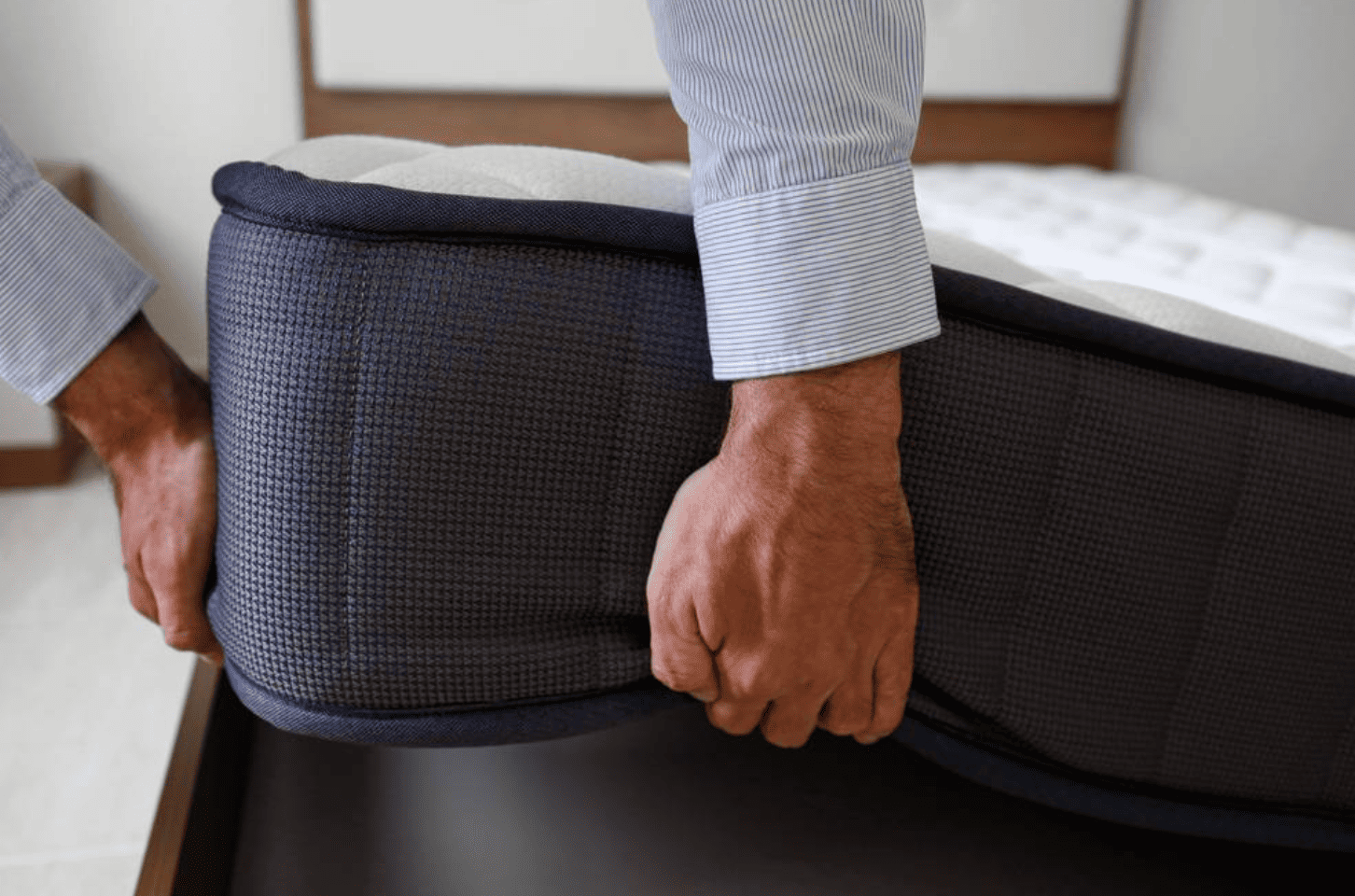
Choosing a mattress has become increasingly difficult in recent years. The reason is simple: there are many models available on the market, and brands are using innovative technologies to set themselves apart from the competition. This mattress guide provides all the essential information you need to make an informed decision. One thing is certain, however: to sleep well, you need a comfortable mattress. Comfort depends on the quality of the support, the composition of the core, and the treatment of the cover, but also—to a lesser extent—on the density, thickness, size, and weight of the mattress. When it comes to weight, there are significant differences depending on whether the mattress is made of latex, foam, or springs. What does this mean in practice?
Mattress Construction Technology and Weight
In general, a mattress weighs between 12 and 70 kg. It’s important to note that the core technology directly affects a mattress’s weight. By “core,” we mean the mattress’s center—the part that provides support for the sleeper. This core can be made of foam, latex, or springs. These materials are what determine the mattress’s weight. Thus, a memory foam mattress will be lighter than a natural latex mattress and a pocket-spring mattress, especially if the latter contains a large number of springs.
It also seems appropriate to note the significant differences in weight between polyether foam, polyurethane foam, and viscoelastic foam; between natural latex and synthetic latex; and between the three types of spring mattresses available on the market.
When it comes to latex mattresses, synthetic materials are generally considered lighter and more fragile than natural materials. As a result, a mattress certified as 100% natural latex will tend to be heavier than a 100% latex mattress.
For foam mattresses, the weight naturally depends on the quality of the foam. In this case, it’s safe to say that entry-level mattresses made of polyether foam are lighter than mid-range mattresses made of polyurethane foam and high-end mattresses made of memory foam.
When it comes to spring mattresses, the number of springs determines not only the quality of support but also the weight of the mattress, assuming the same dimensions. As a result, biconical spring mattresses are the lightest on the market because they contain a limited number of springs (300 on average). Next are multi-coil spring mattresses, which contain an average of 800 springs. Pocket spring mattresses are the heaviest, as they can contain up to 2,000 springs.
However, the material alone does not determine a mattress's weight. You must also take the mattress's dimensions into account.
What weight for what mattress size?
The weight of a mattress varies not only by material but also by size category. When it comes to mattress dimensions, there are the following:
- single mattresses;
- double mattresses;
- Queen-size mattresses;
- King-size mattresses.
Single Mattress
There are several sizes of single mattresses: 90 x 190 cm, 100 x 200 cm, and 80 x 200 cm. For these different sizes, the listed weight varies depending on whether the mattress is made of foam, latex, or springs.
The 90 x 190 cm mattress is suitable for both children and adults (up to 1.70 m). It is the standard size for a single mattress. It weighs approximately 17 kg.
The 100 x 200 cm mattress is designed for adults. It is intended primarily for people whose body dimensions are not quite standard. This mattress weighs approximately 15 kg.
The 80 x 200 cm mattress is designed for adjustable beds or for models with two separate sleeping surfaces. This type of mattress typically weighs between 12 and 17 kg, depending on the sleep technology used.
As for 70 x 140 cm baby mattresses designed to fit in a crib, the weight ranges from 3 to 4 kg.
Double Mattress
In France, the standard size for a double mattress is 140 x 190 cm. Double mattresses measuring 140 x 200 cm and 120 x 190 cm (the smallest size for a double mattress) are also available on the market. These different mattress models weigh approximately 20 kg. The weight may be slightly higher or lower depending on the material used in the mattress core.
Queen-size mattress
This type of mattress is designed for people taller than 1.80 meters, allowing them to enjoy optimal comfort. The queen-size mattress is also ideal for couples, as it ensuresthat each partnerhas their own sleeping space. A queen-size mattress measures 160 x 200 cm and weighs approximately 30 kg.

King-size mattress
King-size mattresses aren't very common in France. They are, however, very popular across the Atlantic. Like queen-size models, they are designed for larger individuals and couples. A king-size mattress measures 180 x 200 cm and weighs an average of 40 kg.
What weight is appropriate for which mattress density and thickness?
The density of a mattress refers to the weight of the material per unit volume. Expressed in kilograms per cubic meter (kg/m³), this measurement applies only to latex and foam. It is generally believed that the higher the density, the longer the mattress is likely to last. In some cases, density also refers to the firmness level of the mattress. Thus, a very firm or firm mattress will tend to weigh more than a medium-firm or soft mattress. Of course, at the same density, the weight of a polyurethane foam mattress will not be the same as that of a natural latex mattress.
Thickness can also be a factor in determining a mattress’s weight. In terms of thickness, models ranging from 15 to 18 cm and from 20 to 25 cm are available on the market. The thickest mattresses are spring mattresses. It is generally believed that the thicker a mattress is, the more filling it contains. However, this does not necessarily mean it is heavier.
Ultimately, one might wonder why knowing the weight is so important when choosing a mattress. While weight doesn’t necessarily determine comfort or how well the mattress supports you, it does help you assess whether the mattress will be easy to handle on a daily basis. While a heavy mattress isn’t very practical—since it’s difficult to move and flip—a lightweight mattress may not be very durable.
We recommend these other pages:
- What height of bed frame legs should I choose?
- Which bed slats should you choose?
- Which box spring should you choose for a latex mattress?
- Which bed frame should you choose for a pocket-spring mattress?
- What kind of mattress should you choose for an electric bed?
- What kind of mattress should you choose for a storage bed?
- What kind of mattress should you choose for a slatted bed frame?
- What type of mattress should you choose for a slatted bed frame?
- What kind of mattress should you choose for a box spring?