

Sleep quality, comfort, a pleasant feeling all night long, and restful sleep: these are just a few of the benefits a mattress can offer you—provided you choose the right one. Given the wide variety of mattresses available on the market, choosing the ideal model can be particularly difficult.
The sale and purchase of mattresses are increasingly taking place online. Companies specializing in bedding have had to innovate to reduce their costs while offering their customers high-quality mattresses at affordable prices. The concept of rolled and compressed mattresses emerged a few years ago; today, thanks to their many advantages, these mattresses are enjoying immense success.
What is a compressed, rolled-up mattress?
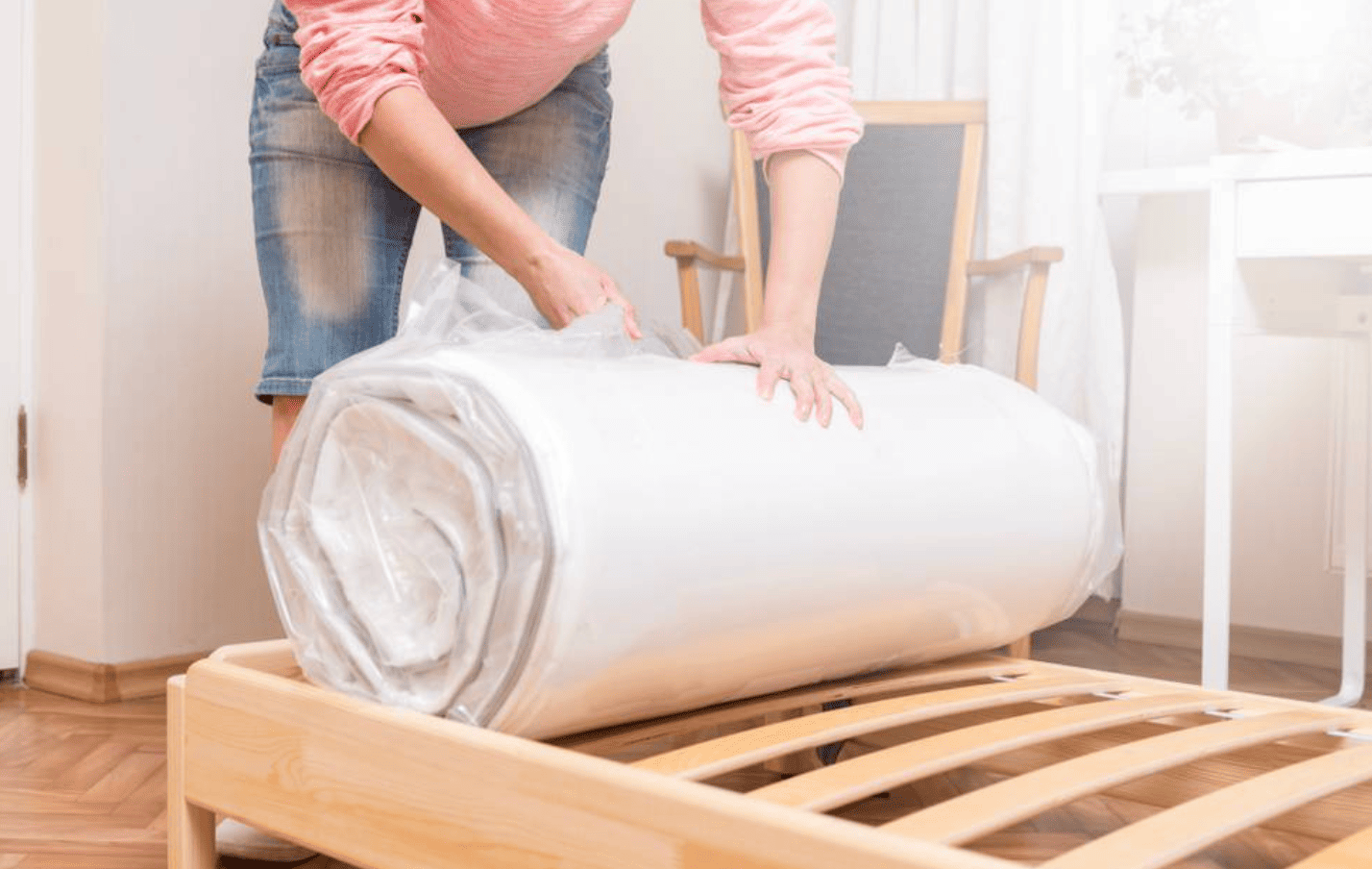
For various reasons, a mattress may be rolled up and compressed before being sold. Using special machines, air is extracted from the mattress, reducing its thickness, and then it is rolled up. Rather than leaving the mattress in its original rectangular shape, a compact, ergonomic rolled-up mattress can be stored in a rectangular cardboard box.
The method of compressing and rolling mattresses has become indispensable in the bedding industry, for both customers and specialists. Although opinions differ regarding the potential impact of compression and rolling on mattress quality, this method offers undeniable advantages in terms of storage, transportation, delivery, and installation.
What types of mattresses can be rolled up and compressed?
Many manufacturers compress and roll their mattresses (brands such as Emma, Hypnia, Eve, Simba, etc.). Several factors influence whether this process is feasible: the mattress’s thickness, resilience, and density, as well as any potential negative impact the process might have on product quality. That’s why not all mattresses are suitable for compression and rolling.
Foam, latex, hybrid, and memory foam mattresses can be easily rolled and compressed—this is the case with the natural latex mattress offered by Kipli. As for pocket-spring mattresses, the compression process is relatively complicated, which is why very few pocket-spring mattresses are rolled and compressed.
Storage, Transportation, and Delivery: What Are the Benefits?
For both customers and experts, rolled and compressed mattresses offer advantages in every way.
First, these mattresses are much easier to store in warehouses and on transport trucks, thanks to their optimized packaging. Manufacturers of all brands can easily and quickly store large numbers of mattresses in a warehouse or on a truck.
Second, the space saved by rolling and compressing the mattresses allows brands to reduce logistics costs, including transportation costs. By storing more mattresses in a single truck, the company saves money because the number of deliveries is reduced—which also results in a smaller environmental impact.
One of the benefits for customers is the fast delivery of rolled and compressed mattresses. Because the compression and rolling processes save space, the carrier can store a large number of mattresses in its truck, allowing it to deliver more mattresses more quickly. If you prefer shopping in-store to shopping online, you can easily take your mattress home with you when you leave the store and start using it right away, without having to wait for delivery.
In addition, when you buy a rolled and compressed mattress, you benefit from reduced shipping costs—or even free shipping on Kipli natural latex mattresses. Since manufacturers of all brands save on storage and transportation costs, they can afford to lower the shipping costs for mattresses or even reduce the price of the mattress itself.
Thanks to its compact, optimized size, the mattress is easy to handle, move, and carry from the warehouse to its final destination on the box spring. Narrow staircases, small doorways, or tight hallways will not hinder the delivery of your mattress in any way. A Kipli specialist will deliver your mattress by appointment, up to your floor and into the room of your choice.
What about setting up the rolled-up, compressed mattress?
Regardless of the brand (Emma, Hypnia, Eve, Simba, etc.) or the type of mattress (foam, latex, memory foam, or hybrid), the process for unpacking and setting up the mattress is the same for all products. Once the mattress has been moved into the room where it will be used, simply:
- make sure the room is well-ventilated;
- Place the mattress on the bed frame;
- Remove the packaging from the mattress;
- Do not use the mattress until it has regained its original shape
- Do not roll up the mattress again if you are returning it; leave it as is.
Does this process affect product quality?
It all depends on the mattress's ability to return to its original shape after being compressed (its resilience). A high-resilience mattress will be able to return to its original shape without losing any quality or comfort. Above all, you must not use the mattress until it has fully returned to its original shape: otherwise, you won't enjoy optimal comfort while sleeping.
Before you form an opinion about your new mattress, keep in mind that it will take some time to adjust before you can truly enjoy the feeling of comfort. This adjustment period will be even longer if you change:
- mattress type (latex, foam, or springmattresses);
- type of body support (soft or firm);
- type of treatment for the body (soothing or invigorating).
Once this period is over, all you have to do is settle into your mattress and enjoy a bed that offers maximum comfort for restful nights. With Kipli, you get a 100-night trial period to try out your natural mattress.
We recommend these other pages:
- How to Disinfect a Mattress
- How to Clean a Mattress
- How to Dust a Mattress
- How to Tell If You Have Bed Bugs
- How to Get Rid of Bed Bugs
- How do I recycle my mattress?
- How to Remove a Mattress