


Sleeping together is an experience shared by many couples and one of the most difficult to balance. Snoring, nighttime movements, differences in body temperature, and conflicting sleep schedules: these challenges can turn the marital bed into a source of silent tension. However, there are solutions that allow both sleepers to get what they need without sacrificing either the quality of their sleep or their intimacy as a couple.
Understanding Sleep as a Couple

Sleeping together is an intimate aspect of life as a couple that directly influences each person’s well-being and sleep quality. Understanding the unique dynamics of sharing a bed is the first step for couples who want to sleep better together. This involves recognizing that sharing a bed does not mean sleeping the same way or having the same sleep needs—and that this is perfectly normal.
The Benefits of Sleeping Together
Sleeping together offers benefits that go far beyond simply sharing a bed. The presence of a partner provides a sense of security and comfort, helping you fall asleep faster and enjoy better-quality sleep. Couples who sleep together often report reduced stress and anxiety, thanks to the emotional and physical connection that comes from this nighttime closeness.
This intimacy can even improve the quality of sleep for both sleepers by creating a soothing environment, provided that the sleeping conditions are tailored to both of their needs.
Sleep Challenges for Couples
Despite these benefits, sleeping with a partner presents real challenges that can disrupt the partner's sleep and reduce the quality of sleep for both people if they are not addressed.
Challenge: Snoring Impact: Disrupted sleep for the partner, frequent awakenings. Solution: Medical consultation, anti-snoring devices.
Challenge: Nighttime movements Impact: Partner wakes up briefly, non-restorative sleep. Solution: A mattress that provides good sleep independence.
Challenge: Different temperatures Impact: Arguments over the comforter, waking up because of the heat. Solution: Two separate, appropriately sized comforters.
Challenge: Mismatched sleep schedules Impact: Trouble falling asleep, waking up when the other person gets up. Solution: Separate bedtime routines.
Differences in Rhythm and Their Effects on Sleep

Differences in sleep patterns between partners are a major source of disruption. An early riser sharing a bed with a night owl experiences frequent nighttime awakenings, just as the night owl may find their ability to fall asleep disrupted by their partner’s early morning departure. These differing rhythms and the habits that stem from them—such as reading by lamplight or getting up for a glass of water—directly impact the quality of sleep for both partners.
These differences are not behavioral; they reflect distinct biological chronotypes. Recognizing and accepting these variations is essential for both sleepers to sleep better together without imposing their own rhythm on the other.
Key Takeaway: To learn more about your biological sleep profile, check out our guide on chronotypes: Are you a morning person or a night owl, and does it really make a difference?
Choosing the Right Bedding for a Good Night's Sleep as a Couple
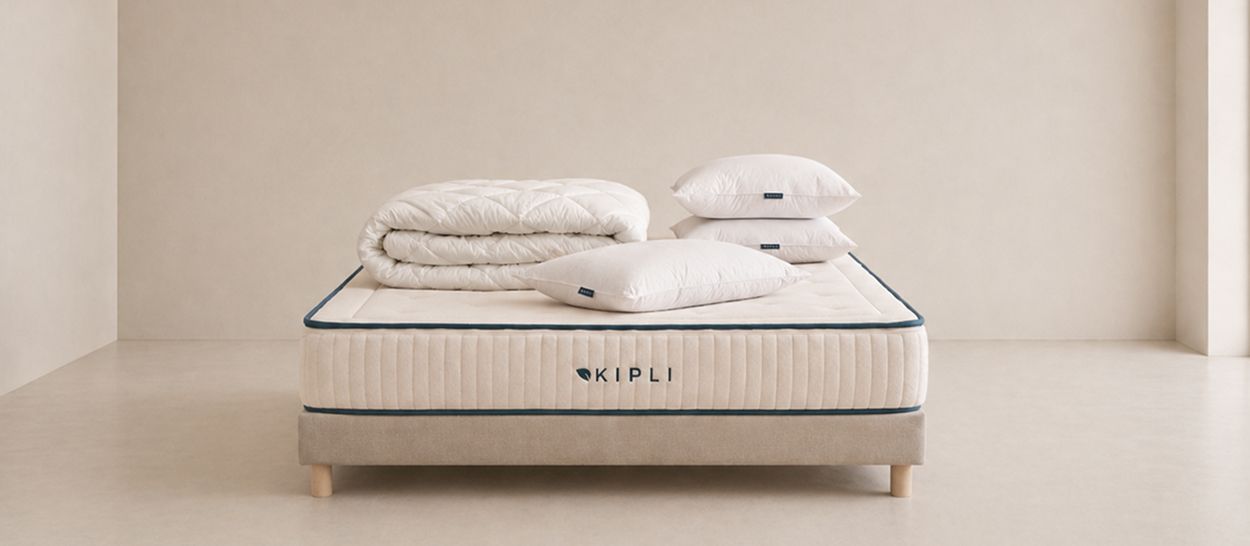
To sleep better as a couple, choosing the right bedding is crucial. It’s not just about having a comfortable bed, but about ensuring that every element—from the mattress to the comforter, including the pillows and box spring—contributes to a restful night’s sleep for both people.
The Importance of a Good Mattress
A high-quality mattress is the foundation of a good night’s sleep for two. It must provide proper support for both body types, minimize pressure points, and adapt to each sleeper’s needs. A natural latex mattress naturally meets these requirements: elastic, breathable, and dust-mite resistant, it conforms to the body’s contours without sagging over time. Its ventilated structure prevents the buildup of heat during the night, which often wakes temperature-sensitive sleepers.
Separate sleeping arrangements: the key factor for couples
"Sleep independence" refers to a mattress's ability to absorb movements on one side of the bed without transferring them to the other side. It is the most important factor for couples in which one partner moves frequently during the night. A natural latex mattress offers excellent motion isolation, allowing each sleeper to roll over, stretch, or change positions without disturbing the other person’s sleep.
Duvets: The Often-Overlooked Solution
For couples with different temperature preferences, two separate comforters make all the difference. Each partner can regulate their own temperature without pulling on the shared comforter. A medium-weight comforter for one, a summer comforter for the other, or a customized setup based on the season and each person’s needs.
Practical Solutions for Improving Sleep as a Couple

Managing Snoring and Noise Disturbances
Snoring is the most common complaint among couples who share a bed. It disrupts the partner’s sleep and can lead to chronic sleep debt if left untreated. Earplugs are the quickest solution for the sensitive sleeper. For severe snoring accompanied by daytime sleepiness, a medical consultation is recommended; sleep apnea is a treatable disorder that significantly affects both partners.
Adjust the room temperature
The ideal temperature for sleep is between 17 and 19°C. A bedroom that is too warm disrupts deep sleep phases and causes you to wake up during the second half of the night. For couples with opposing temperature preferences, the most effective solution is to use two separate comforters, so each person can adjust their bedding to their own sensitivity to heat without imposing their preferred temperature on the other.
Create an environment conducive to sleep
A dark, quiet, and cool bedroom promotes better sleep for both people sleeping there. Reducing screen time in the hour before bedtime, maintaining a regular sleep schedule, and airing out the bedroom every morning are simple habits whose effects on sleep quality are well documented.
When Sleeping Apart Makes Sense
Sleeping apart may seem like a drastic step, but it is sometimes the most considerate decision for both partners. Loud snoring, excessive movement during the night, or radically different sleep schedules can make sharing a bed truly detrimental to the health of both sleepers.
This decision is not an admission of failure; it is a form of mutual care. It allows each person to fully recover, conserve their energy, and—paradoxically—be more present and available to the other in daily life. The important thing is to talk about it openly, without judgment, while assessing individual needs and possible compromises.
For couples who want to sleep in the same bed, investing in a mattress with excellent sleep independence and two suitable comforters remains the most effective way to balance intimacy and sleep quality.
Kipli, of course.
Written by the Kipli team, specialists in natural bedding since 2018. Our advice is based on our product expertise and customer feedback to ensure you enjoy peaceful and restful nights.