

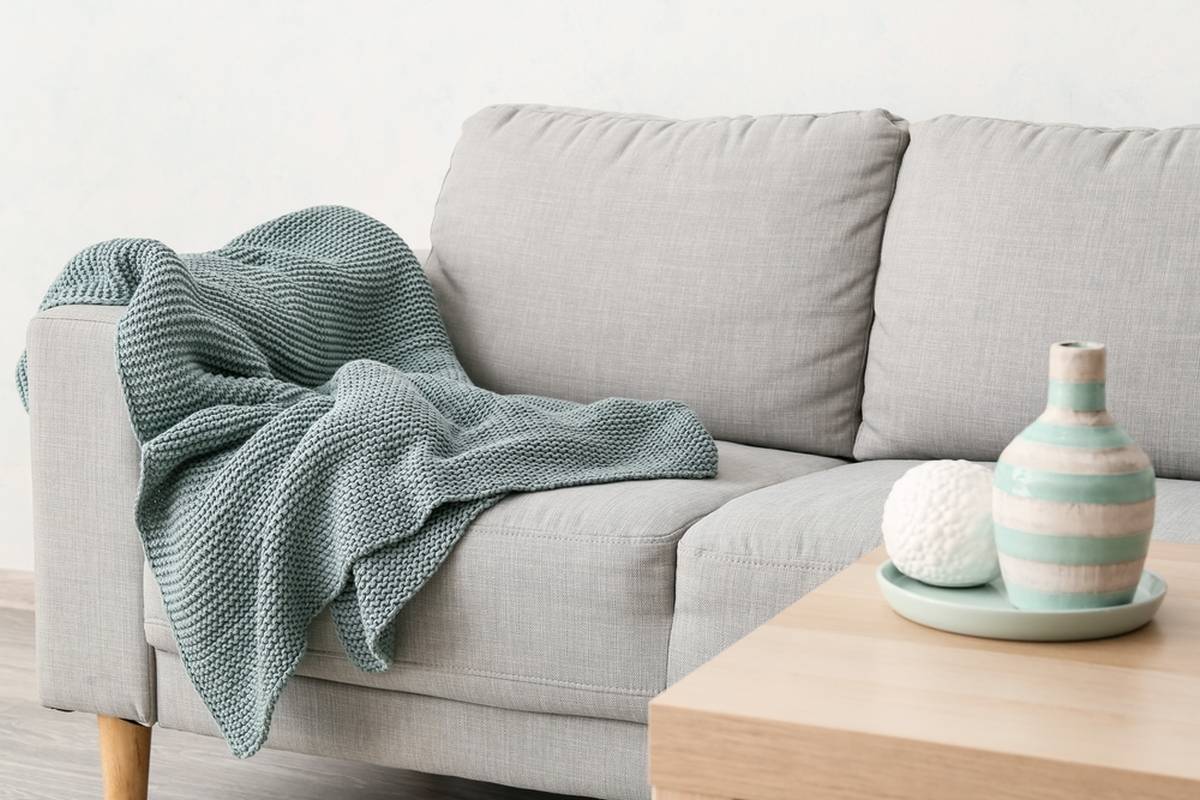
In winter, when temperatures drop outside, the home gradually transforms into a lovely, cozy cocoon. Cozy materials find their way indoors, whether to provide extra warmth or simply for decorative purposes. Scandinavian and “hygge” trends from the North add a much-appreciated sense of coziness to living spaces. While rugs, pillows, and curtains contribute to this soft, comforting atmosphere, throw blankets and other home textiles combine practicality with comfort, warming both the eyes and the body.
Choosing a throw or a bedspread adds a touch of coziness to the bedroom—as a bedspread—or to the living room. People often confuse these two sofa accessories, but they each have their own distinct characteristics. Here’s how to tell them apart!

The two main differences between a throw and a sofa blanket
When it comes to throws and sofa throws, confusion is common—both among homeowners and interior design professionals. However, these two accessories differ in many ways and do not serve the same purpose.
The sofa throw: a versatile and cozy accessory for the living room
In the world of interior design and home furnishings, the word “plaid” is used in all sorts of contexts. Derived from the Gaelic language, it originally referred to a small, thick blanket—often made of tartan—that Scots wore in various ways, such as a coat or a skirt. The traditional kilt was once called a “tied plaid.”
Later, the term—which originated in the Highlands —came to be used to describe checkered travel blankets inspired by the same tartan. Today, the definition of a plaid no longer refers to its original material, but it still describes a small, warm, and cozy blanket.
Casually draped over a corner of the sofa, the throw is always within reach to keep a part of your body warm. Some drape it gently over their shoulders, while others use it to cover their legs on long winter evenings. It’s often carried from one room to another—from the sofa to the bed, or out onto the balcony or patio. Lightweight, warm, and practical, the throw is also a versatile decorative accessory that easily complements various living room decor styles.
A sofa throw designed to completely cover armchairs and sofas
Unlike a throw, the primary purpose of a sofa cover is to cover the entire sofa to protect it from wear and tear. This piece of furniture is subjected to everyday accidents. Spilled coffee, wine stains, marker marks, scratches from cats or dogs—it’s very difficult to keep your sofas clean and looking brand-new for very long. Simply placing a fabric cover that can be easily washed over the sofa is enough to extend its lifespan.
This tip lets you give old, worn-out, or outdated sofas a makeover to give them a new lease on life or bring them back into style. Many people enjoy changing up their decor as the seasons change and their daily tastes evolve. Once again, a sofa throw adapts to their preferences, to the warmth of summer, and to cool winter evenings.
Couch throws can be made at home from any fabric, as long as it’s large enough. In stores, these accessories are ready to use and are dressed in their finest to enhance the living room’s interior decor.
What are the decorative benefits of a throw blanket for sprucing up your home?
Prized for its softness and practicality, a throw immediately adds a comforting touch to the living room. The art of draping it over furniture has been elevated to an art form. Whether spread out across part of the sofa, neatly folded over the armrest, or casually draped over the back of an armchair, it pairs beautifully with a few throw pillows to create a bohemian, modern, or laid-back look.
The standard size for a throw is a 150 x 150 cm square, but it’s becoming increasingly common to find rectangular throws measuring 130 x 160 or 180 cm. There are also smaller ones, which are perfect for children as extra blankets. The larger ones are more like sofa throws.
How can you choose a sofa throw that fits the size of your furniture?
In stores, sofa throws come in standard sizes. Smaller sizes, typically ranging from 120 x 150 cm to 130 x 170 cm, are rarely large enough to completely cover living room furniture. It’s best to opt for a medium size—between 180 x 220 cm and 180 x 250 cm—to cover an armchair. Large models, ranging from 220 x 240 cm to 250 x 330 cm, are suitable for two- or three-seater sofas.
Before purchasing a sofa throw, it’s particularly helpful to take a few measurements:
- The ideal length of the upholstery fabric can be determined by simply adding the height of the sofa and the height of its backrest to the length and height of the seat;
- The ideal width is calculated by adding the height from the floor to the armrests on both sides, the height from the armrest to the seat, and the width of the seat.
How do you choose the right fabric for a sofa throw or a blanket?
The comfort of a sofa throw or blanket depends directly on its material, and it is also the material that sets the tone for the living room’s decor. Natural materials are currently in style. Cotton, linen, sheep’s wool, mohair, alpaca, and velvet are all the rage. Their soft feel and timeless elegance are sure to please.
Fibers sourced from organic farming and manufactured in France or Europe with the utmost respect for the environment guarantee a high-end, durable, and eco-friendly product. When it comes to synthetic materials, the picture is less rosy. These textiles, derived from the petrochemical industry, are polluting and generally less durable.
They are attractively priced and often appeal to customers because of certain features. Fleece throws and sofa blankets are considered particularly warm and easy to care for. Faux fur is popular for its cozy, Nordic-inspired feel. Some consumers, although sympathetic to environmental causes, do not pay particular attention to the label or are constrained by a tight budget.
In conclusion, throws and sofa throws are part of the broader family of blankets, just like the boutis, which is characterized by its quilted appearance. The difference between the two accessories lies mainly in their intended use: decoration, comfort, or even protecting your furniture. Once you’ve determined the size and material of the home textile, the choice of colors and patterns is primarily a matter of personal taste. Natural fibers look best in their original colors, but bright colors add a pop of vibrancy to the living room.
We recommend these other pages:
- What fabric should you choose for your sofa throw?
- What fabric should you choose for your throw blanket?
- Why Choose a Cotton Gauze Throw?
- How to Choose a Wool Throw?
- How do you choose the right size throw blanket?
- What color should you choose for your throw blanket?
- Solid-color or patterned throw: Which one should you choose?
- How do you choose a throw blanket for a child?
- Which blanket should you choose for a baby?
- How do you choose a throw based on the season?
- How do you drape a throw over a sofa?
- How can I use a throw blanket to cover a sofa in an attractive way?
- How to Choose a Sofa Throw?