


Most expectant parents in France decide (often out of cultural habit) to set up a room specifically for the child so that he or she can sleep there alone. However, a countertrend has been emerging in recent years: co-sleeping.
Also known as co-sleeping, this practice involves having the child sleep with his or her parents. The baby sleeps in the same bed as his or her parents or in a suitable crib placed right next to the parents' bed.
Many parents find benefits in co-sleeping. However, it's important to choose the right bed if you, too, want to co-sleep safely with your child.
What size bed should you choose for co-sleeping? How do you choose the right crib for co-sleeping? We’ll help you find out below.
Everything You Need to Know About Co-Sleeping
In the West, it is almost always the norm to have a child sleep alone in their own room. However, in other cultures, such as in the Philippines, it is common to have a child sleep with their parents. This provides peace of mind and allows parents to keep a closer eye on the infant.
Co-sleeping is the term used to describe this practice. Whether in a crib placed next to the parents’ bed or sleeping directly in the parents’ bed, the child sleeps with his or her parents. However, co-sleeping without a suitable crib can be dangerous (overheating, suffocation, etc.), which is why choosing an appropriate co-sleeping bed is essential when parents decide to have their child sleep with them.

Is co-sleeping beneficial for a child's development?
Co-sleeping goes against the best practices often recommended by our elders. However, co-sleeping with an infant appears to be beneficial for the child’s development. It is also just as beneficial for parents.
Several scientific studies have examined this topic to prove it. For example, a survey of a group of psychology students revealed that adults who slept with their parents as children now have higher self-esteem. They also tend to be less prone to anxiety. According to James McKenna, director of the Mother-Infant Behavioral Sleep Laboratory at the University of Notre Dame, co-sleeping helps children:
- more confident;
- more socially comfortable;
- more independent.
For mothers, a study by the same director showed that co-sleeping promotes breastfeeding.
Up to what age should you practice co-sleeping?
Co-sleeping is therefore a practice that appears to be beneficial and helps put many parents’ minds at ease. However, there comes a time when a child needs to become independent and sleep on their own. So, up to what age is co-sleeping recommended? At what age is it recommended that a child sleep alone, outside the parents’ bedroom?
Co-sleeping can be practiced from the baby’s birth until around 6 months of age. At that point, the child typically weighs about 10 kilos. As you know, however, every child grows at their own pace. Certain signs may indicate that it’s time to switch to a different sleeping arrangement, such as your baby sitting up on their own.
In that case, the co-sleeping crib will no longer be suitable. The child can then sleep in a crib that is appropriate for his or her weight and height.
A co-sleeping bed: a must-have for co-sleeping
As we mentioned earlier, having your child sleep with you is a good thing, but not right in your bed. At least, not with an infant. Co-sleeping in the parents’ bed may be possible once the child is older (by opting for a king-size bed, for example), but for infants, it’s essential to choose a crib designed for this practice. The baby really needs to have their own space to sleep. So, if you want to practice co-sleeping, you’ll need to buy a specific crib.
To prevent the risks of suffocation and overheating in infants, it is important to choose a co-sleeping bed so that the child can sleep with his or her parents. A co-sleeping bed is a crib specifically designed for this purpose, as it attaches directly to the parents’ bed.
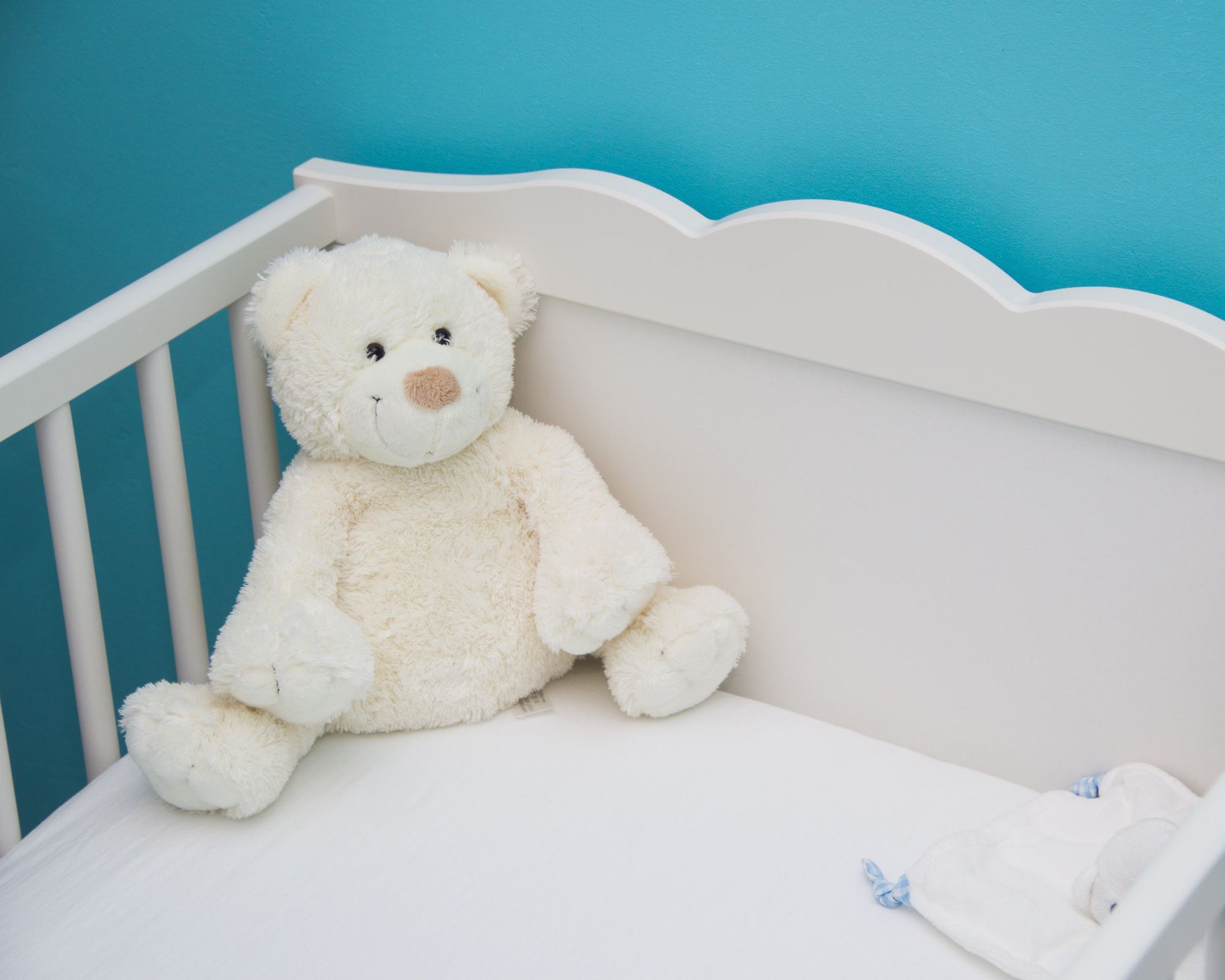
How to Choose the Right Co-Sleeping Bed?
To practice co-sleeping, parents need to buy a special crib, since standard cribs aren't suitable for this practice. But what makes a co-sleeping crib different?
The Essentials for a Co-Sleeping Bed
A co-sleeping crib is a crib with a side that lowers so it can be placed next to the parents' bed. This removable side of the crib is sometimes the source of this type of crib's nickname: the "side-car" crib.
The co-sleeping crib also features an adjustable fastening system to ensure the child’s safety using harnesses and straps. This type of crib allows parents to sleep with their infant without risking encroaching on the baby’s space. It also allows parents to stay in contact with the baby and quickly comfort them if needed. The adjustable design of the co-sleeping crib is essential so that it can fit next to the parents’ bed.
Most co-sleeping cribs have a rocking feature to help soothe and calm the infant. If this feature is essential to you, be sure to check that it’s included. In addition, co-sleeping cribs often come with casters to make it easier to move the crib around the house.
A natural co-sleeping bed to keep your baby healthy
There are various co-sleeping beds on the market, which can sometimes make it hard to choose. Whether they're made of wood, fabric, or plastic, you're spoiled for choice.
However, we strongly recommend that you choose a co-sleeping bed made from natural materials. Not only will your purchase be more eco-friendly, but you’ll also be protecting your child’s health by providing them with a healthier sleeping environment.
A foldable crib for parents on the go
For parents who don't always sleep in the same bed, or who want to be able to stay overnight at a friend's house or in a hotel without having to leave their child behind, we recommend choosing a foldable co-sleeping bed.
The foldable co-sleeping bed is easy to transport, so you can take it with you on trips with your baby with ease.
We recommend these other pages: