


You’ve probably come across the word “Tencel” on the label of a comforter, sheet, or mattress cover without necessarily knowing what it was. This textile is increasingly found in high-end bedding and linens, alongside organic cotton and linen. Yet it remains largely unknown to the general public. Where does it come from? How is it made from wood pulp? This comprehensive guide explains everything you need to know about Tencel™, this eco-friendly fiber that likely plays a bigger role in your bedroom than you realize.
What is Tencel?
Tencel® is a naturally derived textile fiber made from wood pulp. Essentially, it is wood that has been transformed into a soft, silky yarn, which is used to weave fabrics for bedding, home textiles, clothing, and even certain types of technical sportswear.
Tencel® is a registered trademark of the Austrian company Lenzing AG, one of the world’s leading producers of cellulose fibers. The technical material behind Tencel is actually called Lyocell, a fiber invented in the 1980s and patented shortly thereafter. In other words, Tencel™ Lyocell is Lyocell manufactured by Lenzing in accordance with strict specifications and a patented process. It’s a bit like “Kleenex” versus “paper tissue”: a brand name that has become so well-known that it now refers, in everyday language, to the fiber itself.
What sets Tencel™ Lyocell apart from other cellulosic fibers—such as viscose, bamboo, and modal—is its natural origin, the traceability of its production, and a manufacturing process considered one of the most environmentally responsible in the textile industry.
How is Tencel made?
Tencel is made from wood pulp, the vast majority of which comes from eucalyptus, but also from beech and birch. The trees come from sustainably managed forests certified by PEFC or FSC (Forest Stewardship Council), two certifications that guarantee the responsible use of forest resources.
The process takes place in several stages. The wood is first ground up, then dissolved in a non-toxic solvent called NMMO, or N-methylmorpholine N-oxide monohydrate, to form a viscous pulp. This pulp is then extruded through tiny holes to form continuous filaments. It is from this paste that the cellulose is extracted, which will become the textile fiber after drying and cutting.
One of the major advantages of this manufacturing process is what is known as a closed-loop process—or, more precisely, a near-closed-loop process: over 99% of the NMMO solvent is recovered and reused, which significantly reduces releases into the environment. In contrast, the production of conventional viscose uses carbon disulfide, a solvent that is highly toxic to workers and the environment. This optimized manufacturing process is what sets Tencel apart from other cellulosic fibers.
Another major advantage: Tencel uses less than 1,000 liters of water per kilogram of fiber, whereas conventional cotton requires several thousand liters and often relies on an intensive irrigation system. This dual savings in water and chemicals makes it one of the most environmentally friendly natural fibers available today.
Tencel or Lyocell: What's the Difference?
In practice, there is no difference. Lyocell is the technical and generic name for the fiber. Tencel® is the trademark registered by Lenzing for its own Lyocell, which is manufactured according to precise specifications and a controlled supply chain.
On a label, you may see “Lyocell,” “Tencel,” or “Tencel™ Lyocell.” In all cases, they refer to the same family of fibers, with the same basic properties. The difference lies primarily in traceability, certification, and the consistent quality guaranteed by a manufacturer such as Lenzing AG.
Why is Tencel so common in bedding?
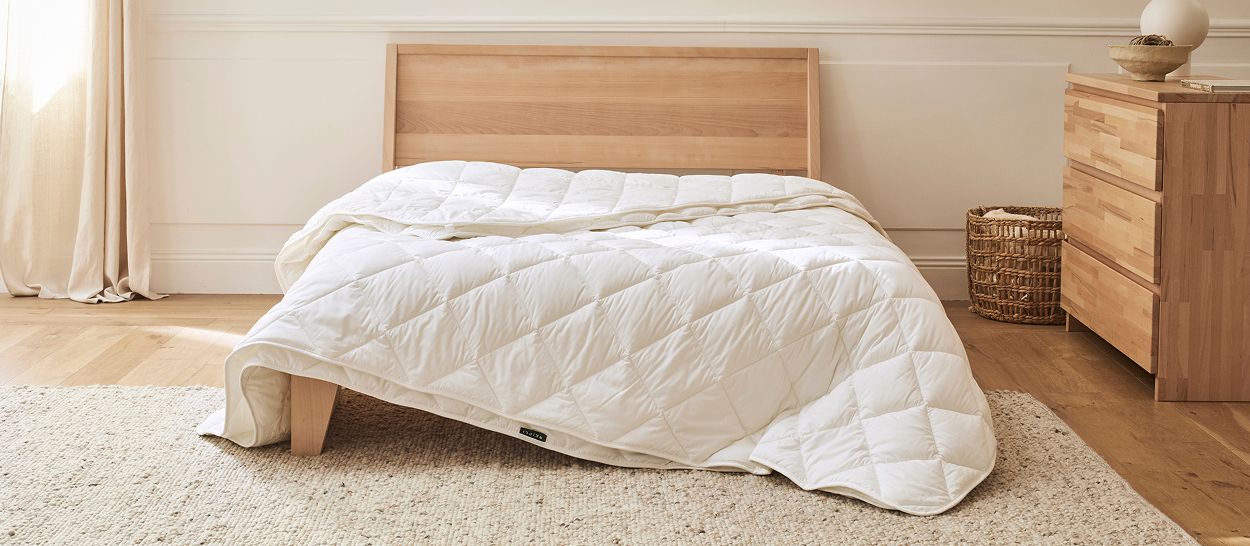
It’s no coincidence that Tencel has become so popular among bedding manufacturers. The fiber combines several properties that make it an eco-friendly material particularly well-suited for sleep.
Exceptional softness. Tencel is known for its silky feel, similar to silk, while retaining the lightness of a breathable fiber. It provides that pleasant, cool sensation against the skin—a quality highly sought after in sheets, comforters, and pillowcases.
Excellent breathability and moisture management. The fiber has an internal structure that absorbs moisture and quickly wicks it away, up to 50% more effectively than cotton. In practice, this means less of a damp feeling at night, better temperature regulation, and superior comfort for sleepers who run hot or sweat.
Natural temperature regulation. Tencel adapts to body temperature: it keeps you cool in the summer and warm in the winter. This makes it a valuable ally for people who are sensitive to temperature changes or for couples with different preferences.
Hypoallergenic properties. The smooth surface of the fiber naturally limits bacterial growth and makes the fabric an inhospitable environment for dust mites. This is a major benefit for people with sensitivities or allergies.
A composition free of harmful chemical treatments. Unlike many synthetic fibers, such as polyester, Tencel does not need to be chemically treated to provide its properties. The material is naturally safe, which reduces the risk of irritation or fumes in the bedroom.
A sustainable and recyclable material. Tencel is biodegradable at the end of its life cycle and can be recycled when the fabric is no longer usable. This is a real advantage over synthetic fibers derived from plastic.
Tencel in Kipli Duvets
At Kipli, Tencel has naturally found its place in our line of comforters. We chose this fiber for its rare balance of comfort, breathability, and environmental friendliness.
Our 4-season comforter features a 100% Tencel filling, woven with precision to provide loft, softness, and lightness. The lightweight comforter and the mid-season comforter can be used separately or layered together to accommodate all temperatures throughout the year. Tencel plays a central role here: it creates a naturally breathable filling without the need for animal down or synthetic polyester. The result is a vegan, temperature-regulating comforter ideal for sleepers who tend to get hot easily. To learn more, check out our article on how a 4-season comforter works.
Our summer comforter follows the same design philosophy but with an even lighter weight, specifically designed for warm nights. Ideal for people who sweat at night or live in hot climates, it takes full advantage of Tencel’s moisture-wicking properties.
All of our comforters are made in France, in the Auvergne region, by a manufacturer certified as an “Entreprise du Patrimoine Vivant” (Living Heritage Company), which has specialized in making comforters since 1870.
Tencel Beyond the Duvet: Mattress Covers and Bedding
Tencel isn't just for comforters. It's found in many parts of our bedding, often combined with organic cotton to bring out the best of both materials.
Our mattress covers. Kipli mattresses—including the Premium, Ultime, and Prestige models—feature a cover made from 39% Tencel and 61% organic cotton. Tencel provides softness and breathability against the skin, while organic cotton ensures the cover’s durability and structure.
Our bedding. We also offer Tencel bedding sets, which are especially popular in the summer because they feel cool to the touch, as well as pillowcases that provide a very comfortable sleeping experience for your skin and hair.
This versatility makes Tencel a true hallmark of contemporary natural bedding.
How do you care for Tencel fabric?
One of the advantages of Tencel is that it is easier to care for than wool or down, while still being a high-quality fabric. A few simple rules are all it takes to preserve its qualities over time.
For bed linens and pillowcases, machine washing at 30 or 40 degrees is generally recommended, using a mild detergent without bleach. Air drying is ideal, but some items can be tumble dried on a low heat setting.
For Tencel comforters, such as our 4-season comforter, they are generally dry-cleaned to preserve the filling over time. This is the price you pay for a natural, durable comforter designed to remain beautiful and comfortable for years to come. A cotton or Tencel duvet cover, changed regularly, protects the filling on a daily basis and greatly reduces the need for thorough cleaning.
In any case, it is best to avoid high temperatures, bleach, and direct ironing, which can damage the fabric.
Finally, keep in mind that each Tencel product may have its own specific characteristics depending on its weave, weight, or blend with other fibers. We recommend that you always refer to the care label sewn into your comforter, bedding set, or duvet cover: it provides specific instructions for washing, drying, and ironing that are appropriate for your product.
Discover our 100% Tencel 4-season comforter: Tencel filling and an organic cotton cover, with two comforters connected by strings to provide three levels of warmth. Handcrafted in Auvergne, OEKO-TEX certified.
Kipli, of course.
Written by the Kipli team, specialists in natural sleep since 2018.