

No, not every natural material is necessarily a satisfactory eco-friendly alternative. At KIPLI, we are committed to choosing the healthiest materials with the least environmental impact. After researching the various natural fibers available for manufacturing our line of mattresses, we selected those that best met our ethical and environmental standards. Bamboo is used in various forms: for everyday items, textiles, and even in the food industry.It’s a versatile material that appeals to both manufacturers and consumers alike. But beware of greenwashing—and of materials we assume are natural without understanding the often highly polluting processing methods involved. Here’s a brief clarification to help you better understand our position.
An interesting plant with many qualities
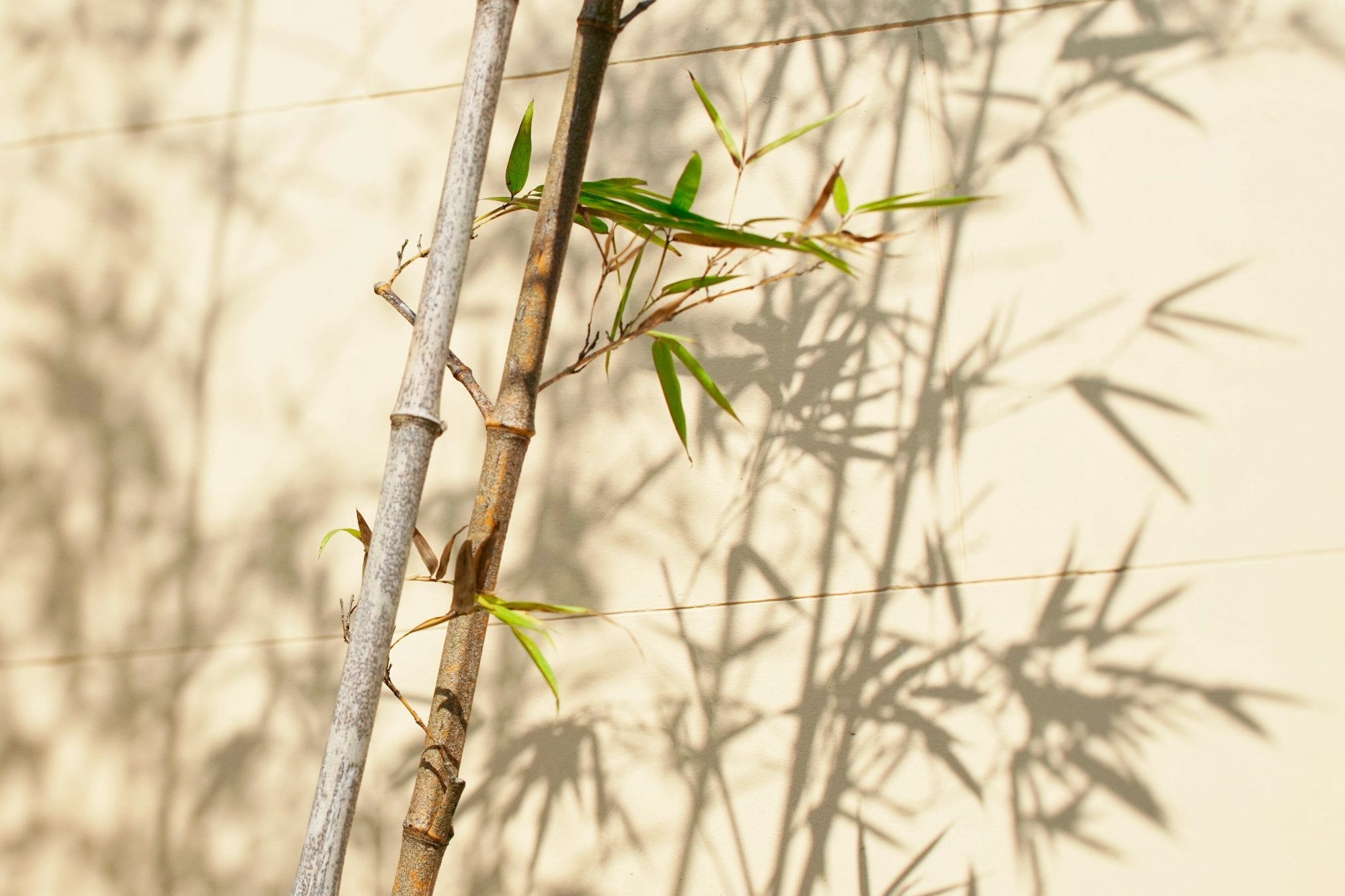
Bamboo comes mainly from Asia; in fact, China is the world’s leading producer. It is also found in Latin America and Africa. It is a fast-growing plant (capable of growing up to 1 meter per day) that requires very little water, fertilizer, or pesticides to grow. For this reason, it is nicknamed the “camel plant.” Furthermore, bamboo is highly effective at absorbing greenhouse gases—on average, three times more than trees of equivalent volume. Thanks to its very dense root system, bamboo cultivation helps reduce erosion.
In terms of its physical properties, bamboo is both lightweight (lighter than steel or concrete) and resistant to harsh weather and high temperatures. It is therefore highly sought after in the construction industry. A bamboo structure consumes far less energy than structures built with conventional materials. In fact, it requires nearly ten times less energy than a concrete structure, for example. Its unique, exotic aesthetic appeals to both architects and buyers.

Its growing popularity in the West has not come without consequences, as overproduction of bamboo to meet market demand is becoming an ecological disaster. Moreover, while it is a remarkable material in the construction industry, the same cannot be said for the textile industry.
The Negative Effects of Large-Scale Industrial Production
Bamboo is a plant—which is a simplistic way of saying that anything made from bamboo is very simple. That’s the trap with what’s called bamboo viscose, which undergoes numerous processing steps. Once the processing is complete, the bamboo fiber is no longer natural. Bamboo is used in the production of cellulose, a process that involves caustic soda and sulfuric acid, ultimately resulting in a completely artificial material. In fact, the GOTS ( Global Organic Textile Standard) certification, which guarantees environmentally friendly production methods, states that the majority of industrial bamboo fiber production does not include natural bamboo. And yet, many companies that use it boast of offering a healthy and eco-friendly alternative.
Bamboo viscose is used in mattresses. At KIPLI, we offer mattresses made of natural latex, pocket springs, and wool. We make sure that each of our products is as natural and healthy as possible for the whole family. That’s why we don’t include bamboo viscose.
But that’s not all: to meet demand, forests in Asia are being cleared to make way for bamboo plantations. This disrupts biodiversity because bamboo—considered an invasive species—grows very quickly and continues to spread. This monoculture depletes the soil.

Not to mention the significant carbon footprint resulting from the importation of raw materials.
Bamboo is therefore an interesting plant when used wisely and through controlled, sustainable cultivation. But beware of misleading claims about “natural” products that play on the name of a material that is natural in name only. Researching the origin and exact composition of the product you’re interested in will help you better understand its environmental impact. There are various other natural materials that are more locally sourced and offer qualities similar to those of bamboo, such as linen.