

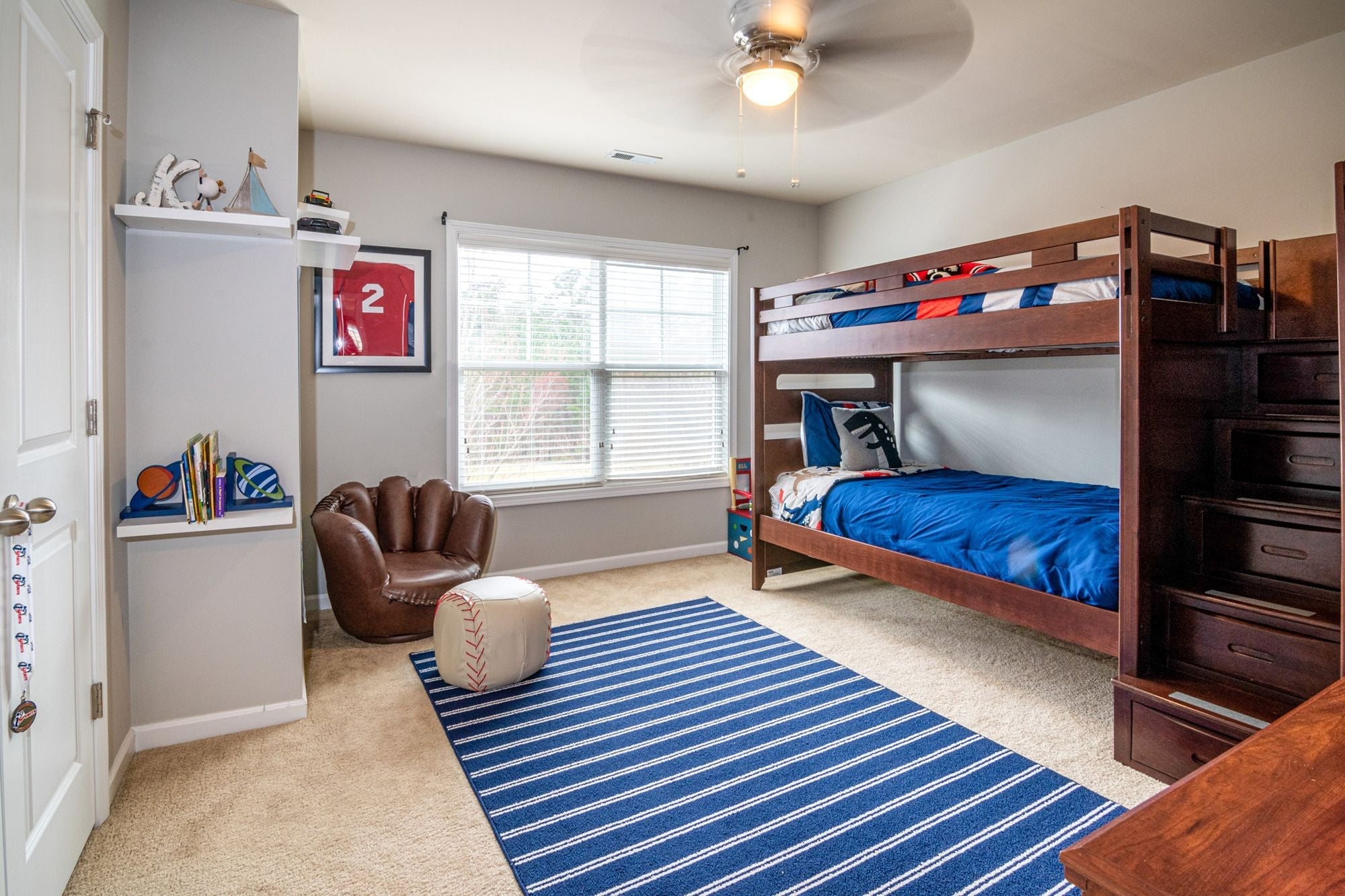
Bunk beds help maximize the available space in a bedroom. Most often, bunk beds are a natural fit for a room that must be shared by two or more children, whether in a primary residence, a house, a vacation rental, or at the grandparents’ home when they occasionally host the children.
Bunk beds are a very specific type of bed, and when choosing one, you need to consider several important factors related to the comfort and safety of young sleepers. We invite you to learn more about the different types of bunk beds and their features so you can determine the guidelines to follow in making the right choice and ensuring you have comfortable and safe bunk beds.
Bunk Bed Models
When taking a look at the various models of bunk beds available on the market, it quickly becomes clear that there are three main types of loft beds:
- traditional fixed bunk beds, with two sleeping surfaces stacked one above the other. The beds can consist of two single beds, or a children’s bed on the upper level and an adult bed on the floor; in the latter case, the beds are generally arranged perpendicular to each other rather than parallel;
- separable bunk beds, consisting of two single beds that can be stacked or separated into two traditional children's beds;
- Pull-out bunk beds, a solution that provides a third sleeping space—usually for occasional use—hidden in a drawer located under the bottom bunk.
Regardless of the type of bunk bed, height is used to optimize space in bedrooms, resulting in a small footprint—which is its main advantage.

How do you choose a bunk bed for a child?
There are many key factors to consider when choosing bunk beds, but they all focus on children’s safety and comfort to ensure they get a good night’s sleep.
Before even getting into the details of these selection criteria, we must start with a factor that is, above all, a matter of common sense: does the room have enough ceiling height to accommodate bunk beds? Indeed, it is essential to ensure that the top bunk is not too close to the ceiling, for obvious reasons of comfort and safety. To prevent a child from bumping their head on the ceiling when getting out of bed—and to allow them to lean against the bed frame to read, for example—there must be a minimum distance of 60 cm to 70 cm between the mattress and the ceiling. In the case of a room with a sloped ceiling, you must therefore carefully choose the location of the bunk beds and make sure to verify whether such an installation is physically possible by taking precise measurements.
What is the height between the two bunk beds?
Similarly, the distance between the bottom bunk and the top bunk is also crucial to prevent any accidental head injuries. That is why it is advisable to choose a model that allows the child sleeping on the bottom bunk—usually the younger and smaller of the two—to stand up on their bed without risking hitting the underside of the top bunk.
Structural Materials and Assembly
Wood and metal are the most commonly used materials for building the frames of bunk beds. Wood is known for being more solid and sturdy, offering a wide range of finishes and colors. However, wood and its topcoat—if any—can be prone to wear and show signs of use over time.
Metal, on the other hand, is lighter than wood but remains a very sturdy material that offers a more contemporary and understated style. It’s important to pay close attention to stability when choosing a bunk bed model. It’s always difficult to get a clear sense of this stability when shopping online, whereas it’s easier to check it by visiting a specialty store. The same applies to the sturdiness of the slats on the top bunk’s bed frame, which must be as sturdy as possible to prevent them from breaking and causing an accident.
Whether made of wood or metal, bunk beds are delivered as a kit for self-assembly. This assembly step is essential for the stability and safety of the structure. It is therefore important to follow the assembly instructions to the letter and not to attempt to modify any aspect of them. If the instructions recommend securing part of the structure to the wall, you must do so. If the assembly guide specifies that a part of the structure must leave no gap between the bed frame and the wall, you must also ensure this and follow the instructions accordingly.
Security Features
In addition to the overall sturdiness and stability of bunk beds, there are two safety features on which we must be uncompromising, as they involve children's safety.
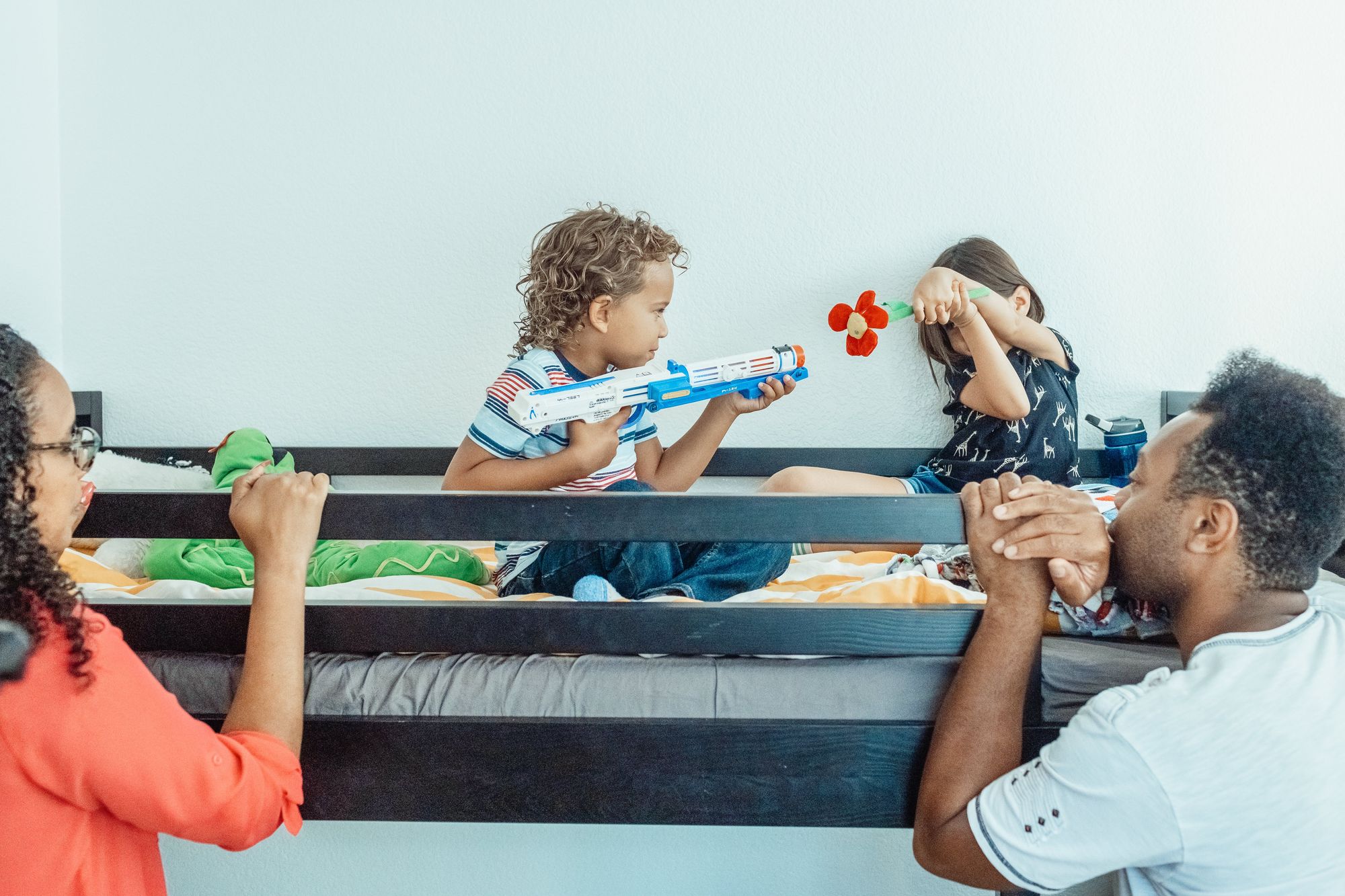
First and foremost, a loft bed must always be equipped with a safety rail that is high enough and securely fastened to minimize the risk of falling.
The second point concerns access to the top bunk. Most often, this is done via a ladder, which must be stable, sturdy, and set up with the utmost care. Since children use this ladder several times a day, taking even the slightest risk is out of the question. Ideally, the ladder should have side handrails and non-slip treads. Some models of bunk beds—which are more expensive and require more floor space—feature a full staircase instead of a ladder, which is much more practical and reassuring for both parents and children.
At what age can a child start sleeping in a loft bed?
This issue is sensitive and important enough to warrant specific legal provisions. These provisions state that it is prohibited to have children under the age of 6 sleep at a height.
Since the bed is often a place where children play and run around, it makes sense to assume that only children aged 6 and older are capable of recognizing the danger posed by heights—especially when a child is half-asleep or still drowsy.
We recommend these other pages:
- Classic Beds: What Factors Should You Consider to Make the Right Choice?
- The Benefits of a Storage Bed or Bed with Drawers
- The Pros and Cons of Electric Beds
- The round bed: an original and stylish choice
- The Pros and Cons of a Loft Bed
- Japanese Beds: The Many Benefits of the Futon
- How to Choose a Canopy Bed?
- Why choose a convertible bed?
- The Benefits of a Fold-Down Bed