


Wool is one of the oldest natural materials known to the world. It has been used to cover all kinds of objects for hundreds of years, from Berber tents to Persian rugs, and from our various textiles to mattresses. It keeps us warm and protects us from the cold and damp. In short, wool is an ideal fabric choice in many situations.
Pas étonnant donc de compter la laine dans la liste des meilleurs revêtements pour composer nos canapés en tissu. Mais quels sont les bienfaits de la laine ? Quelles sont ses différentes formes ? Découvrons les principales informations à connaître sur la laine comme tissu pour canapé.
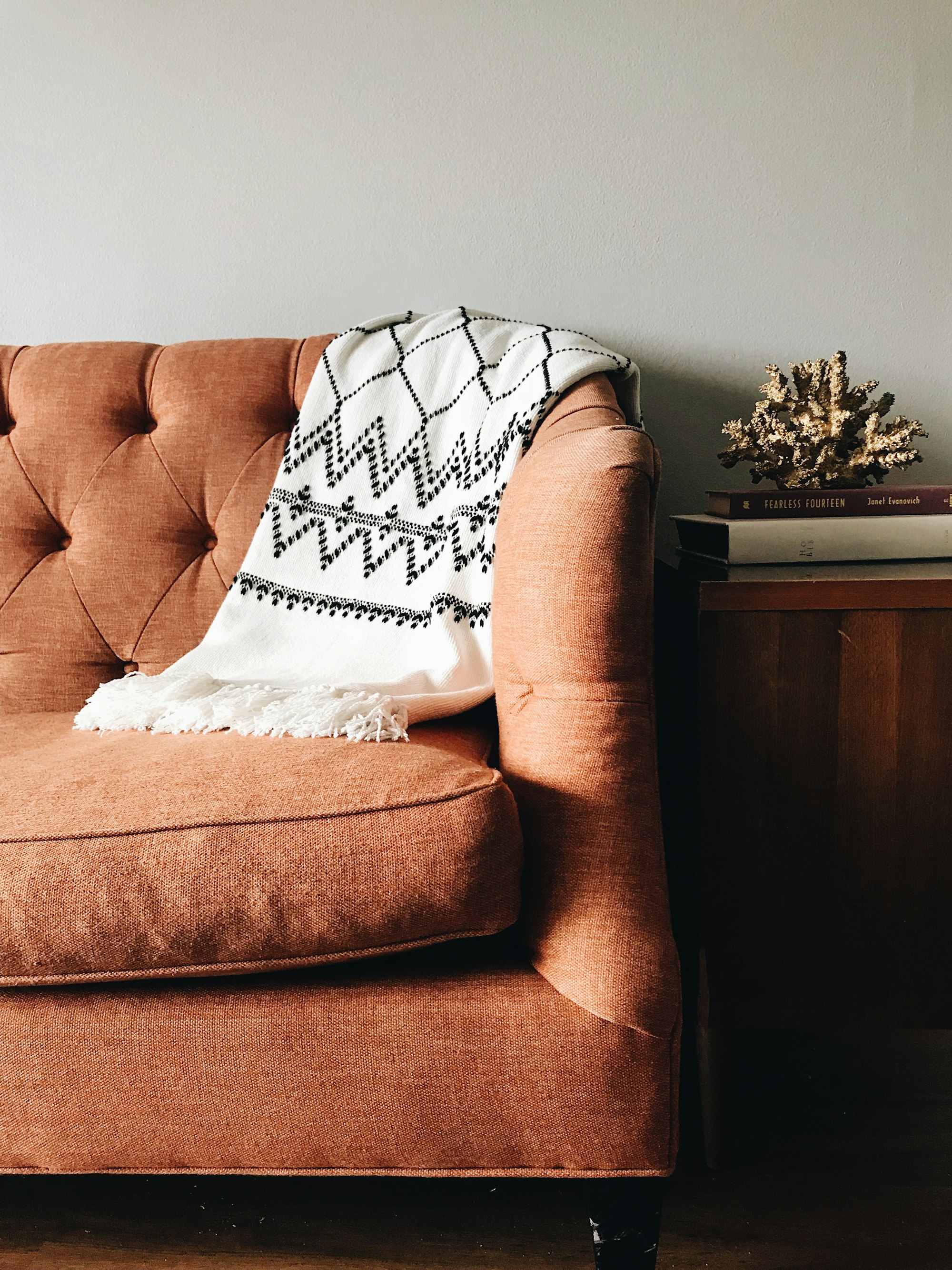
Wool: A Material with Many Benefits
Wool is a completely natural textile fiber that comes primarily from sheep—at least in France. The reason we picture a wool sweater keeping us nice and warm despite winter temperatures is that wool has significant thermal properties. More specifically, wool is thermally insulating. It helps the body maintain a steady temperature. So, when we’re comfortably sprawled out on a wool sofa, we can curl up there all winter long. Furthermore, wool allows the skin to breathe. We’re less likely to sweat on a wool sofa than on one made of synthetic fabric.
This thermoregulatory property offers another benefit: it helps prevent the proliferation of dust mites. A wool sofa is therefore ideal for people who are allergic to them. Furthermore, wool does not cause any other allergies or respiratory illnesses. The same cannot be said for synthetic fabrics. Finally, wool has beneficial properties when it comes to indoor air quality. It absorbs and binds volatile organic compounds (VOCs), such as formaldehyde. This material therefore acts as a practical air purifier, especially since our living spaces are regularly exposed to harmful emissions.
Wool also offers benefits for sofas. Its structure gives it good elasticity and great flexibility. Furthermore, wool sofas tend to wrinkle less than other fabric sofas or fabric sleeper sofas. When it comes to caring for the sofa, wool once again demonstrates all its qualities. It doesn’t generate static electricity, so it attracts less dust.
What kind of wool should you use to reupholster your sofa?
You should read the brochures describing wool sofas carefully. This is because there are several types of wool and manufacturing methods used to create the upholstery.
The looped-wool armchair
Curly wool is all the rage when it comes to home decor. While it remains a major trend in fashion, this type of wool is now making its way onto our sofas, armchairs, ottomans, and rugs. Looped wool is created by an irregular weave that combines cotton and wool threads. This gives it a slightly curly appearance. Soft and comfortable, it has the advantage of not wrinkling.
Curly wool gives living room seating a rustic, even retro look, while lending it a beautiful elegance. To give it even more character, it’s best to choose a curly wool sofa in its most natural, ecru color. Durable and insulating, it’s the most aesthetically pleasing type of wool.
The heathered wool sofa
The heathered wool sofa is made of virgin wool, created by combining several threads of different colors. This manufacturing process gives the sofa a textured appearance and subtle, nuanced shades. From a more technical standpoint, heathered wool is fairly water-repellent, as water droplets roll off its surface.
Virgin wool and pure virgin wool: What's the difference?
If the sofa's specifications include the term "virgin wool," this means that the upholstery is made from wool sheared from healthy, live animals. Please note that this type of wool may be blended with other fibers (cotton, synthetic). More specifically, it may contain up to 7% other textile fibers.
Wool can also be produced using other methods. One example is regenerated wool, which is made from used wool. Synthetic fibers derived from recycled plastic bottles are often added to it. At first glance, this seems sustainable, but regenerated wool is still energy-intensive to produce. Most sofas or clothing labeled “100% wool” are made from recycled material. Tanning wool and recovered wool, on the other hand, come from slaughtered animals and animals that have died naturally, respectively.
"Pure virgin wool" is an even more stringent quality label, as it certifies that the animal from which the wool was obtained is indeed alive and in good health. However, pure new wool must contain at least 99.7% wool and no more than 0.3% other fibers. On a different note, pure new wool refers to the first shearing of a lamb.
Why should you always choose an organic wool sofa?
Certes, la laine est un produit naturel, plutôt sain pour le canapé. Toutefois, il existe une version bio du textile, qui se révèle comme une réelle alternative à la laine conventionnelle. Certains labels garantissent des standards de sélection d’écoresponsabilité assez élevés. Ils prônent notamment :
- a completely painless sheep shearing;
- a ban on “museling,” which involves removing a portion of the skin without anesthesia to prevent certain diseases;
- the ban on treating sheep with hormones;
- organic livestock farming, which includes grazing and land management;
- Chemical-free wool cleaning.
Of course, another factor that determines the ethical standing of an organic wool sofa is the origin of the upholstery. If the upholstery has traveled thousands of kilometers before being used to cover the living room sofa, needless to say, its environmental impact is disastrous.
How do you clean a wool fabric sofa?
There are several effective ways to care for a wool sofa, but it’s important to remember that wool is a delicate fabric that requires special care. Even though it’s a good dust repellent, this upholstery won’t withstand months without maintenance and the buildup of dirt. That’s why you should vacuum your sofa once a week.
If a stain occurs, it’s essential to act quickly. A mixture of water and mild soap on a clean cloth is usually sufficient. For grease stains, Sommières clay remains the best remedy. Before applying it, be sure to remove excess grease with paper towels. For more stubborn stains, a solution made from water and white vinegar may be effective, as is lemon juice.
Discover our wide selection of 100% natural sofas:
2-Seater Sofas - 3-Seater Sofas - 4-Seater Sofas - Straight Sofas - Solid Wood Sofas - Linen Sofas - Modular Sofas - Corner Sofas - Brown Sofas - Blue Sofas - Green Sofas
We recommend these other pages: