


There are many types of leather on the market, including reconstituted leather, an affordable alternative to traditional leather. It is a quasi-synthetic leather, composed mainly of ground-up leather fibers bound together with a polyurethane (plastic) mixture and attached to a paper or fiber backing. Most often, this leather is used to make book covers, bags, and personal accessories. However, it is also used as upholstery for furniture, particularly sofas. If you choose reconstituted leather for a sofa, it’s because this material offers certain advantages. However, there are also a number of drawbacks to using a reconstituted leather sofa.
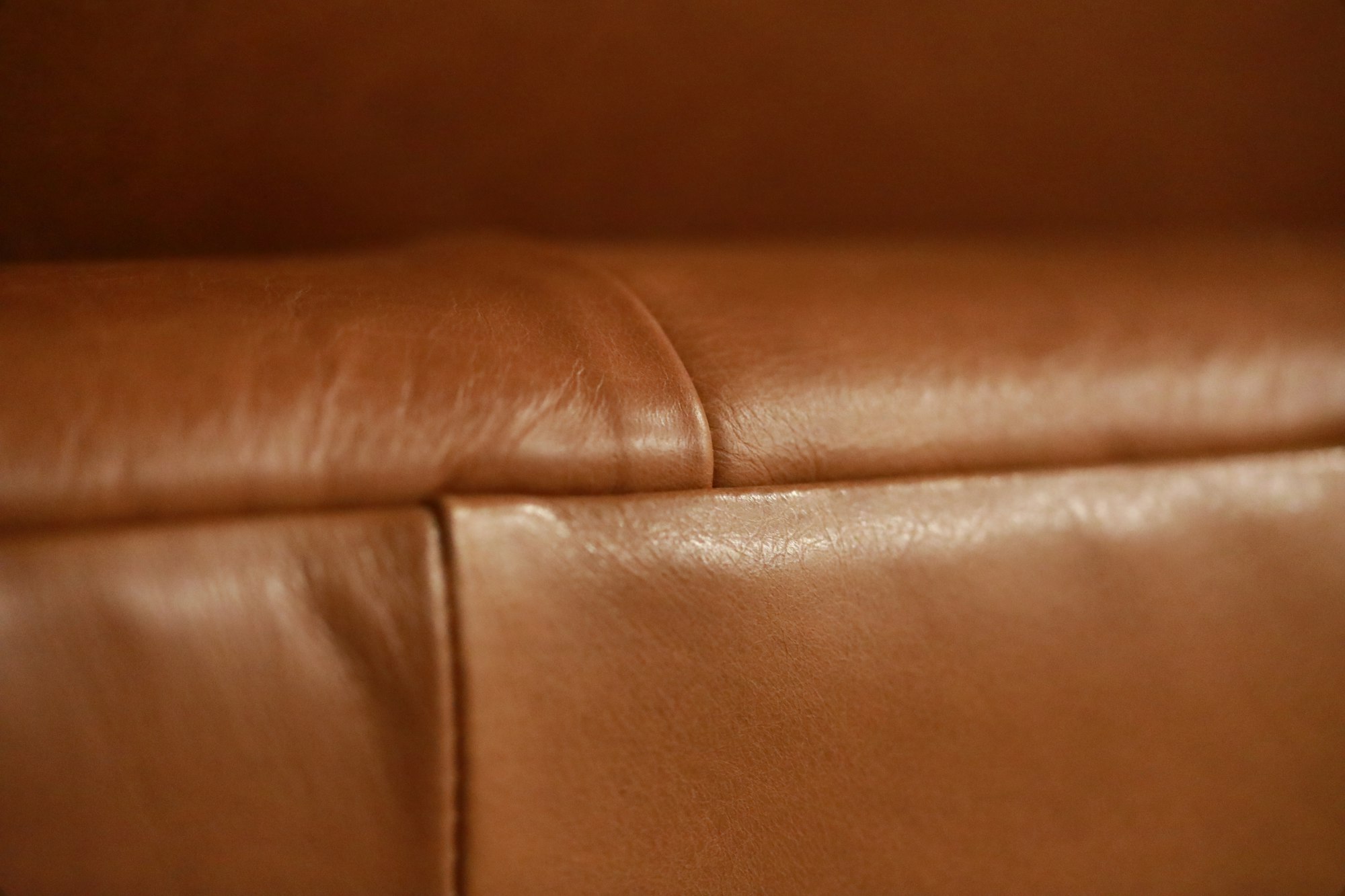
What is reconstituted leather?
Reconstituted leather is a synthetic material originally designed to mimic the appearance of leather. It is made from leather scraps bonded with polyurethane or latex onto a mesh or paper fiber base. The amount of leather in the mixture can vary considerably (from 10% to 90%) and thus affect the functional and aesthetic properties of the finished product. Reconstituted leather also allows for the use of smaller pieces and lower-quality leather in finished products. This can be beneficial, as it significantly reduces the amount of leather waste generated. Old and worn leather can also be recycled to create reconstituted leather. It is worth noting that another term is also used to describe it: blended leather.
What are the pros and cons of a reconstituted leather sofa?
Reconstituted leather sofas are flooding the market and furniture stores. The reason this sofa is attracting so much interest is that it offers certain benefits to the user.
The Benefits of a Reconstituted Leather Sofa
Since reconstituted leather is a composite of leather and plastic, it can be manufactured using various formulations and proportions, depending on the intended use of the final product. A reconstituted leather sofa is highly resistant to moisture and spills, as well as abrasions. It also has other advantages:
- A sofa made of reconstituted leather is generally less expensive than a leather sofa, so the buyer can enjoy all the benefits of leather without paying top dollar;
- The reconstituted leather sofa is available in a variety of colors and patterns, all suitable for living room decor. Light shades brighten up a room and add character, while dark shades lend a sense of understated elegance and sophistication. A reconstituted leather sofa allows you to express your personality and highlight the unique style of your home. That touch of color makes all the difference;
- The reconstituted leather sofa is environmentally friendly because it uses leather scraps from other applications. This does not require the use of additional resources, which helps reduce waste;
- The reconstituted leather sofa is sturdy and has no natural imperfections or minor variations from batch to batch.
The Drawbacks of a Reconstituted Leather Sofa
Are you thinking about buying a reconstituted leather sofa? While it’s certainly an affordable alternative to genuine leather, it’s important to understand its limitations to get the most out of it in everyday use. The main drawbacks of this sofa are:
- its durability, which is generally inferior to that of a natural leather sofa. Since reconstituted leather is primarily made of plastic, it is not as flexible as natural leather. Furthermore, because the natural fibers are not exposed, this type of leather cannot be treated and conditioned as if it were genuine leather;
- its comfort, which is not 100% guaranteed, because when the sofa is subjected to frequent use, the reconstituted leather begins to separate from its backing. Over the years, it can flake and peel away, eventually becoming uncomfortable;
- its appearance, because while genuine leather is a luxurious and elegant material, reconstituted leather is unattractive, especially after a certain amount of use. You may notice pieces of leather peeling off. Furthermore, reconstituted leather does not hold dyes well. This results in uneven coloring. The main consequence is that the underlying layers of the material are exposed;
- Its maintenance is rather complex, because it’s important to know that once the first signs of deterioration appear, reconstituted leather is difficult to repair. This type of leather generally begins to show signs of wear after 2 or 3 years, but you can delay this process by cleaning the sofa regularly, keeping it away from sunlight and all sources of heat, and—most importantly—avoiding rubbing spills and stains. In short, the care techniques are similar to those for genuine leather, with a few minor differences.
Furthermore, a reconstituted leather sofa is not a sound investment. While it is relatively affordable compared to a genuine leather model, it does not last over time. This is a real drawback, as the buyer will have to spend money again to purchase the same piece of furniture. The financial impact is much greater in the short, medium, and long term.
Buying a synthetic leather sofa: Is it worth it?
Given all of the above, one might question the value of owning a reconstituted leather sofa, even if its competitive price may explain the number of sales recorded over the course of a year. So, if your budget only allows for “faux leather” instead of genuine leather as the upholstery for your sofa, it’s best not to make it the centerpiece of your decor and to avoid placing it in a high-traffic area, or it may crack more quickly.
The fact that it’s also an environmentally friendly product can stir up strong feelings. One might think that ardent defenders of nature would be the first to turn to this solution. However, in reality, a true leather enthusiast won’t risk choosing inferior-quality leather. For one thing, it won’t bring them any satisfaction. Second, they might end up spending twice as much for the same product. For all these reasons, it’s often more sensible to save up the necessary funds to purchase a genuine leather sofa.
Ultimately, a reconstituted leather sofa is a good choice for families on a tight budget when furnishing their home. But leather isn’t the only option. Fabric upholstery also offers many advantages, for example, for a corner sofa. Thus, a convertible sofa or a straight sofa made of modal fabric, viscose fabric, or velvet can be a very attractive choice.
Check out our different types of sofas:
Linen Sofas - 2-Seater Sofas - 3-Seater Sofas - 4-Seater Sofas - Solid Wood Sofas - Modular Sofas
We recommend these other pages: