

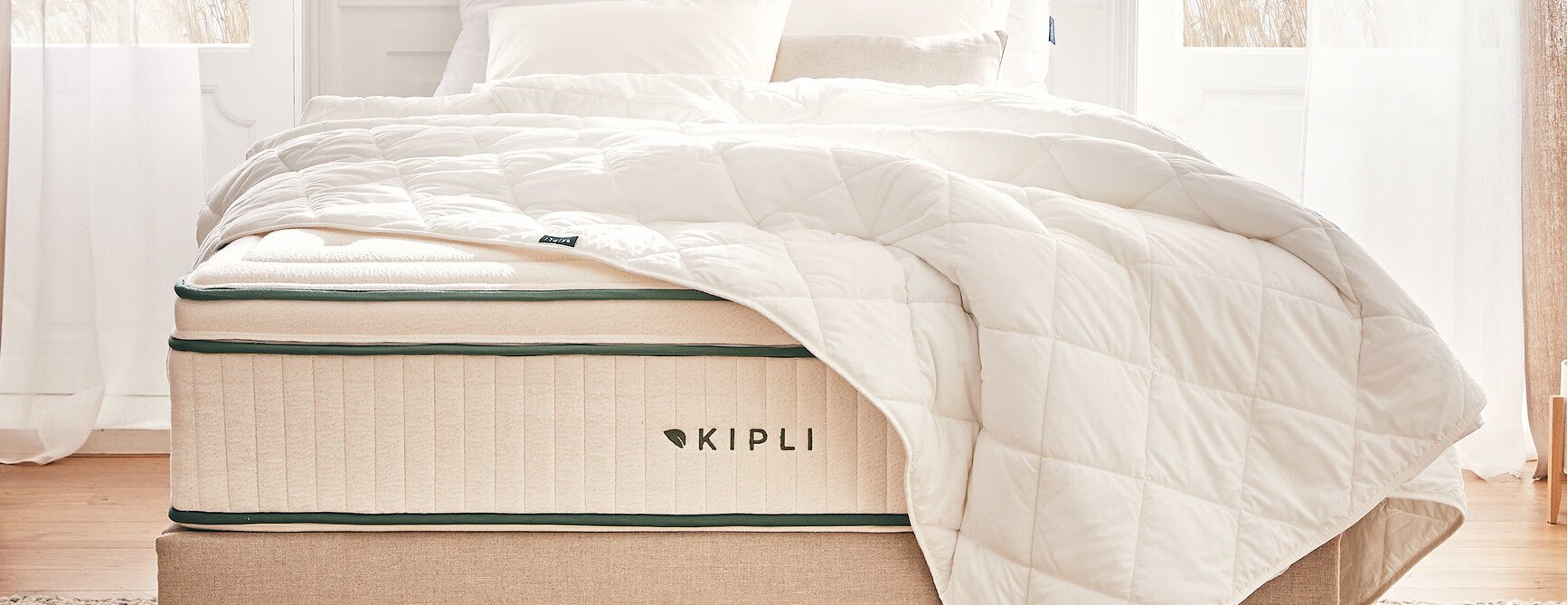
Every night, the comforter protects our sleep and retains some of our body heat. But over the months, it accumulates sweat, dead skin cells, and sometimes dust mites if it isn’t properly protected. Washing your comforter isn’t just a matter of hygiene—it’s a way to extend its lifespan, preserve its comfort, and maintain a healthy sleep environment.
How often should you wash your comforter?
Most comforters can be washed once or twice a year. The best time to do so is often when the seasons change, when you adjust your bedding to a different temperature. Washing is also recommended after an illness or excessive sweating. If you use a duvet cover that you change every week, the comforter itself stays protected and requires less maintenance.
Can all comforters be machine-washed?
Not all comforters are suitable for home laundering. Synthetic models and comforters made of feathers or down can generally be machine-washed at 40 or 60 °C. However, they must be dried thoroughly to prevent musty odors.
Natural comforters, such as those made of wool or wood fiber (Tencel), require more care. Due to their bulk and material, you may need to use a large-capacity washing machine or an eco-friendly dry cleaner. This is an important point to consider before purchasing yourKipli comforter, which is made from natural materials and designed to last.
How do you properly wash a comforter in the washing machine?
First and foremost, check the label on your comforter. It specifies the maximum temperature, machine-washability, and any precautions to take. As a general rule, it’s best to select a delicate cycle at 40 °C and avoid a high spin cycle. Using a mild detergent without fabric softener will help preserve the quality of the fibers. Drying should be a long, even process, preferably air-dried, for at least twenty-four hours. For those with a dryer, adding a tennis ball helps maintain loft by distributing the filling evenly.
The trick to avoiding washing it too often
Washing a comforter isn’t something you do every week—and thankfully so. To limit how often you have to wash it, the key is to use a breathable comforter cover, which should be washed every one to two weeks. For those who are particularly particular, a thin duvet protector, placed between the comforter and its cover, acts as an invisible barrier against dirt. Paired with anorganic cotton duvet cover, this protection ensures long-lasting comfort while reducing wear and tear from repeated washings.
When should you replace your comforter?
Even when cared for properly, a comforter eventually loses its effectiveness. When it no longer retains its loft, doesn’t regulate heat as well, or your sleep becomes more restless, it’s often a sign that it’s time to replace it. On average, a synthetic comforter lasts three to five years, while a natural comforter can provide comfort for six to ten years, depending on how often it’s used and how well it’s cared for. Choosing a high-quality comforter, such as afour-season comforter, is an investment in longevity and healthier sleep.