


The bed is the centerpiece of the bedroom. However, make one's bed requires special care. By cleaning it regularly, you preserve its beauty, your comfort, and a healthy sleeping environment. Cleaning the headboard is often overlooked by families. However, just like the box spring or mattress, this part of the bed also requires regular maintenance, which will extend its lifespan. The cleaning methods, On the other hand, they depend on the material it's made of (leather, fabric, velvet, etc.). Here are a few tips to help you clean and care for your headboard in the best possible way.
A cleaning product for maintaining a leather headboard
Vegetable-tanned or animal-tanned leather is a high-quality material that often comes with a high price tag. It is a very popular choice for headboards because it adds a great deal of style and elegance to a room. Leather is also known for its durability.
To care for this upholstery, use a suitable cleaning product. Pour a few drops of the cleaner onto a cloth, then gently wipe it over your headboard. Note, however, that applying the solution directly to the upholstery is strongly discouraged.
Be careful not to apply too much product, as leather does not tolerate moisture well. Gently move the applicator back and forth across the entire surface of the furniture without rubbing it, so as not to damage the leather.
Removing a non-greasy stain from your leather headboard
If you notice a stubborn, non-greasy stain on your headboard, you can give that area a more thorough cleaning. To do this, pour a few drops of makeup remover or baby cleanser onto a cotton pad, then gently rub the affected area using circular motions. If necessary, you can apply a few drops of white vinegar to help the cleanser penetrate the fabric. Finish by applying a small amount of moisturizer.
Removing a Greasy Stain from Your Leather Headboard
To remove a grease stain, use baby powder and sprinkle it on your leather headboard, then let it sit for a few hours. After waiting, simply brush away the remaining powder with a soft brush using gentle strokes.
If this first application isn't enough to remove the greasy dirt from the backsplash, feel free to repeat the process or try one last time using Sommières powder instead of talcum powder.
Dish soap and ammonia for cleaning an upholstered or fabric headboard
If your fabric headboard has a removable cover, caring for it is fairly simple. Once a month, all you need to do is remove the cover and put it in the washing machine. However, things get more complicated with headboards that don't have removable covers, especially when the upholstery is attached to the back panel.
Also, to clean a fabric or upholstered headboard, you can use a mixture of ammonia and dish soap. Mix a few drops of each product into a cup filled with lukewarm water, then take a clean cloth—ideally white—and dip it into the solution. Wring it out, then gently rub the cloth over your headboard. To avoid any streaks, wipe the cloth over the entire surface of the headboard.
Once you've completed this step, take a clean washcloth, dampen it with lukewarm water, then wring it out and wipe down the headboard with it. To help the fabric dry faster, you can use a hair dryer set to the cool or warm air setting. Hot air can damage the fabric.
Note, however, that this method is not suitable for all types of fabric. Therefore, it is best to test it on a small, inconspicuous area of the headboard before applying it to the entire piece of furniture. If you notice that the fabric’s color is bleeding onto the white cloth, it is best to stop the process.
In this case, opt for dry cleaning by mixing one tablespoon of talcum powder with baking soda. Spread this mixture over the entire surface of the headboard, paying special attention to the soiled areas. Let it sit for a few hours, then brush off the excess powder with a soft brush.
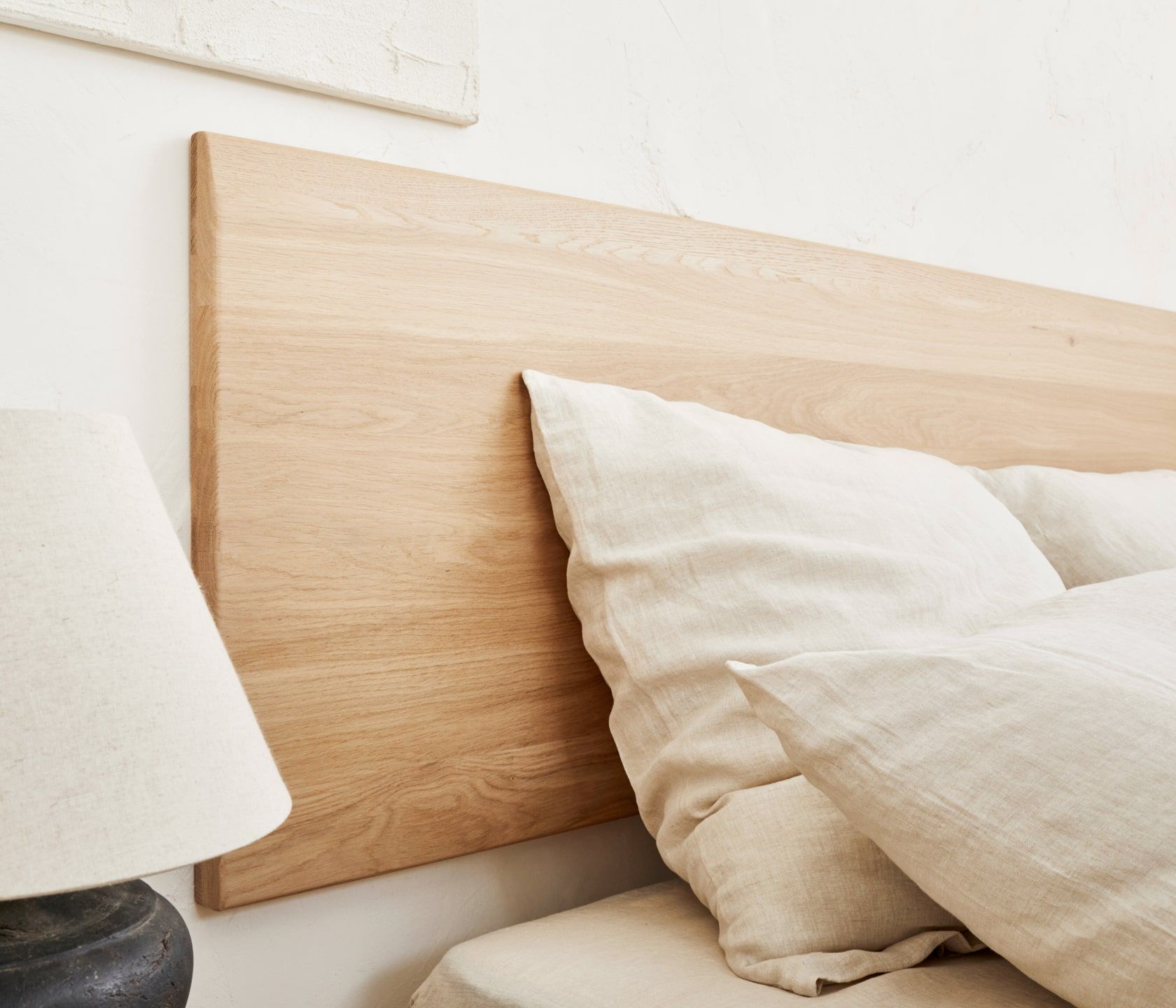
How to Clean and Care for a Wooden Headboard
When it comes to wooden headboards, the care instructions will vary depending on whether your headboard is made of waxed wood, lacquered wood, or painted wood.
-
Waxed Wood
To care for a waxed wooden headboard, you can use a sponge dampened with lukewarm water, onto which you’ll add a few drops of turpentine. After gently rubbing this mixture over the entire surface of your headboard, be sure to apply a thin layer of wax to maintain the wood’s luster.
-
Lacquered wood
This type of wood is often very durable and does not require any special maintenance. Therefore, for your lacquered wooden headboard, simply clean it with a damp sponge. After wiping down the entire surface of the headboard, simply dry it with a microfiber cloth.
-
Painted wood
If your headboard is made of painted wood, you must be careful not to damage the paint or ruin your furniture. To do this, soak a sponge in lukewarm water mixed with a little dish soap and gently wipe down your headboard. If it’s very dirty or stained, you can use a solution made from washing soda and lukewarm water (½ liter of lukewarm water to 1 tablespoon of washing soda). Finally, dry the wood with a dry cloth or towel. In the summer, you can simply open the window and let it air dry naturally.
Spotlight on Velvet or Brass Headboards
If your headboard is made of velvet, deep-clean it once or twice a year using a mixture of lukewarm water and mild soap flakes. Soak a sponge in this solution, rub it over the entire surface of your headboard, then rinse with water mixed with a tablespoon of white vinegar and let it dry.
For the brass headboard, mix half a cup of white vinegar with one tablespoon of salt and one cup of flour. This will create a smooth paste that you can simply rub onto the brass using a cloth. Let the mixture sit for about ten minutes before rinsing it off with a clean, damp cloth.
With these few tips, you should be able to keep your headboard in good condition for as long as possible—and, most importantly, enjoy a good night's sleep in a healthy, clean environment.
We recommend these other pages: