


You wake up one morning with a slight redness on your arm. No new cream, no new clothes—nothing has changed in your usual skincare routine. And yet… The cause may be right there, just a few centimeters from your skin for the past six hours—in the sheets, the duvet cover, and the pillowcases. We tend to think of cosmetics or the clothes we wear during the day. Rarely do we think about bedding. Yet it’s the only material your skin remains in contact with all night long, without interruption. For people prone to skin reactions or suffering from eczema, this choice is not insignificant. Here’s what you need to know.
Why Do Certain Fabrics Cause Reactions?
Skin reactions caused by sheets and comforters have several causes. Dust and dust mites thrive in warm, humid environments, making them the primary source of allergens in a bed. But allergens don’t stop there: synthetic fibers like acrylic or polyester irritate delicate skin, detergent residues that aren’t rinsed out properly remain trapped in the fabric, and certain chemical dyes applied to the fabric release compounds that are harmful to sensitive skin.
The solution begins with the choice of fabric, even before you wash it. That’s why the difference between organic cotton and conventional cotton is much more significant than you might think if you have sensitive skin.
Ingredients Suitable for Sensitive Skin
Organic cotton percale
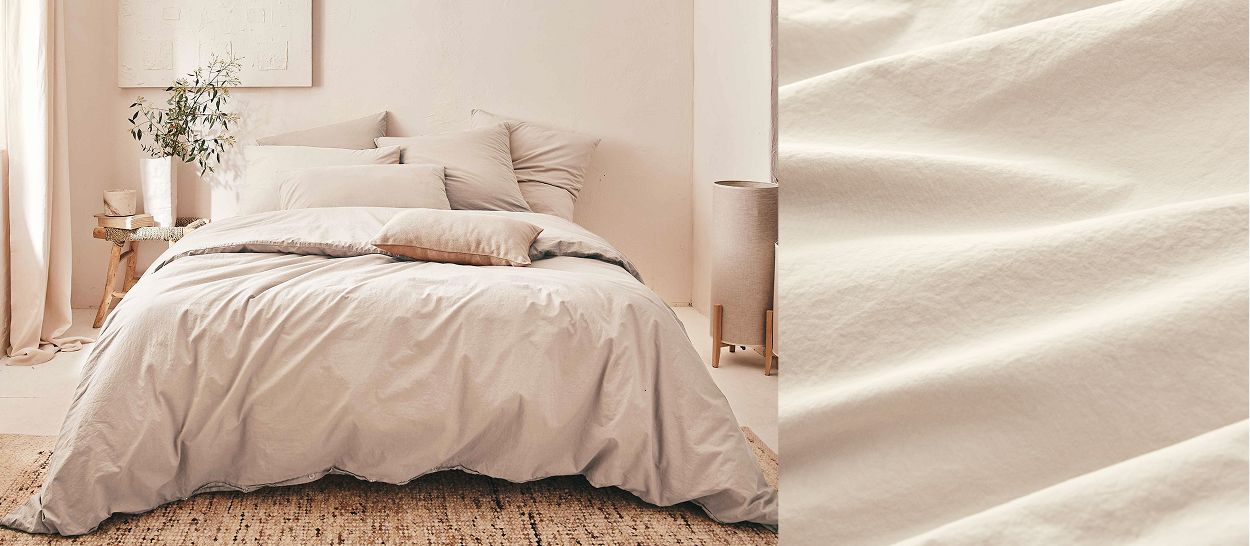
This is the go-to material for sensitive skin. Organic cotton, grown without pesticides, is naturally hypoallergenic. Its breathability limits the buildup of moisture—a breeding ground for dust mites and dust. Made of tightly woven percale (minimum 80 threads per cm²), the fabric forms a physical barrier that reduces the penetration of allergens into the bedding. Certified to the OEKO-TEX® STANDARD 100, it is free of substances harmful to the skin.
This set of pre-washed cotton bedding offers an additional benefit for sensitive skin: the fabric, which is pre-washed at the factory, has already removed most of the manufacturing residues before the first wash at home.
Flax
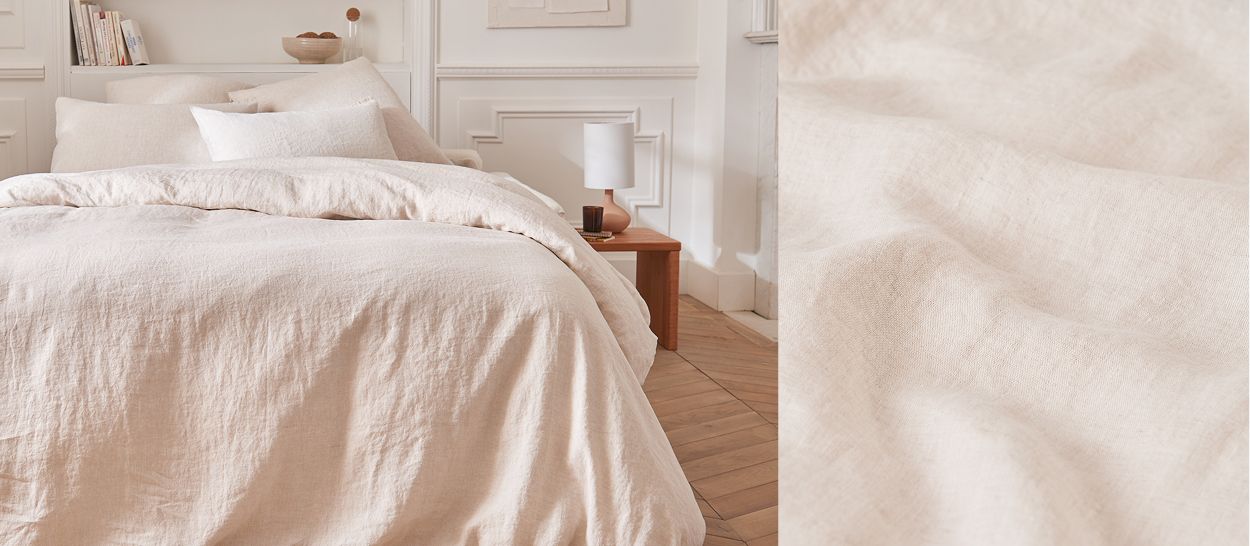
Linen is naturally antibacterial, dust-mite resistant, and temperature-regulating. Its hollow fibers allow for excellent air circulation, which reduces moisture buildup at night. Grown in France and Belgium without chemical treatments, it is one of the gentlest materials for people with skin sensitivities. The Kipli washed linen set is OEKO-TEX® STANDARD 100 certified, meaning there are no chemical allergens in the fabric. To learn more about this material, our guide on how to choose linen bedding covers all the essential criteria.
Hemp
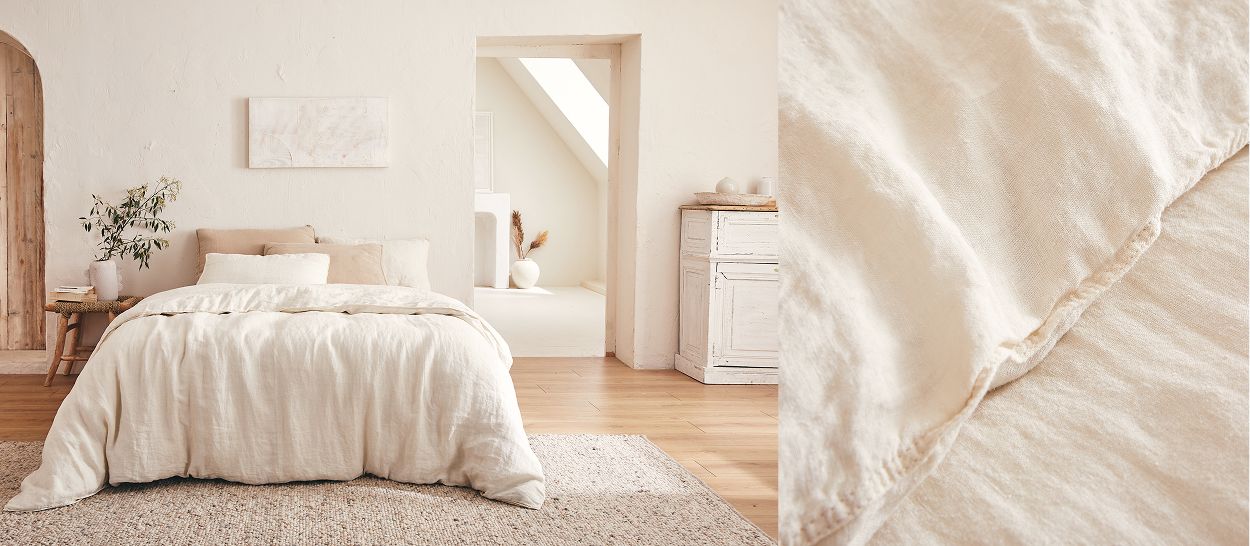
The material most resistant to natural allergens. Hypoallergenic, antibacterial, and grown in France without pesticides. Its temperature-regulating weave limits night sweats, reducing conditions that promote dust mites. The Kipli hemp bedding set is particularly well-suited for sleepers whose skin reacts to heat and humidity.
Organic cotton satin
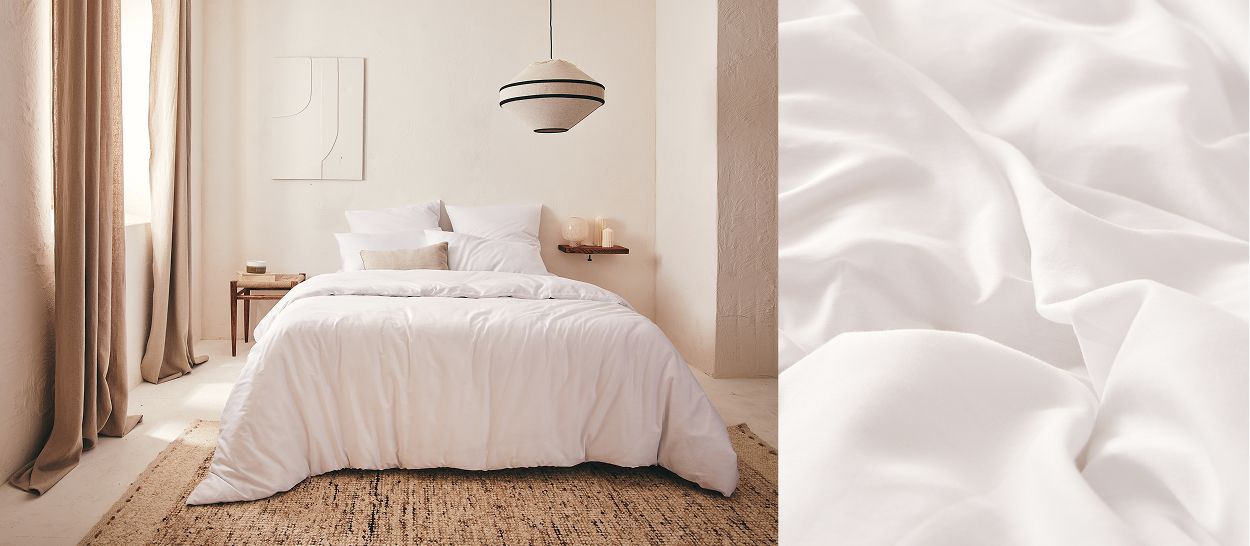
For very sensitive skin that cannot tolerate any rough textures, organic cotton satin offers a silky feel without any synthetic materials. Its dense weave—120 threads per square centimeter—also limits the penetration of dust and dust mites into the comforter and pillows.
Substances to Avoid

Acrylic, polyester, microfiber
These synthetic fabrics are not very breathable, can cause allergic reactions in people with sensitive skin, and trap heat and moisture—ideal conditions for dust mites. Acrylic, in particular, is often poorly tolerated by people with eczema-prone skin. Even when labeled “dust-mite-resistant,” these treatments involve chemicals and can worsen skin reactions in sensitive sleepers.
Conventional, uncertified cotton
Without certification, it’s impossible to know which detergents and dyes were used during manufacturing. Certain finishing treatments applied to uncertified materials may cause allergic reactions. Bedding—such as sheets, pillowcases, and pillows—deserves just as much attention as the clothes we wear during the day.
Certifications to Look For
Care: Just as Important as the Fabric
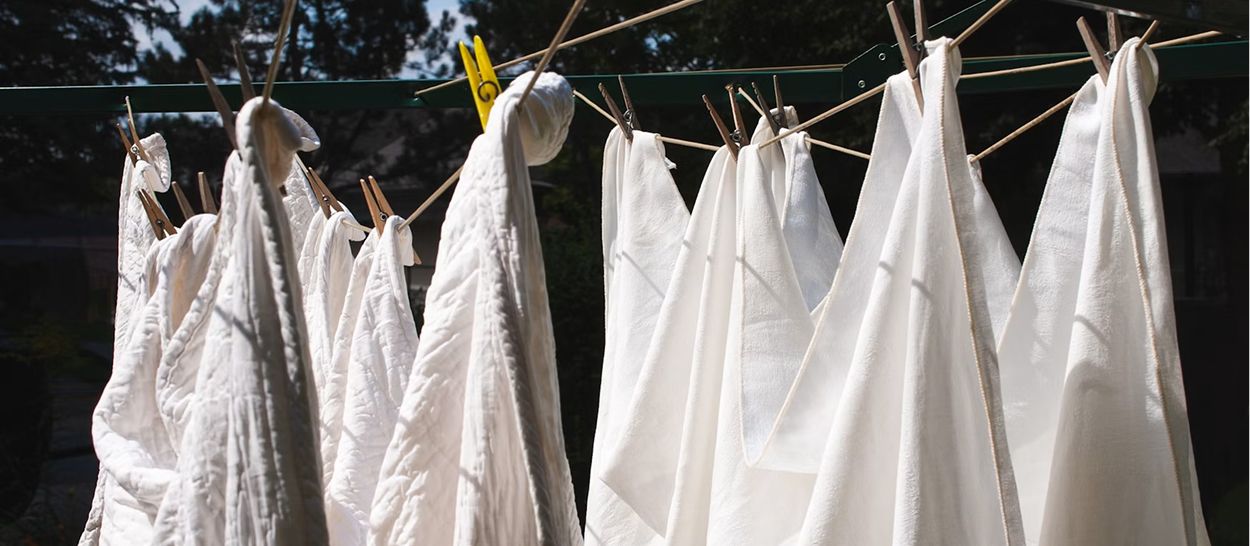
Even natural bedding loses its properties if it isn't cared for properly. Our guide to common mistakes that damage bedding details the most frequent errors.
The mattress protector and the box spring
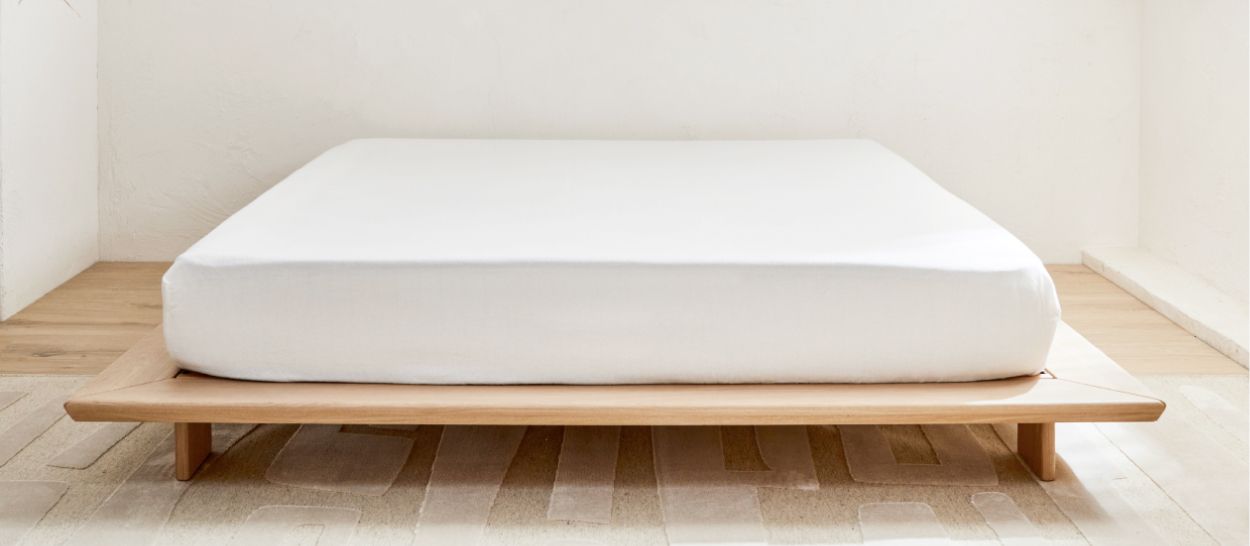
An organic cotton mattress protector creates a barrier between the box spring, the mattress, and the sheets. It limits the spread of dust mites and dust, is machine washable at 60°C, and protects the layers of bedding that are most difficult to maintain. It is an essential addition to bedding designed for people with skin allergies.
The bed frame itself deserves attention: a solid wood slatted frame, left untreated, is more neutral than an upholstered bed frame, whose materials can trap dust. The natural latex mattress is naturally resistant to dust mites—a well-documented benefit for people with respiratory or skin allergies.
Summary Table: Sensitive Skin and Ingredients
| Subject | Hypoallergenic | Anti-mite | Breathable | Reviews |
|---|---|---|---|---|
| Organic cotton (percale) | ✓ | ✓ | ✓✓ | Recommended |
| Wash-finished linen | ✓✓ | ✓✓ | ✓✓✓ | Recommended |
| Hemp | ✓✓ | ✓✓ | ✓✓ | Recommended |
| Organic cotton satin | ✓ | ✓ | ✓✓ | Recommended |
| Conventional cotton | Variable | Variable | ✓ | According to certification |
| Polyester / Microfiber | ✗ | ✗ | ✗ | Things to Avoid |
| Acrylic | ✗ | ✗ | ✗ | Things to Avoid |
For those with sensitive skin and people with allergies, choosing bedding hinges on three key factors: the material (natural, untreated), the weave (dense, certified), and care instructions (washing at the correct temperature, without detergent residue). Linen, organic cotton, and hemp are the best options. OEKO-TEX® STANDARD 100 certification is the minimum requirement. Sleeping in healthy bedding is also a form of self-care—one of the simplest and most sustainable.