


There is no specific age for transitioning from a crib to a child’s bed, but there are some signs to look out for. In some cases—often when the child has one or more older siblings—the child will express a desire to move to a bigger bed. However, most of the time, it’s up to the parents to make this decision, particularly because of safety concerns related to the use of a crib.
If your toddler starts climbing the bars of his crib, he’s at risk of falling. But this also means he’s seeking independence and wants to do more things on his own. Lack of space, difficulties putting your baby to bed, or sleep problems are also things to watch for starting at 18 months, to avoid having to switch to a new bed. Once you’ve made the decision, how can you be sure you’re making the right choice? The size of the bed, safety, materials, and even design are all criteria to consider carefully before buying.
What factors should you consider when choosing a child's bed?
To grow properly, a child needs to sleep well. Their bed is a special place that must meet their needs so they can drift off to sleep safely. There are certain factors to consider to ensure you make the right choice.

Children's Bed Sizes: Transition Bed or Big Kid Bed?
It can be hard to figure out the different sizes of children’s beds. While most parents opt for an intermediate-sized bed ( 70x140 cm) or a junior bed ( 70x160 cm) before moving on to a traditional single bed measuring 90x190 cm or 90x200 cm, a transition bed is also perfectly suitable for children up to age 6. However, you’ll need to replace it once your child gets bigger. That’s why some parents prefer to skip this important stage in their child’s development.
A toddler bed helps young children adjust to the size of the bed and feel more secure. When using an adult-sized bed, certain precautions should be taken, such as:
- tuck the child in;
- add removable barriers;
- Place cushions at the foot of the bed and on the floor to reassure and protect him;
- etc.
Safety: How Can You Prevent Falls with the Right Protective Equipment?
A children’s bed serves as a transition between a crib and an adult bed. It must therefore be equipped with appropriate safety features to ensure the safety of a child who has been accustomed to sleeping in a crib with bars. For younger children, it is best to choose a low bed with removable safety rails. Elevated children’s beds, such as loft beds or bunk beds, should only be chosen when the child’s age and mobility allow for it. They are not recommended for children under 6 years of age.
Materials Used: Be Aware of VOCs and Chemical Treatments
Children are particularly sensitive to volatile organic compounds (VOCs), which are released from adhesives and paints. These compounds release pollutants into the air and can affect children’s health by causing respiratory problems and increasing the risk of allergies.
Depending on the brand, a label affixed to the furniture may provide information on its emission levels, using a rating scale from A+ to C. If no information is available, it is advisable to choose solid wood and water-based paints that are free of varnish and chemicals. HDF, or high-density fiberboard, is considered a high-quality material, provided the product has not been chemically treated.
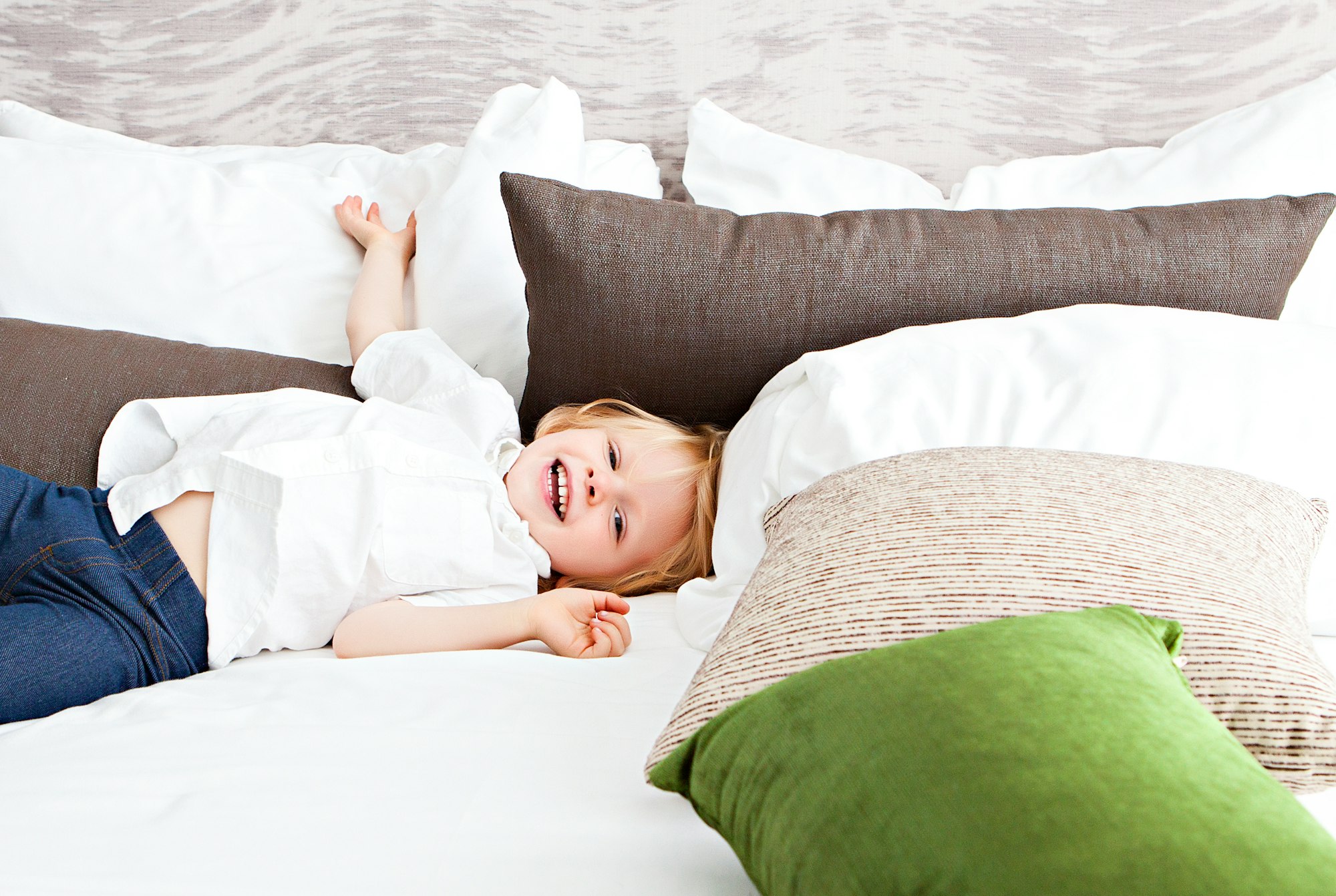
A children's mattress made of natural fibers for a good night's sleep
A good bed should be comfortable, inviting, and suited to a child’s body type. In fact, a mattress that is too soft is not suitable for young children, as they need firmness and support to keep their spine properly aligned. It should preferably be made of natural fibers, such as wool, organic cotton, or coconut fiber.
Natural latex is the most recommended material for children, as it is breathable and hypoallergenic. This type of mattress provides good ventilation and does not trap moisture. Please note that memory foam mattresses are not suitable for children, as they cause excessive sweating by enveloping the child too tightly. When it comes to bed bases, slatted bases are preferable for better mattress ventilation.
What kind of bed design is best for children?
Choosing a children's bed is mainly a matter of style, but it should be appropriate for the child's age and fit the available space in the room, especially since some beds are much larger than others.
-
The Standard Children's Bed
A traditional or classic transition bed is a sturdy bed that sits close to the floor, featuring solid headboards and footboards, as well as side rails that are often removable. It promotes independence by providing steps that allow children to get in and out of bed on their own. Some models are decorated or come in unique shapes, such as boat-shaped or car-shaped beds.
-
The Convertible Bed
A convertible bed is a good option for parents who don’t want to have to replace furniture as their child grows. This type of bed converts from a crib to a toddler bed, and sometimes even into a single bed, which is ideal for teenagers. These models are designed with the child’s needs in mind and offer a sleeping solution suitable for every age.
-
The Treehouse Bed
Also known as a “house bed” or “Montessori bed,” the cabin bed is very trendy because, in addition to the striking, graphic appeal of its hollow structure, its design is based on innovative educational principles. It’s designed to give little ones as much independence as possible. The mini-frame can be decorated in countless ways, with sheer curtains, garlands, and many other accessories.
-
The loft bed
Intended for children ages 6 and up for safety reasons, the loft bed features an elevated sleeping area accessible by a ladder. The space created beneath the bed frame can accommodate a mini bookshelf, toy bins, a small desk, or even a vanity.
-
The Bunk Bed
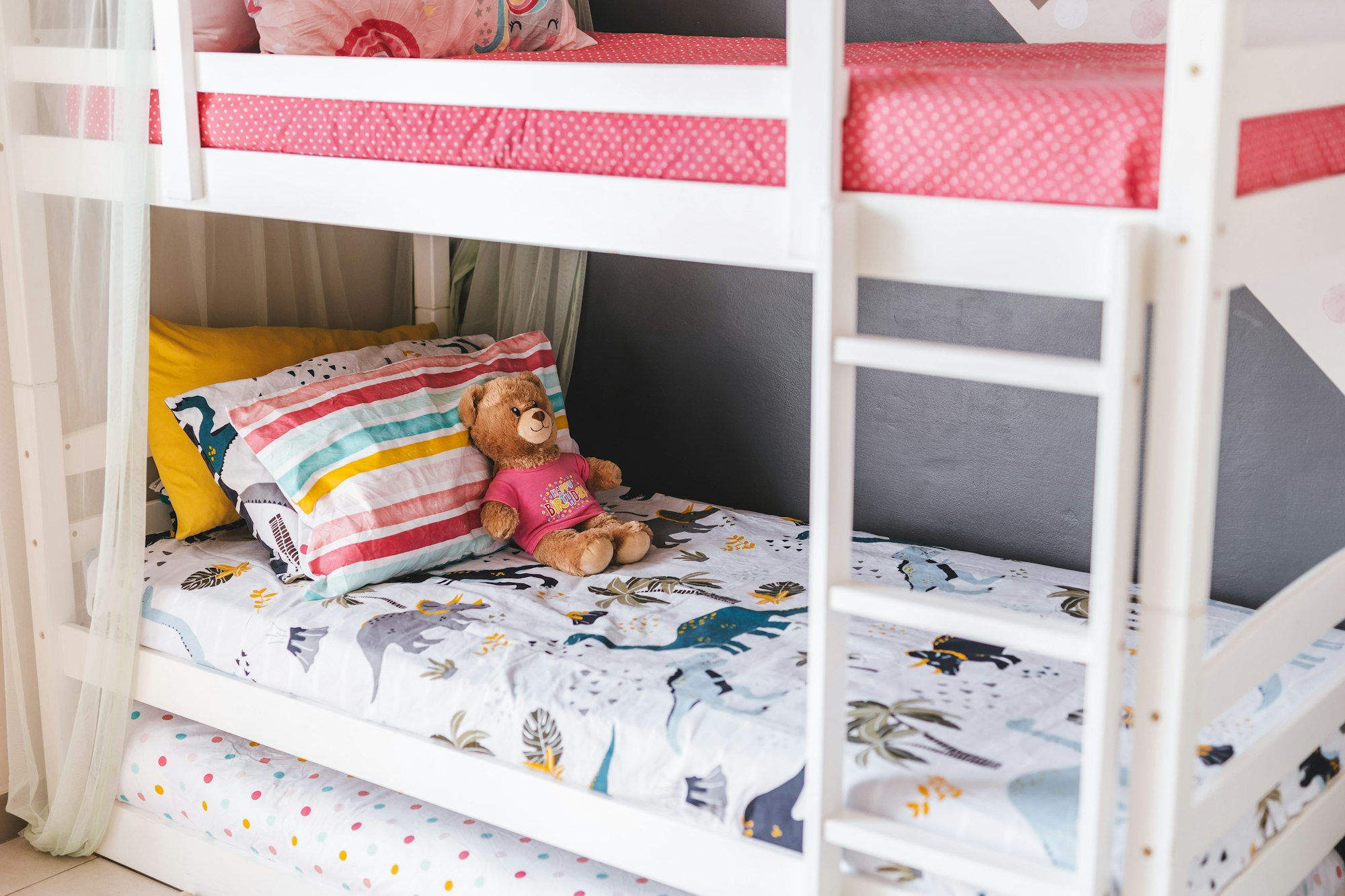
An integral part of households with multiple children and small spaces, the bunk bed is a practical solution in many ways. Ideal for twins, it’s also suitable for children of different ages. However, for safety reasons, the top bunk must always be reserved for the older child.
We recommend these other pages: